






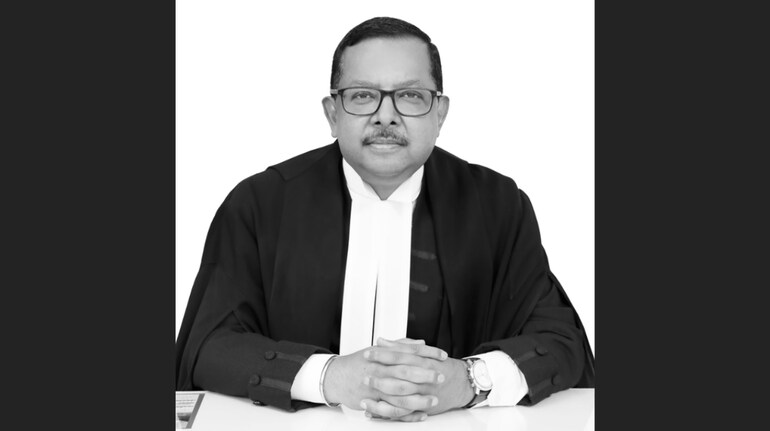

Supreme Court judge Justice Ujjal Bhuyan has expressed serious concern over a recent instance in which the Supreme Court Collegium altered a transfer proposal for a High Court judge after the Central Government sought reconsideration, calling the development deeply troubling for judicial independence.
Speaking at the Principal GV Pandit Memorial Lecture on “Constitutional Morality and Democratic Governance” at ILS Law College, Pune, Justice Bhuyan underlined that transfers and postings of judges fall solely within the judiciary’s authority.
“By the very nature of things, the Central Government can have no say in the matter of transfer and posting of High Court Judges. It cannot say that such and such Judge should not be transferred or should be transferred. It is within the exclusive domain of the judiciary,” he said.
His remarks come against the backdrop of the Collegium’s decision in October last year to revise its original recommendation to transfer Justice Atul Sreedharan from the Madhya Pradesh High Court to the Chhattisgarh High Court.
Instead, the Collegium proposed his transfer to the Allahabad High Court, explicitly recording that the change was made “on reconsideration sought by the Government.”
At the Chhattisgarh High Court, Justice Sreedharan would have been part of the High Court Collegium, whereas at Allahabad, his seniority position would be considerably lower.
The decision drew attention because Justice Sreedharan is widely known for orders reflecting judicial independence, including a suo motu proceeding against a Madhya Pradesh minister for remarks targeting Colonel Sofiya Qureshi.
Justice Bhuyan did not mention Justice Sreedharan by name but questioned the broader implications of such changes. “Why should a Judge be transferred from one High Court to another High Court just because he had passed certain inconvenient orders against the Government? Does it not affect the independence of the judiciary?” he asked.
According to him, when the Collegium records that a proposal was altered at the Centre’s request, it “reveals a striking intrusion of executive influence into what is constitutionally supposed to be an independent process.”
He stressed that transfers are intended only for the “better administration of justice,” not as a mechanism to discipline judges whose rulings displease the executive.
Integrity of Collegium and duty of judges
Justice Bhuyan recalled that the Collegium system itself was fashioned by the Supreme Court to insulate judicial appointments from executive control. If Collegium members allow themselves to be swayed by external pressure, he warned, the very purpose of the system is defeated.
“Now that the judiciary has repelled the Government's attempt to replace the collegium system, it becomes even more important for the judiciary, more particularly the members of the collegium, to ensure that the collegium continues to function independently. Integrity of the collegium process must be maintained at all costs,” he said.
Emphasizing the constitutional oath taken by judges, Justice Bhuyan added: “As Judges, we have taken a solemn oath to uphold the Constitution and to perform our duties without any fear or favour, affection or ill will. We must remain true to our oath.”
He underscored that safeguarding independence is not merely an institutional responsibility but a personal one for every judge.
“Therefore, it is primarily the duty and responsibility of the Judges to uphold the sanctity and integrity of the judicial process, including the collegium system, thereby the independence of the judiciary… It is for the judiciary, rather the members of the judiciary, to see to it that its independence is maintained at all cost in order to ensure its continued relevance and legitimacy.”
Justice Bhuyan also cautioned that dangers to judicial autonomy may not always originate outside the system. “The greatest threat to judicial independence today may come ‘from within’,” he observed, urging judges to guard against political or ideological leanings influencing their decisions.
“It will be a sad day for democracy if the outcome of a case becomes predictable merely by knowing which judge or bench is hearing it,” he said.
Concluding his address, Justice Bhuyan reaffirmed that judicial independence is “non-negotiable.” He warned that distortion of the Constitution amounts to a breach of constitutional morality and quoted Caroline Kennedy to underline the point: “an independent judiciary is indispensable to protect our democracy and the rule of law.” For that, he said, the country needs “Judges who can stand erect against the political winds of the times.”

Discover the latest Business News, Sensex, and Nifty updates. Obtain Personal Finance insights, tax queries, and expert opinions on Moneycontrol or download the Moneycontrol App to stay updated!
Find the best of Al News in one place, specially curated for you every weekend.
Stay on top of the latest tech trends and biggest startup news.





