






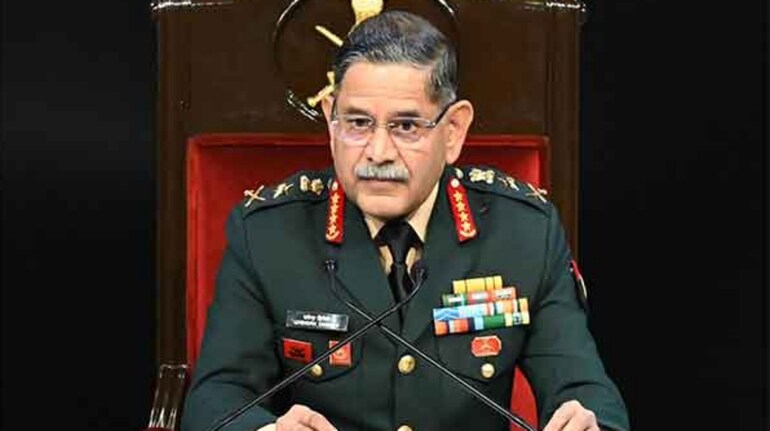

Pakistan 'mistakenly' released and then withdrew a list of about 150 people in mid-August, of whom nearly 100 were assessed by India to have been killed in firing along the Line of Control and the IB J&K sector, Army Chief General Upendra Dwivedi said on Tuesday.
Responding to a question from ANI, General Dwivedi said the list was analysed by Indian agencies before it was taken down. “Of those, about 100 people, according to our assessment, had been killed in the firing along the Line of Control or in the IB J&K sector,” he said.
The episode came amid Operation Sindoor, which, the Army Chief said, also significantly accelerated the Army’s shift towards drone-led warfare and new force structures. He added that the drones were already in use, but the operation forced a rapid integration of unmanned systems across infantry and artillery units.
Operation forces faster drone integration
General Dwivedi said drones were already playing an important role, but Operation Sindoor led to a 'major acceleration' in their operational use. The Army had tested unmanned systems in desert and high-altitude terrain earlier, but the ongoing operation required them to be commissioned at speed.
Because of the compressed timeline, the Army moved to restructure units to support surveillance, force application, anti-radiation missions, jamming and loitering munitions, he said.
New infantry formations raised
To address the need for skilled operators and better integration, the Army created a new structure at the infantry battalion level. “The first organisation we established was an infantry battalion, within which we created the Ashni Platoon,” General Dwivedi said, adding that it comprises specialists who must meet defined qualification standards.
He said the Army has also raised the Bhairav Light Commando Battalions, with 13 such battalions operational so far. Their role is to bridge the gap between standard infantry platoons and special forces, he said.
“These battalions are equipped with modern equipment, including UAS equipment and counter-UAS equipment, a large amount of ammunition and other systems,” he said.
Artillery units get dedicated UAS support
The Army Chief said the changes extend beyond infantry. A Divyastra battery has been created within artillery regiments to provide direct support to divisional commanders.
“This again involves UAS equipment,” he said, noting that counter-UAS ammunition and capabilities are also being expanded. The Army is currently raising three such regiments, with plans to add 12 more in the next phase.
Discover the latest Business News, Sensex, and Nifty updates. Obtain Personal Finance insights, tax queries, and expert opinions on Moneycontrol or download the Moneycontrol App to stay updated!
Find the best of Al News in one place, specially curated for you every weekend.
Stay on top of the latest tech trends and biggest startup news.





