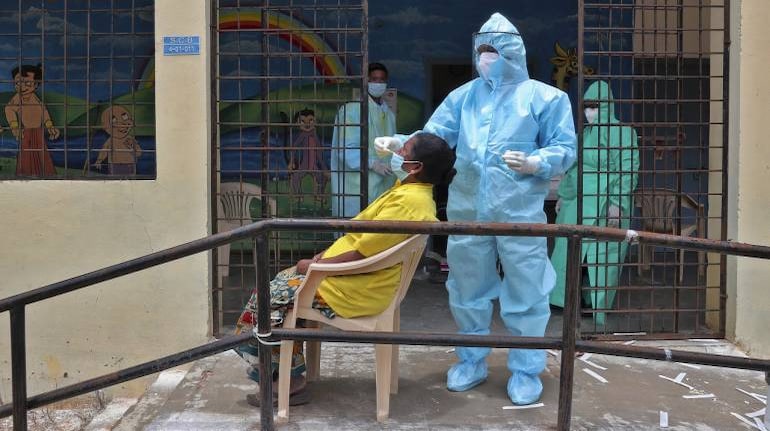
Only 4 percent people of those who needed an ICU bed were able to find one by going through the routine process, while 78 percent had to use connection or clout to find a bed, a survey has revealed.
The survey, conducted by LocalCircles, included responses from over 17,000 individuals located in over 211 districts of the country.
Amid rising COVID-19 cases there have been many reports of shortage of beds in private, as well as government hospitals.
"After receiving many complaints about people's inability to ICU bed we decided to conduct a survey to get the pulse on the issue," founder of LocalCircles Sachin Taparia said as per a report by Indian Express.
In response to a question on their ability to secure an ICU bed, 38 percent respondents said they had to use clout/connections to secure the ICU bed, 7 percent said they had to follow up extensively to secure the ICU bed, 40 percent said they had to use their clout/connections and escalate via social media or complain to the government to secure the ICU bed, 7 percent said they had to bribe hospital/government officials to secure the ICU bed, only 4 percent said they got the ICU bed without using any of the above measured.
Remaining 4 percent said they did not get an ICU bed at all.
Track this blog for all the latest updates on coronavirus pandemicAsked that whether it must be made mandatory for all hospitals to update availability of ICU beds on a real-time basis on their website, 92 percent responded in its favour.
Of 653 respondents from Pune, 32 percent said that they had to use connections to secure a COVID-19 ICU bed, while only 5 percent said they got it through the routine process.
Meanwhile, Minister of State for Health and Family Welfare Ashwini Kumar Choubey on September 20 told Rajya Sabha that India has 1.16 beds per 1,000 persons with its population estimated at 139.78 crores as per the 2011 census.
COVID-19 vaccine tracker | Check out the latest developments from around the worldIn his written response, Choubey said India has 15,403 COVID-19 treatment facilities with 15,54,022 isolation beds, 63,758 ICU beds and 2,32,505 oxygen supported beds while so far, a total of 344.78 lakh N95 masks and 141.46 lakh PPE kits have been supplied to states, Union Territories and central government institutions.
According to the figures provided by the minister, Delhi has 162 COVID treatment facilities with 25,719 isolation beds, 2,617 ICU beds and 10,023 oxygen-supported beds.
Maharashtra has the maximum COVID treatment facilities at 3,328 centres with 3,50,340 isolation beds, 14,866 ICU beds and 56,737 oxygen-supported beds, followed by Karnataka with 1,809 facilities, 1,38,725 isolation beds, 4,963 ICU beds and 17,162 oxygen-supported beds.
India reported 92,605 fresh COVID-19 cases on September 20, taking the total COVID-19 cases to 54,00,619. The death toll climbed to 86,752 with the virus claiming 1,133 lives in a span of 24 hours. Total reported active cases in the country stand at 10,10,824.
Click here for Moneycontrol's full coverage of the COVID-19 outbreakDiscover the latest Business News, Sensex, and Nifty updates. Obtain Personal Finance insights, tax queries, and expert opinions on Moneycontrol or download the Moneycontrol App to stay updated!
Find the best of Al News in one place, specially curated for you every weekend.
Stay on top of the latest tech trends and biggest startup news.