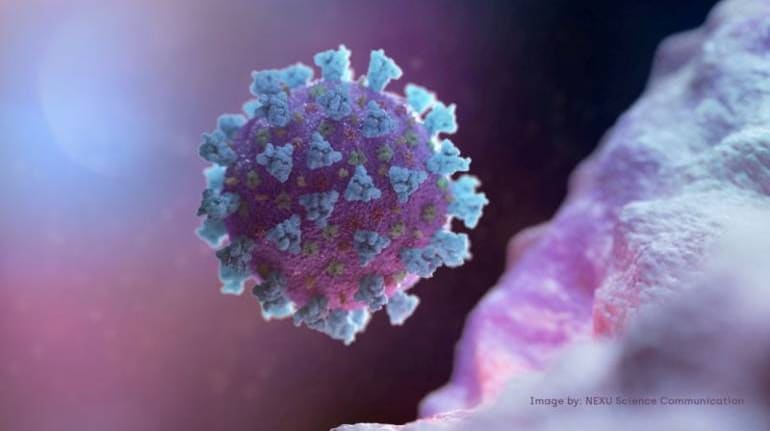
Contrary to earlier studies, scientists have found that severe COVID-19 does not solely result in a hyperactive immune system, but instead the body's defense response is caught in a continuous loop of activation and inhibition, an advance that may help develop better therapeutics to combat the deadly disease.
The researchers, including those from the German Center for Neurodegenerative Diseases (DZNE), assessed blood samples from a total of 53 men and women with COVID-19 from Berlin and Bonn in Germany, whose course of disease was categorised as mild or severe according to the World Health Organization (WHO) classification.
They used blood samples from patients with other viral respiratory tract infections as well as from healthy individuals as controls.
In the study, published in the journal Cell, they analysed the gene activity and the amount of proteins on the level of individual immune cells circulating in the blood of these patients using very high resolution single-cell OMICs technologies.
"By applying bioinformatics methods on this extremely comprehensive data collection of the gene activity of each individual cell, we could gain a comprehensive insight of the ongoing processes in the white blood cells," explained Yang Li, a co-author of the study from the Centre for Individualised Infection Medicine (CiiM) in Germany.
"In combination with the observation of important proteins on the surface of immune cells, we were able to decipher the changes in the immune system of patients with COVID-19," added Birgit Sawitzki, another co-author of the study.
The scientists found that in severe cases of COVID-19 the immune cells called neutrophils and monocytes in these patients are only partially activated and they do not function properly.
However, these immune cells were found to be ready to defend the patient against COVID-19 in the case of mild disease courses, explained Antoine-Emmanuel Saliba, another co-author of the study.
"They are also programmed to activate the rest of the immune system. This ultimately leads to an effective immune response against the virus," Saliba said.
But in severe COVID-19 cases, the scientists noted that there are considerably more immature neutrophils and monocytes that have a "rather inhibitory effect on the immune response"
This phenomenon, according to the scientists, can also be observed in other severe infections, although the reason for this is unclear.
"Many indications suggest that the immune system stands in its own way during severe courses of COVID-19," said study co-author Leif Erik Sander.
"This could possibly lead to an insufficient immune response against the coronavirus, with a simultaneous severe inflammation in the lung tissue," Sander added.
According to the researchers, the current findings could lead to new therapeutic options.
"Our data suggest that in severe cases of COVID-19, strategies should be considered that go beyond the treatment of other viral diseases," said study co-author Anna Aschenbrenner from the University of Bonn in Germany.
In the case of viral infections, suppressing the immune system may not be beneficial, according to the scientists.
"If, however, there are too many dysfunctional immune cells, as our study shows, then one would very much like to suppress or reprogram such cells." Jacob Nattermann, another co-author of the study from the University Hospital Bonn.
"Drugs that act on the immune system might be able to help. But this is a delicate balancing act. After all, it's not a matter of shutting down the immune system completely, but only those cells that slow down themselves, so to speak," Nattermann said.
He added that scientists could take a page out of cancer research in trying to understand ways to treat these immature cells.
"Possibly we can learn from cancer research. There is experience with therapies that target these cells," he said.
Discover the latest Business News, Sensex, and Nifty updates. Obtain Personal Finance insights, tax queries, and expert opinions on Moneycontrol or download the Moneycontrol App to stay updated!
Find the best of Al News in one place, specially curated for you every weekend.
Stay on top of the latest tech trends and biggest startup news.