






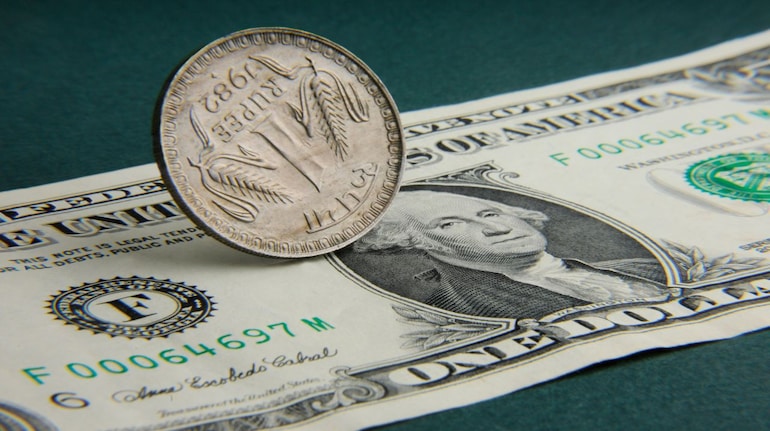
The Indian rupee is heading into 2026 with cautious optimism thanks to stronger domestic growth and muted local inflation. But global developments, particularly the status of the impending India–US trade deal, are likely to influence the stability of the currency.
While major research and brokerage houses expect the rupee to exit its current depreciating phase in 2026, much will depend on the progress of the trade deal between India and its largest trading partner, the US.
SBI Research on December 17 said that, consistent with its empirical analysis, the rupee is poised to exit its current depreciating phase. The research arm added that the currency is expected to bounce back strongly in the second half of the next financial year.
It sees the rupee returning to 87 on average in 2026.
Despite the optimism, the progress in an India–US trade deal is expected to heavily influence rupee’s performance in 2026, with any easing of steeper tariffs expected to significantly improve India’s external balance and reduce pressure on the currency, Goldman Sachs said in a research note dated December 11.
BofA Securities while acknowledging rupee’s weakness in the near term, said that the outlook for 2026 could improve if progress is made on an India–US trade deal that lowers tariffs.
In a research note on December 16, the brokerage added that possible inclusion of Indian bonds in a global index could also help stabilise sentiment and allow the RBI to rebuild its foreign-exchange reserves.
Trade talks between India and the US have been delayed, with the original fall deadline missed, though both sides continue to engage. Indian exports remain under pressure, facing steep tariffs of up to 50 percent on most goods.
Goldman Sachs added that India’s current account deficit is likely to narrow sharply to around 0.1 percent of GDP in the first quarter of calendar year 2026 from about 3 percent in the December quarter, driven by stronger exports if the first tranche of a trade pact with the US is concluded, removing the additional 25 percent tariffs on Indian goods, along with seasonally lower gold imports.
To be sure, since the rupee has already adjusted significantly lower on a real trade-weighted basis, it should help support exports even as US tariffs remain in place, while imported inflation risks are limited due to low domestic price pressures.
While, economists expect the rupee to remain range-bound, as the Reserve Bank of India is likely to rebuild foreign-exchange reserves amid stronger dollar inflows, capping any sharp appreciation, they caution that further delays in India–US trade negotiations into the first quarter of 2026 could weaken the balance of payments and keep the INR under pressure.
BofA Securities added a weaker US dollar next year could support a modest recovery in the rupee, with a possible turnaround during the seasonally strong first quarter but still expects the currency to reach 88 per dollar by end-2026, compared with its earlier forecast of 86 per dollar.
Barclays, however, expects the rupee to weaken further into next year, driven by continued foreign portfolio outflows and limited intervention by the RBI.
In a research note on December 14, Barclays said it expects USD/INR to rise further and reach around 94 by end-2026.
Rupee’s run in 2025
The Indian rupee touched a record low near Rs 91.08 per US dollar in mid-December, pressured by foreign portfolio outflows, strong dollar demand, and stalled India–US trade negotiations.
But, following intervention by the Reserve Bank of India and a weaker US dollar, the currency has bounced back in recent days. On December 24, the INR traded around Rs 89.7 per dollar, down slightly on the day.
The Indian rupee emerged as Asia’s worst-performing currency in 2025 against the US dollar, weakening roughly 5–6 percent so far this year due to foreign capital outflows and delays in a trade deal with the US, which have kept steep tariffs in place.
SBI Research explained that the rupee’s weakness in 2025 was mainly driven by foreign portfolio outflows, especially from equities, and uncertainty around the US–India trade deal.
It noted that between 2007 and 2014, net FPI inflows averaged $162.8 billion, compared with just $87.7 billion from 2015 to date, highlighting how strong portfolio inflows in the past supported the rupee. Geopolitical uncertainties have also become a key factor affecting the currency.
Since April 2, 2025, when the United States announced broad tariff hikes, the Indian rupee has fallen 5.7 percent against the greenback, the most among major currencies, despite occasional gains on optimism over a trade deal with the US.
While the rupee has been the most depreciated, it has not been the most volatile. This shows that the 50 percent US tariff on Indian goods is a key factor driving the current rupee weakness.
Given this, while the worst may be over for the rupee, its performance in early 2026 will still depend on progress in the US–India trade deal and foreign capital flows, with a gradual recovery possible later in the year if conditions improve.
Discover the latest Business News, Sensex, and Nifty updates. Obtain Personal Finance insights, tax queries, and expert opinions on Moneycontrol or download the Moneycontrol App to stay updated!
Find the best of Al News in one place, specially curated for you every weekend.
Stay on top of the latest tech trends and biggest startup news.




