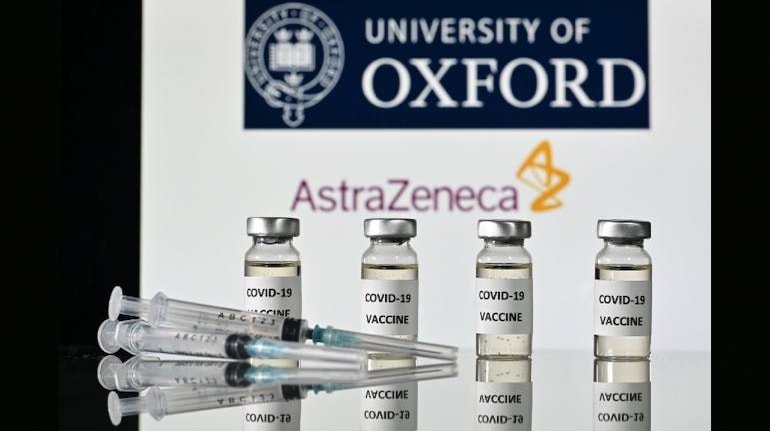
The World Health Organisation (WHO) has recommended the use of AstraZeneca (AZ)-Oxford COVID-19 vaccine even against the highly transmissible variant that is circulating in South Africa.
The recommendation comes even as South Africa paused the rollout of the vaccine after a study found it to be less effective against the SARS-CoV-2 variant called 501Y.V2 or B1.351 circulating in that country. South Africa is now considering trading its doses of AstraZeneca-Oxford COVID-19 vaccine, and begin vaccination using Johnson & Johnson jabs instead.
WHO also backed the use of AstraZeneca-Oxford COVID-19 vaccine for people of 65 years and above, even as many European countries have blocked the vaccine’s use for people in that age group.
What is WHO's justification for backing AstraZeneca-Oxford University vaccine against the South Africa variant?Preliminary analyses from the Phase 1/2a clinical trial of the vaccine in South Africa indicate marked reduction in vaccine effectiveness against mild and moderate disease due to B1.351 based on a small sample size and substantial loss of neutralizing antibody activity.
WHO says the study was designed to assess the efficacy against disease of any severity, but the small sample size did not allow a specific assessment of vaccine efficacy against severe COVID-19. One of the major outcomes of clinical trials of AstraZeneca-Oxford University vaccines was its ability to protect against severe infection, even if the person is infected by COVID-19.
"So we have an absence of evidence from that trial about whether or not the AZ product has efficacy against severe disease, hospitalization and death and that is the outcome of most interest and most impact for early rollout of vaccines," says Dr Katherine O'Brien, Director, Immunization Vaccines and Biologicals at WHO.
O'Brien says the Strategic Advisory Group for Experts (SAGE) at WHO has reviewed the evidence presented to them. The assessment from SAGE (was) that there is a plausible expectation that the vaccine will have impact efficacy against severe disease, despite limited data.
WHO also adds that the vaccine will generate a more enduring T-cell response. "There are different ways that the immune system responds to vaccines. One is by producing antibodies, but another component is the T cells and the evidence that was presented to SAGE provided a view that the maintenance of the T-cell response will be quite strong against this variant," O'Brien explained.
WHO has recommended that South Africa proceed with the use of the AstraZeneca vaccine in the context of collecting information that is needed to fill in some of the gaps for this product with the variant that is in circulation. WHO says that B1.351 may not still be the dominant strain circulating in countries outside South Africa.
What did WHO say on the use of vaccines for 65 years and above?This was another contentious issue with the AstraZeneca-Oxford University vaccine, as many experts have expressed concern whether it works against people aged 65 and above. The late-stage clinical trials conducted by AstraZeneca have relatively small numbers of participants in this age group. There were only a few cases of COVID-19 in this age category, and thus the confidence interval on the efficacy estimate is very wide.
While more data is expected soon, WHO believes that the immune responses induced by the vaccine in older persons are well documented and like those in other age groups.
"This suggests it is likely that the vaccine will be found to be efficacious," the SAGE committee concluded.
WHO says that even with the possibility of low efficacy, it still believes that the AstraZeneca vaccine would be beneficial for people above 65 years, given its ability to offer protection against severe COVID-19. Older adults are at high risk of developing severe disease and death due to COVID-19.
"Older adults are identified as a priority group in the WHO SAGE Prioritization Roadmap. This Prioritization is supported by vaccine impact modelling work, even for vaccine efficacy that is substantially below that observed among younger adults administered AZD1222. Taking the totality of available evidence into account, WHO recommends the vaccine for use in persons aged 65 years and older,” the world body noted.
What will be the impact of WHO's recommendation on COVID-19 vaccination?The WHO recommendation will help clear concerns among many countries about using the AstraZeneca-Oxford vaccine in the backdrop of new SARS-CoV-2 variants and limited data on people above 65.
COVID-19 vaccine of AstraZeneca has already been granted conditional marketing authorisation or emergency use in over 50 countries, including India. It's a vaccine that's been widely in use, given its availability, affordable price of less than $3 per dose, and ease of logistics.
As per the interim plan of COVAX, about 336 million doses of AstraZeneca-Oxford vaccine will be available from February end.
About 240 million of those doses will be supplied by Serum Institute of India (SII), which has a license with AstraZeneca to manufacture and distribute the vaccine in India and other low-and middle-income countries.
COVAX facility, which is co-led by WHO, Gavi, the Coalition for Epidemic Preparedness Innovations (CEPI) and the UN Children's Fund, plans to cover at least three percent of the total population of 145 countries in the first half of the year, enough to protect the most vulnerable groups, such as healthcare workers.
In comparison, 1.2 million doses of Pfizer-BioNTech COVID-19 vaccine is available for distribution under COVAX. Pfizer vaccine is expensive and requires -70-degree centigrade cold chain to store the vaccine. India too has deployed the AstraZeneca vaccine for internal consumption and for giving it to neighbouring and friendly countries as part of her vaccine diplomacy.

Discover the latest Business News, Sensex, and Nifty updates. Obtain Personal Finance insights, tax queries, and expert opinions on Moneycontrol or download the Moneycontrol App to stay updated!
Find the best of Al News in one place, specially curated for you every weekend.
Stay on top of the latest tech trends and biggest startup news.