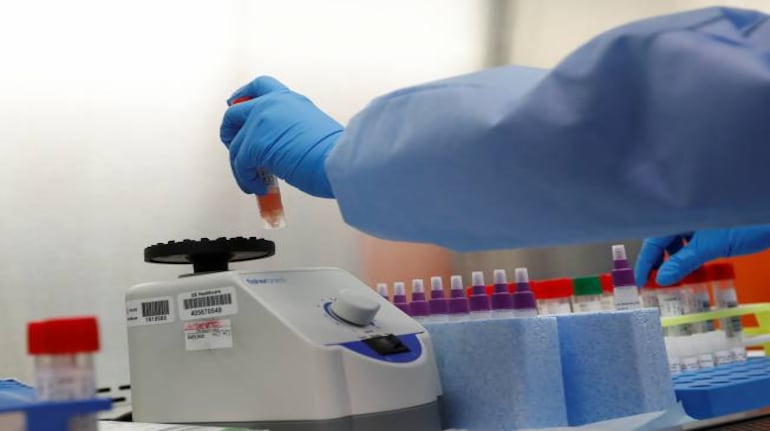
Indian Council of Medical Research (ICMR), the apex medical body, released an advisory for using pooled samples to increase the capacity of laboratories to screen more samples using molecular testing for COVID-19 and for the purpose of surveillance.
A pooled testing algorithm involves the reverse transcription polymerase chain reaction (RT-PCR) screening of multiple individual patient samples pooled together. If the test is positive, all persons are tested individually. This is called pool de-convolution.
If all individual samples in a negative pool are regarded as negative, it results in substantial cost savings when a large proportion of pools tests negative.
This method can greatly enhance the capacity to test in a low-resources setting, as RT-PCR test is reliable but not scalable. Also, when positive cases are still low, it may help to use the pooled samples for screening.
Pooling conditionsA feasibility study was conducted at DHR/ICMR Virus Research and Diagnostic Laboratory (VRDL) at King George’s Medical University (KGMU), Lucknow.
"It has been demonstrated that performing real-time PCR for COVID-19 by pooling 5 samples of TS/NS (200 ul/sample) is feasible when the prevalence rates of infection are low," the advisory said.
"All individual samples in a negative pool to be regarded as negative. Deconvoluted testing is recommended if any of the pool is positive. Pooling of more than 5 samples is not recommended to avoid the effect of dilution leading to false negatives," the advisory added.
The other conditions that ICMR has set forward include the use of pooling only in areas with a low prevalence of COVID-19 or positivity of less than 2 percent from the existing data. Still, a watch should be kept on increasing positivity in such areas.
In the areas with positivity of 2-5 percent, sample pooling for PCR screening may be considered only in community survey or surveillance among asymptomatic individuals, strictly excluding pooling samples of individuals with known contact with confirmed cases, health care workers in direct contact with care of COVID-19 patients. Sample from such individuals should be directly tested without pooling.
The pooling of samples is not recommended in areas or populations with positivity rates of 5 percent for COVID-19.
Preferable number of samples to be pooled is five, though more than two samples can be pooled, but considering the higher possibility of missing positive samples with low viral load, it strongly discouraged to pool more than 5 samples, except in research mode.
It is still not clear whether the pooling is allowed in private labs or not.

Discover the latest Business News, Sensex, and Nifty updates. Obtain Personal Finance insights, tax queries, and expert opinions on Moneycontrol or download the Moneycontrol App to stay updated!
Find the best of Al News in one place, specially curated for you every weekend.
Stay on top of the latest tech trends and biggest startup news.