




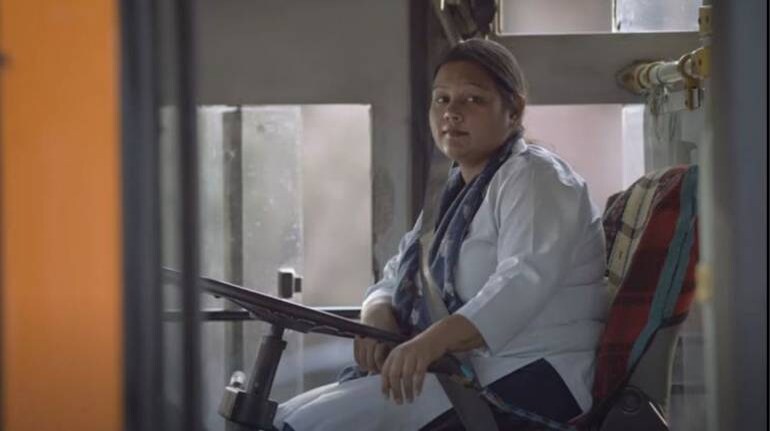
India is facing a jaw-dropping decline in the participation of women in the workforce. Women form only 19 percent of the workforce in India as of 2021, falling from over 40 percent in the early 90s, according to World Bank and International Labor Organization statistics. In contrast, women constitute more than 50 percent of the workforce globally.
Consider the case of Nidhi Mishra, 30, from Lucknow, who was working as an HR consultant till she decided to put in her papers last year as she struggled to balance her personal and professional lives.
“I was managing the acquisition of talent including retention and employee engagement. I found women dropped out because they are not able to balance their personal lives. While I was trying to retain women, I was myself struggling and decided to quit. But I am willing to work after a gap of 1-2 years. I will look for a part-time role where I can utilise my experience and skillset wisely,” she said.
Suman Agarwal, 33, from Noida was working as a chief sub-editor until she had to leave in December 2022 as the company laid her off to cut costs and now she wants to start her own business.
“I want to work again but on my own terms now. I want an environment where work will be a priority, not office politics. I faced microaggressions at the workplace. Workplace environments should be such that women can speak their minds. Respect along with position at the workplace is important,” Agarwal said.
Nidhi and Suman are among the millions of Indian women who have exited the workforce in the last few decades.
The alarming statistics
The World Bank says that women are less likely to work for income or actively seek work in India.
Female participation in India's labour force -- the proportion of the population over the age of 15 that is economically active -– has been steadily declining since 2005 and hit a low of 19 percent in 2021, the World Bank said.
Between 2004–05 and 2011–12, about 19.6 million women dropped out of the workforce.

Participation declined from 42.6 percent during 1993–94 to 31.2 percent in 2011–12, as per a World Bank survey. Approximately 53 percent of this drop occurred in rural India, among those between the ages of 15 and 24 years, it said.
Female participation rates declined from 34.1 percent in 1999-00 to 27.2 percent in 2011-12, and wide gender differences in participation rate also persist, according to the International Labour Organization.
The percentage of women in the workforce dropped from 33 percent in 2012 to 25 percent in 2020, it said. This may have further nosedived during the pandemic, which had a near-immediate effect on women’s employment. One in four women was considering leaving the workforce or downshifting their careers compared to one in five men, according to a 2021 McKinsey survey.
The number of women in the workforce in India dropped to a dire 9 percent by 2022 due to COVID-19 and other reasons, according to a Bloomberg survey.
The reasons
So why are so many women exiting the workforce?
Experts say work-life balance issues, gender role expectations and socio-economic imbalances in India are leading to the exodus. Nirmala Menon, Founder of Interweave, which consults companies on gender inclusion, said that microaggressions and biases have made women drop out as they feel it’s not worth their time.
“It’s a multi-pronged problem. The mindset that women hold larger responsibility for homes has to change. Women are raised to be daughters-in-law due to this mindset, they are not able to reach their full potential. Getting men more involved in homes, helping them to see there is a value for them as well, that they have to adjust. My company helps companies understand why the inclusion of women in the workforce is important,” Menon told Moneycontrol.
The problem is also about the mindset as many organisations feel there is no need to hire women when there are enough men available. “Companies feel that women will come and take maternity leave. But women are needed to bring ideas which men have overlooked. Companies have to look at a change in their policies and programs. With COVID-19, flexibility has become the norm, so that’s helping in a way. A lot of change has come from the time I started 15 years back,” she said.
How law helps
In earlier days people thought it was not worthy to even talk about the percentage of women in the workforce. But changes have been visible, starting from the law itself. The Prevention of Sexual Harassment has been brought at workplaces. The Act provides a legal framework to protect employees from sexual harassment at the workplace and ensures a safe and secure work environment.
In companies, women are entitled to maternity leave, even fathers get paternity leave while menstrual leave is being debated.
The Companies Act, 2013 mandates at least one woman director in listed and other specified classes of companies. The Ministry of women and child development has a national creche scheme. The Maternity Benefit (Amendment) Act, 2017 makes it mandatory for an establishment with over 50 employees to have in-house creche facilities. But are these being implemented effectively?
While it is debatable whether these measures are enough, organisations cannot ignore the subject anymore as policies are very important in keeping women in the workplace. More organisations are seriously working hard to retain women in the organisation. Still, it’s a very long way off.
Is hybrid the way forward?
While many feel that the pandemic enhanced the flexibility of work hours for women, for others it has brought more struggles as the daycare centres have still not revived fully.
“Hybrid work is welcome but working with a 6-month baby is challenging from home. It gets frustrating. The daycare centres post-COVID-19 need to be scaled up. Working from home is not helping women. Middle-class homes do not have a quiet corner to work. Coupled with that, layoffs by organisations have led to a sharp decline in women workforce,” Shachi Irde, Director - sales enablement, Pollinate Group, said.
Irde has been working in the field of empowering women and making them financially independent for over 10 years now.
She currently encourages women from the economically weaker sections to start their micro-organisations and trains them to become entrepreneurs and manage their own finances.
“We provide them with green products like solar lights, biodegradable sanitary pads, mosquito repellent oils, etc, and handhold them for two years. These women sell in their community to start with as these are homemakers who can’t go to work because of small children and elders in the family,” Irde told Moneycontrol.
She aims to empower and train 10,000 women for entrepreneurship and micro businesses by 2025.
Many times the women do not have much of an option as their spouse is transferred to a different location and they choose family over work.
“I have experienced that women leave because of family compulsions many times. But after some time women should look at joining the workforce again and not lose their identity and skills. Some do not have an option because their husband gets transferred to an outstation. But nowadays very few families have the chauvinistic attitude that women should not work. Women are very savvy these days,” Sheela Godbole, Director, ICMR-National AIDS Research Institute, said.
Some women who are comfortable financially and are in their 50s choose to leave the workforce to complete their bucket list.
“The recent pandemic made a lot of people reconsider their lives. We should cheer those who leave the workforce to complete their bucket list. We need to focus on those who are forced to leave the workforce for other reasons because that is sad,” she said.
Are there lessons from other countries?
Japan, which had poor female workforce participation in 1990, adopted “womenomics” as its strategy, expanded childcare facilities and removed tax deductions for dependent women in 2013. As a result in 2016, Japan’s female labour force participation jumped to 66 percent.
India, too, may have to devise some similar strategy to stem its declining women workforce participation.
 Nirmala Menon, Founder, Interweave; Shachi Irde, Director, Pollinate Group, Nidhi Mishra, former HR consultnt
Discover the latest Business News, Sensex, and Nifty updates. Obtain Personal Finance insights, tax queries, and expert opinions on Moneycontrol or download the Moneycontrol App to stay updated!
Find the best of Al News in one place, specially curated for you every weekend.
Stay on top of the latest tech trends and biggest startup news.