






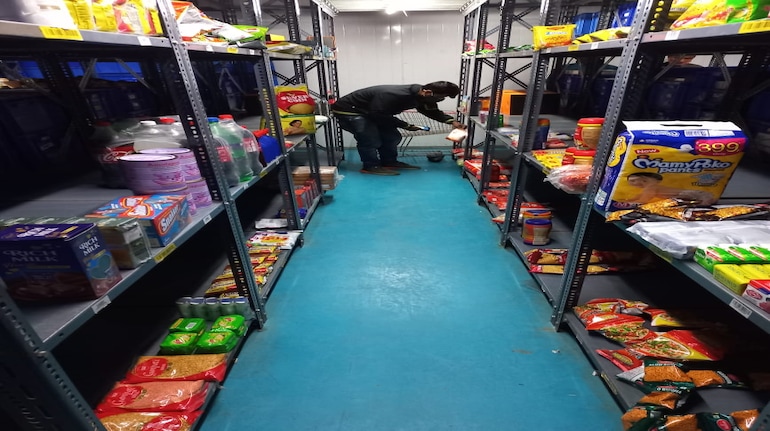
India’s rapid shift towards quick commerce is reshaping the urban real estate landscape, with dark stores emerging as one of the fastest-growing asset classes.
Fuelled by the growth of e-commerce and quick commerce platforms, the number of dark stores across the country is projected to reach around 7,500 by 2030 from current 2,500, as companies race to cut delivery timelines to minutes.
As of October, India had around 2,525 dark stores spread across more than 100 cities, occupying nearly 13 million square feet of space, a Savills India report, released on December 22, said.
A dark store is a small warehouse exclusively for online shopping, with an area ranging from 3,000 to 8,000 square feet located close to densely packed residential areas to meet quick delivery requirements.
Tier 1 cities, including Ahmedabad, Bengaluru, Chennai, Hyderabad, Pune, Mumbai, Kolkata and Delhi-NCR, continue to dominate the landscape, accounting for 68 percent of the total store count and nearly 9 million square feet of space, the report said.
Tier 2 and 3 cities together host around 800 dark stores, or 32 percent of the total count, spanning roughly 4 million square feet.
Delhi-NCR led with about 400 dark stores, followed by Bengaluru (360), Mumbai (250) and Chennai (190).
Quick commerce fuelling growth
Market observers said that rapid scaling of quick commerce and the hyperlocal delivery model, where consumers increasingly expect essentials and daily-use products to be delivered within minutes, is fuelling growth of dark stores.
Srinivas N, Managing Director, Industrial & Logistics, Savills India, said that quick commerce is rapidly evolving beyond its initial focus on groceries, food and daily essentials.
“Leading platforms are increasingly expanding into higher value categories such as premium personal care, luxury lifestyle products and time-critical medical supplies.
“Tier-1 & 2 cities will lead this expansion, while Tier-3 cities will emerge as high-potential markets for dark stores, with secondary and suburban micro markets playing a key role in balancing cost and accessibility,” he said.
Opportunity for developers
Analysts said as the demand for dark store outpaces supply, the segment might open up a significant opportunity for developers and investors.
Arvind Nandan, managing director, research & consulting, Savills India, said most dark stores are located in repurposed spaces, buildings originally meant for conventional retail and commercial use.
These may have been standalone shops, small offices, restaurants, grocery stores, etc., which are typically located on ground floors. Such structures often face limitations, including those of structural and design capabilities.
This can then potentially lead to restricted automation, vertical storage and refrigeration constraints, safety issues, poor insulation problems, etc, resulting in higher operational and maintenance costs, he said.
“With dark stores expected to grow three times by 2030, builders and investors can capitalise on this growing demand for dark stores by developing purpose-built dark stores or retrofitting underutilised retail and commercial spaces to create high-value assets,” he said.
Discover the latest Business News, Sensex, and Nifty updates. Obtain Personal Finance insights, tax queries, and expert opinions on Moneycontrol or download the Moneycontrol App to stay updated!
Find the best of Al News in one place, specially curated for you every weekend.
Stay on top of the latest tech trends and biggest startup news.




