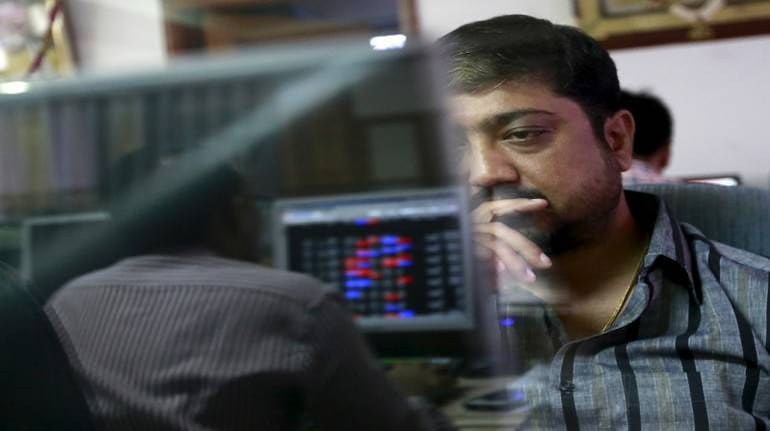
A large-scale crisis tends to bring out fear and uncertainty, and public perception quickly turns pessimistic. Watching your portfolio go through a roller-coaster of volatility will undoubtedly give you sleepless nights, especially if you are amongst the newer generation of investors who are experiencing their first major financial crisis.
The pandemic we are dealing with is unique, but this isn’t the first. In the 20th century, we have witnessed multiple pandemics, world wars, collapse of financial markets, military coups and on-going social and political tensions. However, we have always found ways to adapt, invent, and transform ourselves, and that is what gives us that inimitable edge to bounce back from the worst times.
The tide will turnThe infamous Global Financial Crisis of 2008-2009, triggered by the bankruptcy of investment banking giant Lehman Brothers wiped out over US$2 trillion of the global economy and left millions jobless. While the S&P 500 Index in the US tanked by 39 per cent, closer home, the Sensex took a hit of about 33 per cent between August and October 2008. The BSE Mid Cap Index and BSE Small Cap Index witnessed an even deeper slump of 45 per cent.
Amongst his many insightful pearls of wisdom, one of Warren Buffett’s quotes reads: “Only buy something that you’d be perfectly happy to hold if the market shut down for 10 years.”
Let’s assume you were ‘happily’ invested when the global financial crisis hit, and held on to your investments over the next 10 years. The Sensex was at about 17,650 in January 2008, and crashed all the way down to 8700 points by October 2008. Fast forward 10 years later to September 2018, and the index more than quadrupled to about 38,000 points!
An investment valued at Rs 1,00,000 in the Sensex during the latter half of 2008 would have grown to Rs 3,73,869 over the 10-year period! Even if you were using the SIP route to make investments, at an annualised yield of 12 per cent, your 120 SIP instalments of Rs 1000 each would have appreciated to Rs 2,32,000 during the same period, thanks to compounding.
Mind you, this was not a straight-forward trajectory. There were many other financial disasters along the way. The US debt downgrade by S&P in 2011, Eurozone debt crisis of 2012, CAD (current account deficit)-Rupee depreciation in 2013, devaluation of the Chinese Yuan in 2016 and Brexit in the same year.
If your strategy is robust and you have quality investments in your portfolio, all you need to do is weather the storm out. Getting carried away by sentiment and liquidating investments at a loss means you will never have the opportunity to recover the value of your hard-earned capital.
All investments come with a risk. Debt markets aren’t immune to financial downturns either. The lack of consumer spending and liquidity in the system will send bond prices and debt funds tumbling too. Whatever your investment style, the one thing you need to do is stay off the clutter of financial conversations. Watching financial news and scrolling through constant alerts will do more harm than good.
Learn to separate the actionable information from those you just can’t act on. Don’t get anxious or beat yourself up over ‘could have, should have.’ A calmer long-term approach is good not just for your sanity but for your financial goals too.
Use this time as an opportunity to assess portfolio risk and ensure that your asset allocation is aligned to your goals. Even the most unsinkable of ships needs constant checks. Over the long term, risk management becomes a critical tool in managing your portfolio. Re-examine your asset allocation – your investments in equity, debt – and cash balance. If your weightage is lopsided, make changes as required. If you have never done a risk profiling before, get in touch with a financial advisor who can help tweak/ design a portfolio that is suited to your temperament and risk appetite.
See the opportunity in a crisisStaying invested and weathering out the storm is one thing, but being able to adjust your sails to newer opportunities is what distinguishes a prudent investor from a passive one. To quote Mr. Buffett once again: “We simply attempt to be fearful when others are greedy and to be greedy only when others are fearful.”
Opportunities fly past quickly. If you waited for a year after the 2008 crisis to make an investment, as thing started to stabilise, a Rs 1,00,000 investment in 2009 would amount to a substantial Rs 2,06,520 over the nine-year period, but still a far cry, almost 44 per cent lesser returns than you would have made on seizing the prospect when investments were available at a significant discount just a few months earlier.
This does not mean dabbling in everything. Conduct adequate due diligence. Look for businesses that are non-cyclical in nature, have low debt, high cash flows, and a strong and experienced management team.
Sticking to index stocks or sectoral leaders is a good option.
For the debt aspect of your portfolio, pick instruments that are either issued by the government or an extended PSU arm. Such instruments come with a sovereign guarantee and carry very low risks. Alternatively, you can also consider debt-oriented mutual funds that invest in high-quality papers. These are great options for near-term investments, offer excellent liquidity and over the long-term are tax-efficient too (three years or more).
Other than stocks, mutual funds, bonds and debt schemes, you could also explore various tangible assets such as real estate and precious metals (gold) only if your pocket and asset allocation permit.
(The writer is Co-founder, Scripbox)Discover the latest Business News, Sensex, and Nifty updates. Obtain Personal Finance insights, tax queries, and expert opinions on Moneycontrol or download the Moneycontrol App to stay updated!
Find the best of Al News in one place, specially curated for you every weekend.
Stay on top of the latest tech trends and biggest startup news.