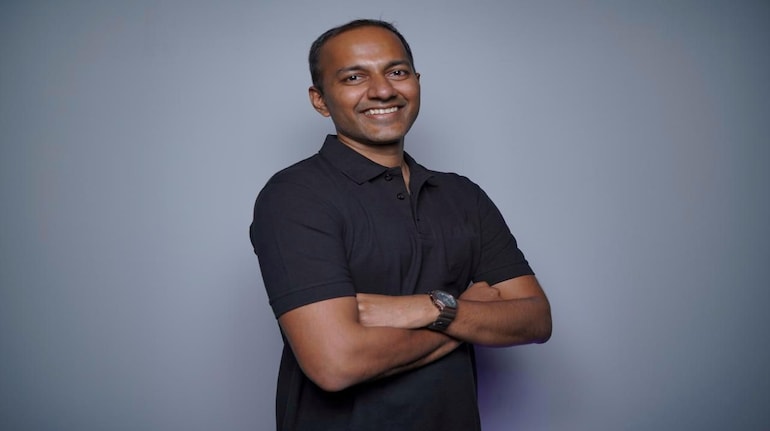
When global AI labs talk about the future, the conversation usually revolves around Graphics Processing Units (GPUs), model sizes, agentic systems and scaling laws. But behind every cutting-edge model, from chatbots to reasoning engines, lies something far less automated: human judgment.
While synthetic data is seen as a way to scale model training cheaply, labs increasingly acknowledge that it cannot replace human-generated, domain-grounded data. Hyderabad-based Rukesh Reddy's startup pitch sits squarely in that gap.
His startup, Deccan AI, doesn’t build models. Instead, it supplies the human intelligence layer that helps them learn, train, evaluate and stress-test some of the world’s most advanced AI systems.
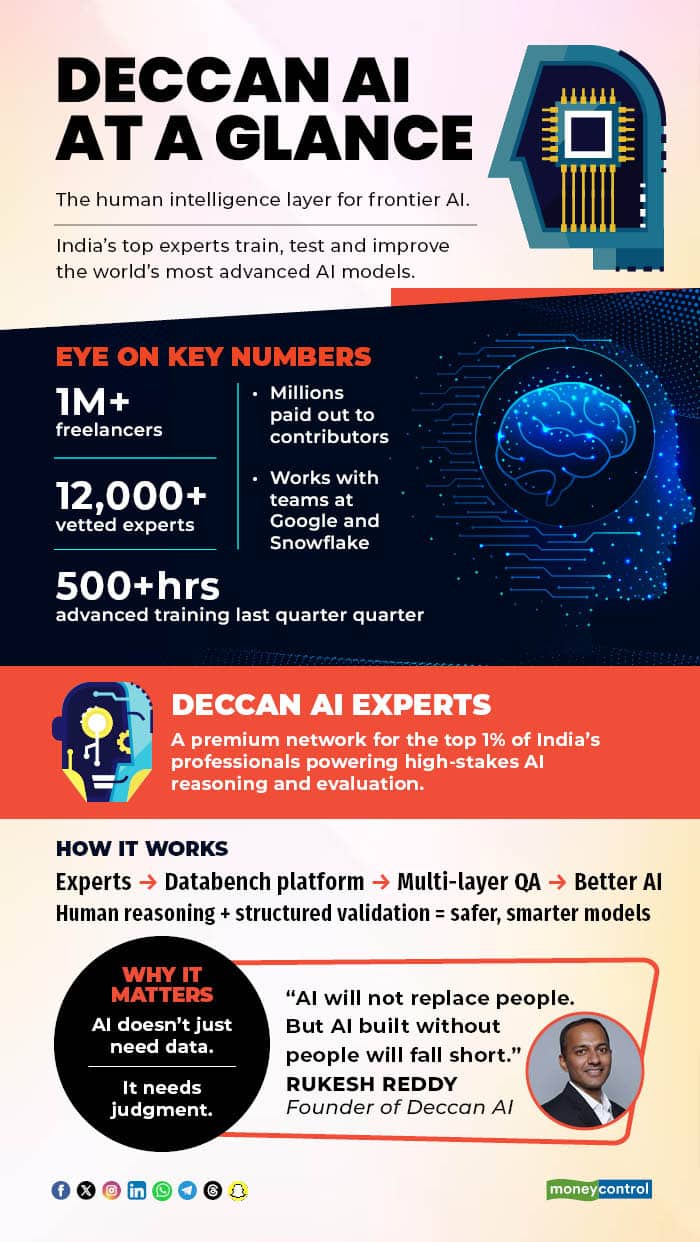
The company today works with labs, including Google and Snowflake, to deliver high-fidelity training data and human evaluations that keep models accurate, grounded and safe. The company raised an undisclosed amount from Prosus in May of 2025.
As Reddy puts it, “Models are like children, we guide them, correct them, and teach them what we know.”
Deccan’s new flagship ‘Experts’ network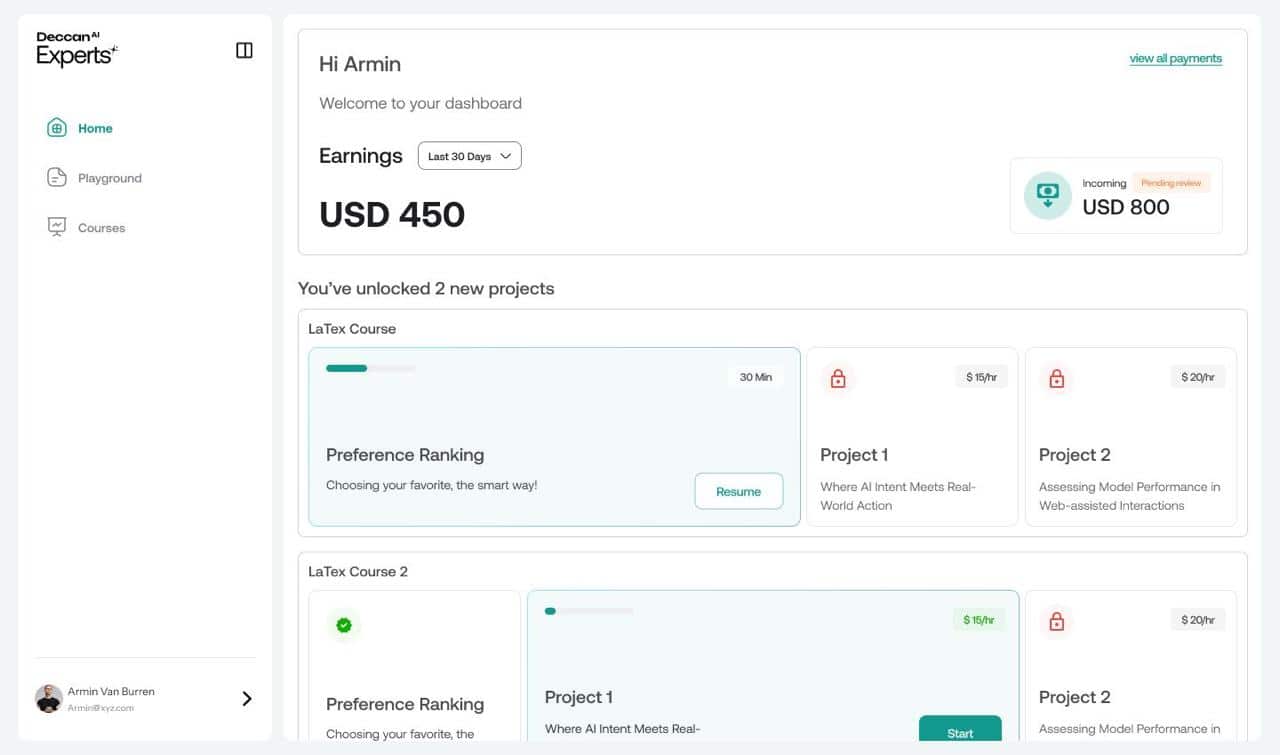 Deccan's AI Interface
On December 12, Deccan AI unveiled Deccan AI Experts, a premium network for the top 1% of India’s professionals. The company says the biggest bottleneck in building reliable AI has quietly shifted not from compute, but from the scarcity of high-quality training data.
The new network combines expert Indian talent with the company’s internal platform, Databench, which embeds peer review, gold-label checks, simulation-based trials and anomaly detection.
In just two years, Deccan has built an expert bench of 12,000 specialists, all of whom undergo domain reasoning tests, project simulations and continuous quality assessment. Only the top percentile makes the cut.
The platform delivered over 500 hours of structured expert training in the last quarter, across reasoning, coding, text-to-SQL and multimodal evaluation, underscoring how complex AI training work has become.
Reddy is clear about why this matters: “AI will not replace people. But AI built without people will fall short. The world needs systems that learn from reasoning, not repetition, and from expertise, not approximation.”
A simple insight: AI still needs peopleReddy’s founding idea emerged early. AI systems could sound flawlessly confident while being fundamentally wrong. That gap between machine fluency and actual comprehension, he recalls, became Deccan AI’s starting point in 2023.
While the AI world sprinted toward automation, Reddy placed a contrarian bet: that humans, especially experts, would become more essential as models scaled.
“We want models that think correctly,” he said. “And for that, we need people at the centre.”
Today, Deccan operates one of the largest human-in-the-loop infrastructures in the world, with over one million registered freelancers and thousands of vetted specialists, from engineers and doctors to poets, lawyers and multilingual analysts.
But Reddy insists their work is far from traditional labelling.
“Our people aren’t labelling data,” he said. “They’re reviewing model logic, tool calls, reasoning steps, teaching models how to think, not just what to answer.”
Why big AI labs need a startup like thisFrontier labs, those building Gemini, GPT, Claude and Llama form Deccan’s core customer base. The reason, Reddy says, is scale.
“Bringing millions of people together with unique perspectives and managing tight turnarounds is extremely hard,” he said. “Labs want to focus on GPUs and algorithms. We handle the human side.”
Evaluation itself has become a full-time discipline. As models shift from chatbots to agentic systems that execute tasks such as booking flights, interpreting enterprise tickets, writing code, the need for structured human oversight becomes critical.
“Everything humans do today, AI will attempt next,” Reddy said. “And that requires massive training.”
Challenges in the business modelReddy acknowledges that labs could theoretically build these training operations in-house. But in practice, he argues, it is difficult and resource-intensive.
“Human operations at this scale require deep specialisation,” he said. “Data is everything, but sourcing and validating it with high quality is extremely hard. That’s our right to win.”
Deccan’s workflows rely on multi-layered human and AI quality checks, structured debates between annotators, domain-expert escalations and review gates embedded in Databench. As its launch document notes: “A high-quality data point is never a single click.”
The India advantageThough headquartered in Mountain View, Deccan’s operational backbone sits entirely in Hyderabad, a deliberate choice.
“People ask why we don’t spread across 50 countries,” Reddy said. “India has the talent density, English fluency and STEM capability to do all of this from one place.”
The company has already paid out “a few million dollars” to freelancers and built a vibrant community earning project-based income on flexible schedules. The new Experts layer sharpens this positioning by specifically targeting graduates from IITs, IIMs, AIIMS, premier law schools and elite PhD programmes. Nearly half of Deccan’s undergraduates and postgraduates come from Tier-1 institutions, according to internal data.
From Wall Street to HyderabadReddy grew up in Hyderabad, studied civil engineering at IIT Bombay, then went to IIM Ahmedabad before spending nearly 15 years in London and New York across JPMorgan, Citibank and Monitor Group.
“I wanted to build something meaningful that tapped into India’s human potential,” he said. “Fintech didn’t offer that intersection. But AI did.”
He returned in 2023, months after ChatGPT’s breakout, convinced that India could become the world’s largest human-intelligence engine for AI systems.
Where demand is heading nextSo far, frontier labs remain the largest spenders. But Reddy believes the next wave will come from enterprises.
He expects companies such as Tata, Jio, Salesforce and Walmart to start deploying private agents and custom models across IT, support, logistics and operations.
“That revolution is still early,” he said. “But 2026 will be the year enterprise AI takes root.”
And as long as humans know something models don’t, he argues, this ecosystem will keep expanding.
From robotic manipulation to safety-critical agents, every new AI capability will require fresh human input.
“We aren’t even able to imagine the next generation of use cases,” he said. “But whatever they are, they’ll need data, and humans, to teach them.”
From robotic manipulation to safety-critical agents, every new AI capability will require fresh human input.
“We aren’t even able to imagine the next generation of use cases,” he said. “But whatever they are, they’ll need data, and humans, to teach them.”


Discover the latest Business News, Sensex, and Nifty updates. Obtain Personal Finance insights, tax queries, and expert opinions on Moneycontrol or download the Moneycontrol App to stay updated!
Find the best of Al News in one place, specially curated for you every weekend.
Stay on top of the latest tech trends and biggest startup news.