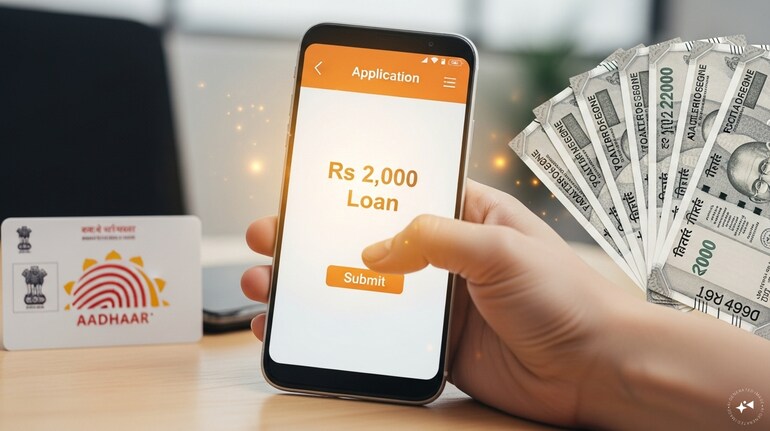

Aadhaar can help you finish KYC faster, but the real rule is simple: borrow only from regulated lenders and read the fine print before you tap “accept”.
Step 1: Start by choosing a safe lender
For a small Rs 2,000 loan, you’ll usually see offers from bank apps, NBFC apps, or partner platforms. Before you even begin the application, make sure the lender is a regulated entity, not a random “instant cash” app acting on its own. RBI’s digital lending rules are built around this idea: the loan should be issued by a regulated entity, with clear disclosures and proper grievance channels.
Step 2: Keep the basics ready
Even when a loan is marketed as “Aadhaar-based”, most lenders still want two things to route money and assess you: an active bank account and a working mobile number linked to Aadhaar for OTP authentication. Aadhaar OTP based e-KYC also requires your specific consent for authentication.
Step 3: Apply inside the official app or website
Download the official app of the bank or NBFC, or use a well-known platform that clearly shows which regulated lender is giving the loan. Avoid clicking loan links sent on WhatsApp, SMS, or social media. RBI and the government have repeatedly warned people about unauthorized digital lending apps and scams that misuse KYC documents.
Step 4: Complete KYC carefully
During KYC, you’ll typically be asked for your PAN, Aadhaar number, and an OTP that comes to your Aadhaar-linked mobile. Some lenders may also use video KYC. Two quick safety rules here: only enter OTP on the lender’s own screen, and never share your Aadhaar OTP with a “support person” on a call. Aadhaar authentication is consent-based, and you should treat OTP like a password.
Step 5: Read the loan summary before you accept
For a Rs 2,000 loan, the big risk is not the principal. It’s the charges. Before you accept, look for the Key Fact Statement or equivalent summary and check the interest rate, processing fee, any “platform fee”, late payment charges, and the exact repayment date. RBI’s digital lending framework is designed so borrowers can see costs clearly and know who is responsible for the loan.
Step 6: Make sure the money and repayments go to the right place
A good sanity check is this: the loan amount should be disbursed to your bank account, and repayments should go back to the regulated lender, not to a personal UPI ID or a random account. If an app asks you to repay somewhere else, treat it as a red flag and stop.
Step 7: Repay on time and avoid rolling it over
Small “quick” loans can quietly become expensive if you miss the due date and roll them over again and again. Set a reminder, repay early if there is no penalty, and keep proof of payment.
A quick warning sign checklist
If the app is pushing you to share contacts, photos, or files, or if it threatens you with shaming tactics, walk away. A Rs 2,000 loan is never worth giving an app control over your phone or your identity.
Discover the latest Business News, Sensex, and Nifty updates. Obtain Personal Finance insights, tax queries, and expert opinions on Moneycontrol or download the Moneycontrol App to stay updated!
Find the best of Al News in one place, specially curated for you every weekend.
Stay on top of the latest tech trends and biggest startup news.