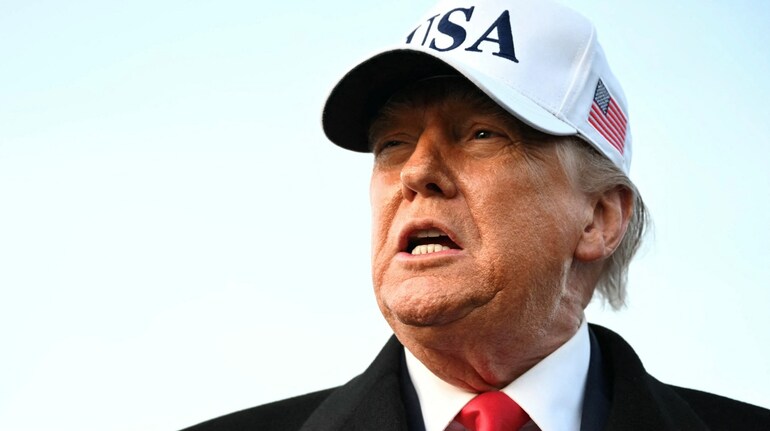

Global investors are pulling money out of US assets in a renewed 'Sell America' trade after President Donald Trump threatened to impose sweeping tariffs on European allies over Greenland, unsettling financial markets that had entered 2026 with relative calm.
The reaction was swift and unusually broad. US equities sold off sharply, Treasury bond prices fell, pushing yields to multi-month highs, and the dollar weakened against major currencies. At the same time, traditional safe havens such as gold, the Japanese yen and the Swiss franc rallied, signalling a shift in global risk appetite away from US markets.
Tariffs, Greenland and alliance shock
Trump said he would impose 10 percent tariffs from February 1, rising to 25 percent by June, on goods from eight European countries, including Germany, France and the UK, if Denmark refuses to allow the US to acquire Greenland, a semi-autonomous Danish territory.
The threat marks an escalation even by Trump’s own trade-war standards. European officials described the move as economic coercion and warned of retaliation. The European Union is weighing options that range from reviving a €93-billion retaliatory tariff list to activating its Anti-Coercion Instrument, a powerful but untested framework designed to counter economic intimidation.
French President Emmanuel Macron said the threat was unacceptable, signalling that the EU may be willing to use tools originally conceived to deter hostile states.
The geopolitical jolt landed at a sensitive moment. Markets had grown accustomed to Trump’s pattern of aggressive rhetoric followed by partial retreats. This time, however, the issue at stake, territory and sovereignty, offers little obvious room for compromise.
Markets recoil
The financial response underscored that discomfort.
On Tuesday, the Dow Jones Industrial Average fell about 870 points, while the S&P 500 and Nasdaq dropped more than 2 percent, wiping out gains for the year and pushing the VIX volatility index to its highest level in eight weeks. European equities also slid, with the STOXX 600 down nearly 2 percent over two sessions.
“The geopolitical risks we’ve been warning about are re-emerging and are shifting perceptions of common alliances,” Wasif Latif, chief investment officer at Sarmaya Partners told Reuters.
Why the dollar and Treasuries are falling together
What has alarmed investors most is not just falling stocks, but the simultaneous sell-off in Treasuries and the dollar, a rare combination that defines the 'Sell America' trade.
In periods of global stress, investors typically buy US government bonds and the dollar. This time, they sold both.
The dollar index slipped to around 98.6, its weakest level in weeks, while the euro rose to about $1.17. The dollar also weakened against the Swiss franc and the yen.
Reuters editor Mike Dolan described the moves as “a sell America trade rather than a pure risk-off mood,” noting that Treasury yields were rising even as gold and silver hit record highs.
Bond prices fell sharply. The 10-year US Treasury yield climbed to roughly 4.30 percent, the highest since September, while 30-year yields rose in tandem. The yield curve steepened at its fastest pace in months, reflecting rising uncertainty about inflation, fiscal risk and policy stability.
Some of the pressure came from abroad, including a sell-off in Japanese bonds driven by concerns about Japan’s fiscal outlook. But analysts said US policy uncertainty was the dominant driver.
Why yields rising matters
When bond prices fall, yields rise. Higher Treasury yields feed directly into borrowing costs across the economy, from mortgages and auto loans to corporate debt.
The jump in yields came just as the Federal Reserve has been pointing to easing inflation and improved financial conditions. Persistent upward pressure on yields could complicate that narrative, tightening conditions without any change in Fed policy.
Flight to safety, outside the US
As investors pulled back from US assets, they sought shelter elsewhere.
Gold surged to record highs above $4,700 an ounce, while silver also hit new peaks. The Japanese yen and Swiss franc strengthened, and even Bitcoin found support near record levels, reflecting diversification away from traditional dollar assets.
Asian and European markets reflected the same unease. Japan’s Nikkei fell, broader Asia-Pacific equities slipped to two-week lows, and US equity futures declined during the Martin Luther King Jr. Day holiday, foreshadowing Wall Street’s sell-off.
Europe’s financial leverage
Beyond tariffs, Europe holds substantial financial influence. EU investors collectively own around $8 trillion in US stocks and bonds.
While an outright liquidation is considered unlikely, the possibility that capital flows could be weaponised has unsettled markets.
Deutsche Bank strategist George Saravelos warned that capital retrenchment, rather than trade tariffs, would be the most disruptive outcome for US markets.
White House pushes back
The Trump administration has sought to calm nerves. White House spokesperson Kush Desai said markets continue to reflect confidence in the administration’s pro-growth policies, citing higher equity levels over the past year and lower Treasury yields compared to early 2025.
Treasury Secretary Scott Bessent, speaking from Davos, dismissed speculation about Europe dumping US Treasuries as 'illogical' and urged allies not to retaliate. He pointed to last year’s 'Liberation Day' tariff episode, when market turmoil prompted a pause.
Still, investors remain uneasy. As one portfolio manager tells Reuters, markets have learned that Trump’s threats are often a negotiating tactic, but the Greenland dispute may test that assumption.
Discover the latest Business News, Sensex, and Nifty updates. Obtain Personal Finance insights, tax queries, and expert opinions on Moneycontrol or download the Moneycontrol App to stay updated!
Find the best of Al News in one place, specially curated for you every weekend.
Stay on top of the latest tech trends and biggest startup news.