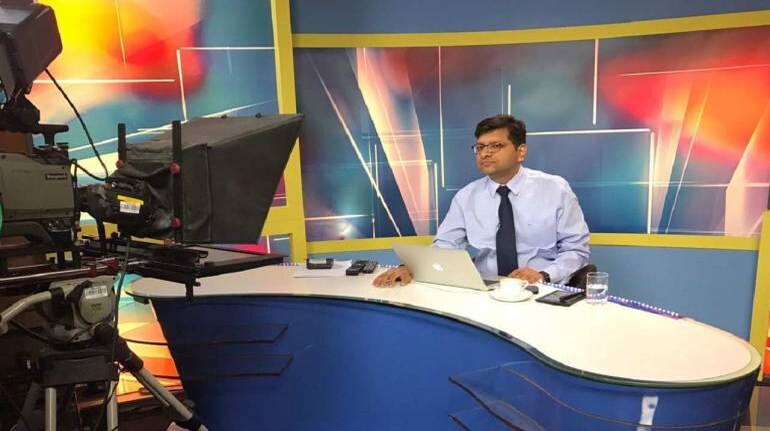
A) I have been interested in the markets ever since I can remember largely because of my mother who has been an investor for well over three decades now.
Although I started investing at an early age and had decided while I was still at school that I would grow up to be an investor like Buffett and Lynch, it was only after I finished my education that I started investing in earnest.
I caught the reading bug very early in life and am a compulsive reader. I read non-fiction mostly. History, investing, politics, evolutionary psychology are subjects I read the most.
My reading has had the biggest impact on my trading and I completely agree with Charlie Munger's view that it is impossible to find a wise man who didn't read all the time.
I think it is important not to restrict oneself to reading about markets and investing. The more eclectic one's choice of subjects the better one gets at investing.
I started my career in investing in fundamental analysis but almost always found information asymmetry a major problem with that idea. Not everyone had the same information about the company.
I quickly took to technical analysis which was coming of age globally at that time so to speak. I have been a devoted chartist ever since and have rarely strayed on the side of fundamentals in all these years.
Charts, I believe is an elegantly simple record of everything anyone knows about a stock and therefore is paramount.
A) I remember vividly the first trade I ever made. It was a few shares of Bausch and Lomb. I bought after having spent a considerable time researching the stock. I sold it off at a princely profit of Rs. 650 in less than a week and knew right then that this was my calling.
Now when I look back on my early trades I am amazed at how quickly I would book profits. I would always succumb to the lure of taking profits and exit stocks long before I should have and now would.
This is typical of amateurs, they usually find it impossible to resist profits and as a result ending up throwing away a good hand for a pittance. This is the one thing I always urge all my students and colleagues to work on, I call it "Profit Appetite".
It is only after having spent a fair deal of time learning to invest that one starts to develop the appetite for ever bigger profits and is able to reign in the instinctive pleasure one gets from booking profits soon as one sees them.
Another thing I learned to do right from the start is keeping meticulous records of all my trades including a record of what I saw on the charts that got me interested in the stock in the first place.
This is the single most important thing a trader could do to improve his trading performance.
Q) You are training a new breed of traders into D-Street. How was the experience so far? Do you think they have the patience to withstand a tsunami in case we get hit by a huge corrections something what we saw in 2008?A) I started training people in trading and charting around 2007 and have been at it ever since. I started with just one student who sought me out and pressed me to train him and have till the last count trained over 3000 students through the regular classroom programs my company Equityrush runs.
I have trained professional analysts, stock brokers, bureaucrats, housewives, pensioners, IT professionals, doctors, media persons and movie actors too! The oldest student I have trained was in his 80s and the youngest so far was 13 years old.
Being a trainer gives me a unique vantage point. It gives me a chance to meet with new entrants as well people who have suffered losses trading on their whims or their broker's advice and decide to learn to trade.
I have seen my students leave the jobs they were in to become professional and successful traders. I see students move ahead in life and earn their living through professional trading and this brings me more satisfaction than spotting a multibagger does!
Young traders are long on enthusiasm and short on patience. They do get rattled by gyrations of the markets but ones who are serious and spend time learning tend to be more objective and disciplined and weather the storms a lot better.
Teaching is a humbling experience you learn more than you teach. I feel psychology is what makes a trader and that is what we focus on in our courses. You can't get the mental toughness required reading off a book, you need to train with an experienced trader to get into the right frame of mind.
Q) What are technical strategies you use to pick stocks?A) I am a big believer in outperformance based ideas. I seek out stocks that show relative strength against a benchmark and look to buy them when the time is right. Indicators like comparative strength and comparative ROC are best suited for stock selection.
I do a basic stock screening based on how the stock is doing against the index then use a timing tool such as a resistance breakout to make an entry. I use my own proprietary selection and exit indicators.
Q) How do you form a view of the market, is it just technical analysis or do you look at the fundamentals as well?A) It is mostly rooted in technicals but I also look at global markets, currency and derivatives data to form a view. I believe it could be counterproductive to mix fundamentals with technicals and one is best off betting on one idea at one time. I give a lot of credence to basic Dow Theory methods which are simple yet immensely effective.
Q) Who is your guru in technical analysis and why?A) The first book I ever read on technical analysis was by Martin Pring and I have always found him to be the most lucid voice on the subject. Other gurus, I have learned from including Ed Seykota, Ed Thorp, Dr. Alexander Elder and Gary Antonacci.
I have learned about as much from half a dozen homegrown investors who are unsung heroes and are generally reticent. They have accumulated huge fortunes using technical analysis. I have been privileged to have learned from them first hand.
Q) Is it that hard to generate multibagger returns in stocks market using technical analysis?A) It sure is hard but is possible. Technical analysis can be used effectively to identify stocks with potential for outsized returns. I think the only dependable way to identify multibaggers has to be rooted in technical analysis.
Q) What is the size of the portfolio you are managing?A) I would rather keep that under wraps but the size has been growing each year for long as I have been in business and that is all that counts. I believe size is of little importance, it is what return you get and with what risk.
Q) Your recent multibaggers stocks? Or, you can list stocks which gave you multibagger returns in the past as well which can still deliver handsome returns in the long term?A) Some of the stocks that I bought recently that have turned out to be mutlibaggers include:
1. Venky's bought at Rs 426 trading at Rs 3600
2. IFB Industries bought in August 2014 for Rs 200 trades at Rs 1350
3. ACE bought on Deepawali last year for Rs 70 trades at Rs 185
4. Honeywell Automation bought at Rs 4200 trades at Rs 18500
5. Astral Poly bought in Rs 105 in 2013 trades at Rs 960
6. Garware wall Ropes bought at Rs 300 in 2015 trades at Rs 980
7. Edelweiss bought at Rs 94 in 2016 trades at Rs 284
Disclaimer: The views and investment tips expressed by brokerage firms on Moneycontrol.com are his own and not that of the website or its management. Moneycontrol.com advises users to check with certified experts before taking any investment decisions.

Discover the latest Business News, Sensex, and Nifty updates. Obtain Personal Finance insights, tax queries, and expert opinions on Moneycontrol or download the Moneycontrol App to stay updated!
Find the best of Al News in one place, specially curated for you every weekend.
Stay on top of the latest tech trends and biggest startup news.