






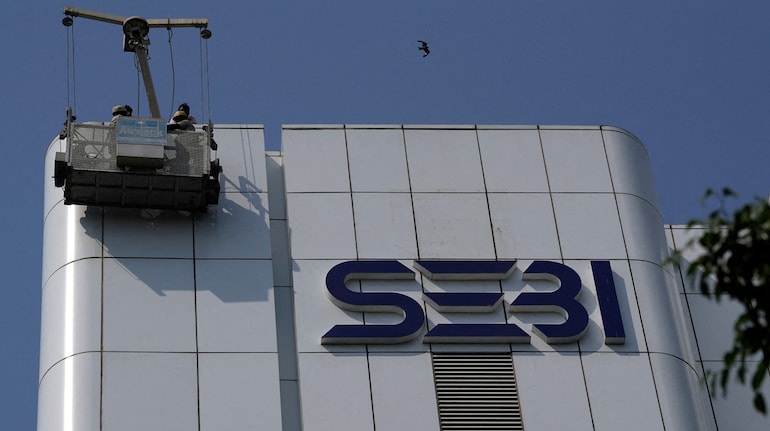
The Securities and Exchange Board of India (SEBI) on Wednesday approved a comprehensive overhaul of mutual fund regulations aimed at improving cost transparency and reducing the expense burden on investors.
The board cleared changes to the Total Expense Ratio (TER) framework, including the exclusion of statutory levies such as securities transaction tax (STT), GST, stamp duty and commodities transaction tax from TER calculations. It also approved tighter caps on brokerage and distribution commissions and allowed performance-linked expense structures for certain schemes.
SEBI board approved SEBI (Mutual Funds) Regulations, 2026, replacing the 1996 framework after a comprehensive review.
Statutory levies (STT/CTT, GST, stamp duty, SEBI and exchange fees, etc.) to be charged on actuals, over and above base expense ratio (BER).
Additional 5 bps expense allowance linked to exit loads has been removed.
Brokerage caps have been rationalised.
SEBI revised its earlier proposal to cap the brokerage that mutual funds pay, raising the limit to 6 basis points from the earlier proposed 2 bps for equity cash transactions. Presently, fund managers pay up to 12 bps as brokerage to buy and sell stocks in their portfolios. SEBI changed brokerage rates for derivative mutual fund deals from proposed 1 to 2 basis points (exclusive of levies). Currently, the rate is 5 basis points.
Total Expense Ratio (TER) to now comprise BER, brokerage, and statutory/regulatory levies.
SEBI cuts base expense ratio limit for index funds, ETFs to 0.9% from 1.0%; SEBI cuts base expense ratio for liquid-scheme based fund of funds to 0.9%; SEBI cuts base expense ratio for close-ended equity schemes to 1% vs 1.25%.
As a result of the overhaul, the regulator noted that there has also been a significant reduction in length of approximately 44%, from 162 pages to 88 pages. "The word count has been reduced by about 54%, from nearly 67,000 words in the current regulations to around 31,000 words in the new regulations. Key highlights include improved clarity on statutory levies and expense ratio limits, which are now referred to as the Base Expense Ratio," said SEBI Chairman Tuhin Kanta Pandey at a press conference.
"After the consultation paper was issued, several representations were received from various stakeholders." Taking these into account, he noted a balanced view has been adopted.
The regulator noted that the new regulatory framework aims to simplify compliance and operational requirements by rationalizing reporting, such as reducing annual trustee meetings and removing separate half-yearly portfolio disclosures, and eliminating duplicative filings under Mutual Fund Regulations. They added that it promotes digital-first disclosures, replacing physical submissions and newspaper advertisements with online monitoring and website/email communication.
The framework also streamlines borrowing, allowing equity-oriented index funds and ETFs to borrow for execution and intra-day redemption needs, while deleting redundant provisions like chapters on Real Estate and Infrastructure Mutual Funds.
"An important enhancement is the enabling of borrowing by equity-oriented index funds and equity-oriented ETFs for execution-related needs, along with clarification on the permissibility of intraday borrowing mechanisms to manage redemption-related timing mismatches. This was a key concern raised by the industry and has been appropriately addressed," said Pandey.
Explaining the rationale, SEBI's Amarjeet Singh noted that the goal is better execution and, consequently, lower tracking error.
On October 28, SEBI had released a detailed consultation paper proposing a restructuring of the mutual fund expense framework, citing concerns that the existing TER regime masked actual costs borne by investors. The paper proposed sharply lowering brokerage caps for asset management companies to 2 basis points for cash equity trades and 1 basis point for derivatives, from existing higher limits.
SEBI had also flagged that including statutory levies within TER inflated costs without reflecting fund management efficiency, and sought feedback on linking a portion of fund expenses to performance relative to benchmarks similar to AIFs.
Discover the latest Business News, Sensex, and Nifty updates. Obtain Personal Finance insights, tax queries, and expert opinions on Moneycontrol or download the Moneycontrol App to stay updated!
Find the best of Al News in one place, specially curated for you every weekend.
Stay on top of the latest tech trends and biggest startup news.




