






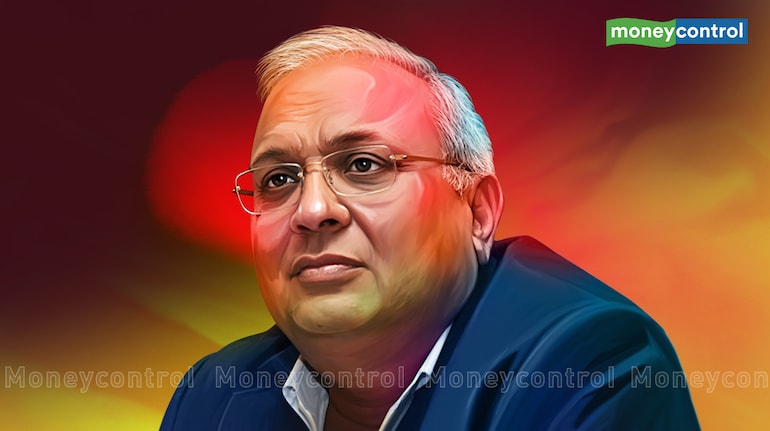

Foreign portfolio investors could sharply reduce allocations to Indian equities if the government raises capital gains tax in the upcoming Budget, Helios Capital founder Samir Arora said, warning that higher taxes combined with currency depreciation would make India uncompetitive versus global markets.
In an exclusive conversation with N Mahalakshmi, Arora said, “If capital gains tax is increased, FPIs will eventually shut shop,” Arora told Moneycontrol. “You already start with a 15 percent tax disadvantage and then add a weakening rupee. Explaining this return math to foreign investors becomes impossible.”
Arora said foreign investors pay little or no capital gains tax in developed markets, particularly the US, and raising India’s rates would widen the relative handicap. “How do you convince global investors that they should overcome higher taxes, currency depreciation, fund management fees and still generate competitive returns,” he asked.
He added that capital gains tax is applied on rupee returns, while currency depreciation erodes dollar returns later, further compressing effective gains for overseas investors. “In normal market conditions, this becomes a serious drag. Only during exceptional bull runs does this get masked,” he said.
Countering calls from parts of the financial sector to bring equity and debt taxation closer together, Arora said the comparison ignores structural differences between the two asset classes.
In debt instruments, interest paid to investors is deducted as an expense by companies, reducing their taxable income. “The borrower gets a tax benefit, while the investor pays tax. In equity, when capital gains are earned, there is no corresponding tax deduction on the other side,” he said.
Arora pointed out that equity returns are already taxed at multiple levels. “Corporate profits are taxed first. Dividends are taxed again. Then capital gains are taxed. To say equity and debt should be treated the same ignores this entire chain.”
He added that copying global taxation models selectively makes little sense. “If we want to match the US system, then we should also stop taxing foreign investors. You cannot pick one part and ignore the rest,” he said.
Arora cautioned that higher equity taxation could disrupt India’s capital formation cycle. He said public markets play a crucial role in allowing private equity investors to exit, recycling capital into new ventures and job creation.
“When public markets absorb private equity exits, ownership gradually shifts to domestic investors and institutions. That is how Indian companies become widely held,” he said. “If you weaken this cycle, capital formation slows and funding shifts back to foreign strategic ownership models.”
He dismissed criticism that private equity exits represent “easy money”. “People only see the successful exits. They don’t see the dozens of investments that go to zero. If you calculate private equity returns in rupees across full portfolios, they are closer to 15 to 18 percent, similar to public market returns,” he said.
Arora said markets have already corrected sharply, reducing the probability of further large sell-offs unless policy shocks emerge. He warned that signalling future capital gains hikes, even with delayed implementation, would be interpreted negatively.
“If the Budget says five years later equity taxes will be raised to match debt, that will be a major negative signal. It implies policymakers do not recognise the importance of equity flows,” he said.
On the positive side, Arora said progress on India’s trade agreements, including the EU deal, could support exports and help diversify foreign currency inflows beyond the US dollar. He also cited continued demand from global retailers sourcing from India despite tariff uncertainties.
Arora said sharp daily swings in the rupee were adding to negative market psychology. “Allowing the currency to move abruptly creates panic. Even if depreciation is part of policy, it should be gradual. The current pace damages investor confidence,” he said.
He added that currency weakness combined with stronger global markets has worsened India’s relative performance, amplifying sentiment pressure.
Despite near-term volatility, Arora said his firm remains focused on structural growth areas. “Our top ideas remain quick commerce and digital payments or fintech platforms. These businesses are scaling rapidly and remain well positioned,” he said.
He reiterated his cautious stance on four-wheeler auto manufacturers but said select EV and two-wheeler names remain attractive.
Watch the full interview here:
Disclaimer: The views and investment tips expressed by investment experts on Moneycontrol.com are their own and not those of the website or its management. Moneycontrol.com advises users to check with certified experts before taking any investment decisions.
Discover the latest Business News, Sensex, and Nifty updates. Obtain Personal Finance insights, tax queries, and expert opinions on Moneycontrol or download the Moneycontrol App to stay updated!
Find the best of Al News in one place, specially curated for you every weekend.
Stay on top of the latest tech trends and biggest startup news.





