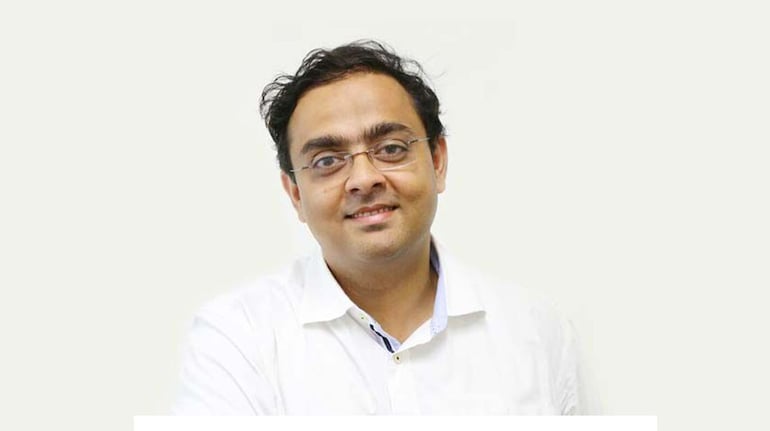
Sonal Minhas, founder at Prescient Capital, believes that this is a good time for investors to enter Indian equities as he sees mid teen returns for CY26.
According to him, Q3 and Q4 earnings growth will be better than Q2 growth and the overall earnings growth for FY26 for the companies could be in the range of 12-15%.
The sectors that had dampened the earnings growth for the previous 6 quarters namely IT, banking and consumption have demonstrated better numbers than Q2 FY26 and have a strong growth/revival outlook for the balance of the year, he believes.
After six quarters of poor earnings growth, do you expect earnings to grow 18–20 percent in 2026?
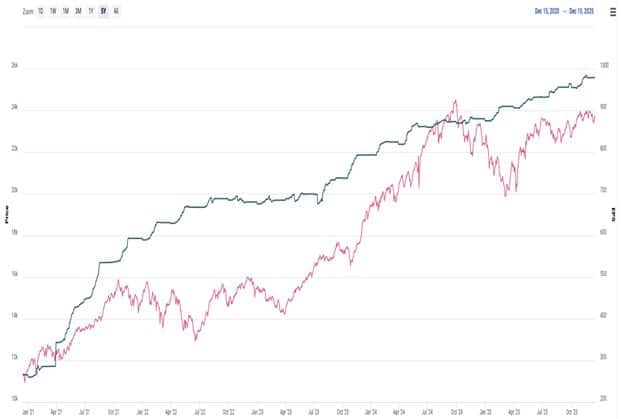
If you refer to the 5-year chart below, breakout moments in Nifty 500 earnings growth happened from April 2021-22 and then from June 2023-24. The subsequent rally in the markets is a derivative of this earnings growth. If we now see the period from April 2024-25, the earnings growth for Nifty 500 companies hasn’t been material. This led to time and absolute correction in the markets. The period post June 2025-till now has shown signs of an earnings revival. The median earnings growth of Nifty 500 companies was at 12.2% for Q2 FY 26. This was higher than the Q1 growth for the same set of companies.
We believe that Q3 and Q4 earnings growth will be better than Q2 growth and the overall earnings growth for FY26 for the companies could be in the range of 12-15%. The sectors that had dampened the earnings growth for the previous 6 quarters namely IT, Banking and Consumption have demonstrated better numbers than Q2 FY26 and have a strong growth/revival outlook for the balance of the year.
The markets, however, have remained range-bound due to macro economic events like tariff wars and Operation Sindoor. We believe that this is a good time for investors to enter Indian equities as we see mid teen returns for CY26.
If yes, which sectors are likely to drive the earnings recovery next year?
The following sectors have a strong earnings growth outlook per us:
Auto & auto ancillaries
Autos is one sector that will do very well in the coming year. The GST rate cuts have boosted growth for the Indian auto industry. More importantly, several auto ancillaries should grow much faster than underlying auto industry growth due to: a.) premiumization of vehicles increasing content per vehicle (CPV). b.) several ancillaries pursuing substitution of imported components from China and other countries, especially in the EV space.
Chemicals
We believe that the chemicals space has good prospects. Many chemicals like agrochemical intermediates, dyes & pigments, performance chemicals, etc have faced tremendous pricing pressures over the last 4-5 years due to incessant dumping by Chinese players both in India and international markets. Now there are signs of cyclical turnaround with demand revival and chemical prices bottoming out.
Banking
For the last 18 months, we saw the shortage of retail savings/deposits curb the lending growth of Banks/NBFCs. Additionally, RBI deliberately curbed the hyper growth in personal and micro credit to prevent a bad credit cycle. These two drivers slowed down the pace of lending and also impacted returns in the capital market returns of Banks/NBFCs.
We believe that the worst is behind us. A 75 bps repo rate cut and a benign inflation estimate of 2-2.5%, makes the base case for a prolonged benign lending rate cycle. We believe that high quality banks/NBFCs with MSME, personal and corporate credit exposure should grow well from hereon.
Are EMS companies attractively valued now after the recent correction?
EMS companies are down by 30-50% from their 52-week high while their TTM (trailing twelve months) sales have grown at >30%. Despite this high sales growth the equity returns of EMS companies have been negative due to multiple factors.
First and foremost, very few EMS companies are capital efficient i.e. their return on equity is below 15%. Markets were valuing these businesses on their topline growth only and had turned a blind eye to the capital efficiency of these businesses. As a result, when growth started tapering, it was difficult to justify expensive valuations of these low-quality companies.
Secondly, EMS companies to chase growth had/have entered lower margins segments, whose return profile is not that attractive. This has again led to a reckoning that one can’t value a business based only on sales tailwind. We have looked at the EMS space and find it expensive in terms of valuation.
Which three sectors are expected to perform strongly next year and should be included in a portfolio?
In addition to the 3 sectors mentioned above, we think the below three sectors should be included in the portfolio:
Power Equipment
A niche industry we like is power equipment, especially power transmission. There are several small cap companies in the power transmission and generation space that are witnessing multi-year tailwinds due to huge transmission capex as well as data center build up in domestic as well as international markets.
Several small cap companies in sectors like transformers, wires & cables, generators, transmission EPC, etc with all-time high order books and strong growth prospects are available at attractive valuations.
Logistics
We believe that logistics is a good sector for investment for the next 2 years. The whole logistics sector is coming out of a cyclical slowdown, which was caused by a slowdown in e-commerce and auto demand. Listed logistics companies had corrected by 20-40% from their peak valuations. In the last 1 year, the 3 e-commerce logistics players have seen consolidation/M&A and as a result irrational pricing and competition for market share has also stopped.
This has improved the unit economics of e-commerce logistics companies. On the side, a cut in GST rates has provided a fillip to the demand for auto, a large end user of logistics. We believe good growth in demand for 2W/4W will also lead to a good demand visibility for their logistics partners.
Microfinance
The MFI industry is coming out of a cyclical downturn caused by lenient lending norms post COVID. These relaxed norms led to excessive leverage for the same set of target customers. These customers borrowed at high interest rates from 4-6 lenders without having the cash flows for repayment. As a result, they rotated loans from one lending to the other.
Around September 2024, RBI and MFIN (the self-regulatory industry body) refined guidelines for tightening MFI lending to customers and capped the total amount and the number of borrowers a customer could borrow from. This deteriorated the asset quality of loans in the short term, and the Microfinance stocks saw a correction of ~33-50% from their peak.
The best in class lenders have tightened their lending processes since September 2024 and are back to demonstrating growth in their loan book. It is expected that MFI companies and their stocks will demonstrate good growth in H2 FY 26.
Do you think India is likely to see a boom in discretionary consumption from next year onward?
Discretionary consumption in pockets has shown green shoots of revival in growth in Q2 FY 26. Paints companies have shown a demand rival and have indicated a good outlook for balance of the year. Wellness products too have shown a decent demand.
Labour and logistics stoppages around Operation Sindoor during Q1 and the revised GST rollout in Q2, however dampened the demand for a lot of discretionary categories in H1 FY 26. We believe that the impact of savings from higher tax slabs, lower GST rates and lower lending rates will start trickling down to demand by Q4 FY 26.
Do you think the trade deal and the lack of an AI theme are the two major reasons for the continuation of FII outflows?
Yes. AI driven growth in earnings has fuelled a rally in capital markets in USA, China, Korea. India on the other hand, was expensive in valuation and saw a flat earnings growth for a prolonged 15-18-month period. This and monetary tightening by RBI led to one of the largest FII outflows in the recent history of markets in India. So far FIIs have sold ~$18.5 billion in 2025.
Disclaimer: The views and investment tips expressed by investment experts on Moneycontrol.com are their own and not those of the website or its management. Moneycontrol.com advises users to check with certified experts before taking any investment decisions.Discover the latest Business News, Sensex, and Nifty updates. Obtain Personal Finance insights, tax queries, and expert opinions on Moneycontrol or download the Moneycontrol App to stay updated!
Find the best of Al News in one place, specially curated for you every weekend.
Stay on top of the latest tech trends and biggest startup news.