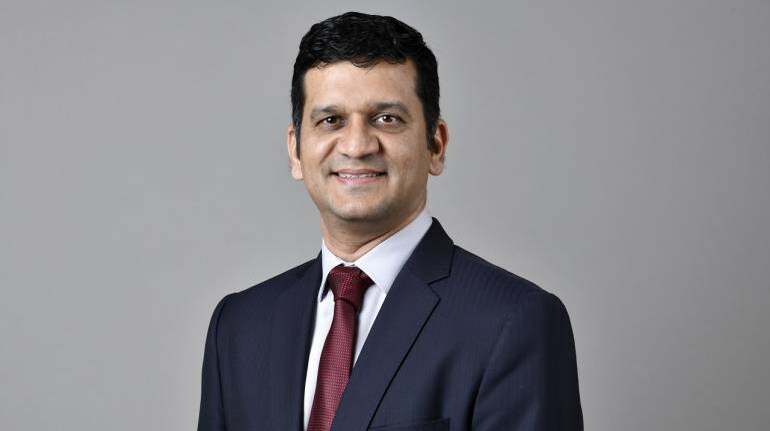
"The only known unknown which has still not deteriorated is the unemployment data in the US -- if that deteriorates, then the recessionary pressures expressed in words can be seen at the ground level leading to further correction in the market," Sushant Bhansali, CEO at Ambit Asset Management, said in an interview to Moneycontrol.
On the auto space, he said: "The chips shortage issue has normalised leading to better visibility for companies in terms of production and more launches giving us confidence that the fundamentals of auto are quite strong and there are more tailwinds than headwinds for the sector currently." Edited excerpts:
Most experts say there could be another 10 odd percent correction in coming months. Are you in the same camp and what could be major reasons behind it?The intensity of volatility has reduced as compared to the previous six months; the only known unknown which has still not deteriorated is the unemployment data in the US -- if that deteriorates, then the recessionary pressures expressed in words can be seen at the ground level leading to further correction in the market. The Indian markets are below the long period average at 18.5x which gives enough confidence from the valuations point of view.
Domestic flows have been strong and hence the liquidity risk seems to be not too high. However, the one year market returns are marginal, and if the FPI (foreign portfolio investor) selling continues, we will witness them being negative in a few weeks. This might slow down domestic flows and create some liquidity squeeze in equity markets as debt returns are becoming attractive as well. The liquidity squeeze should ideally not impact largecaps to a great extent from these levels but midcaps and especially smallcaps might witness more correction.
Upside risk to the above is positive announcements on the geopolitical tensions as well as easing of supply chain disruptions in China. Commodity prices have already softened to a large extent and thus positive sentiments on these two factors combined with compelling valuations might turn FPI flows into a positive trajectory.
Oil prices corrected sharply in recent days despite ongoing geopolitical tensions. Is the possibility of a recession in the US causing this correction or is it just a temporary correction phase?Oil prices soared in 2021 reflecting demand uptrend in the US and rest of the world. Since geopolitical tensions escalated, the oil prices spiked (as they have reacted historically to such events). With the inflation trajectory at a multi-decade high, central banks globally are leaving no stone unturned to cool down the necessitating recession fears, especially in developed markets.
Until and unless the supply side of the oil is not fixed either in terms of upliftment of sanctions or increase in output from OPEC, the demand-supply mismatch will continue and the Brent crude oil will continue to be volatile. The bigger worry is on natural gas compared to oil as Europe is more dependent on gas than Russia. Against this backdrop, we can expect higher capex globally in the long term once the geopolitical situations such as sanctions on Russia remain structural.
The recent softening in oil prices is more on account of recessionary fears in line with several other commodities which have seen much higher drawdowns from recent peaks. As we approach winter when the demand for oil naturally increases, we might see an upsurge in oil prices again if geopolitical tensions do not ease out.
The upgrade or downgrade shall be more narrative-driven as the market has initially factored in the upgrades and downgrades which can be commensurate to the overall valuation of the market. The domestic theme shall witness lower volatility compared to exports which have many factors such as global growth, inflation, and currency.
At this point in time, earnings downgrade possibility is high for IT (information technology), oil & gas, and metals & mining sectors. We might witness earnings upgrades in BFSI (banking, financial services and insurance) and auto sectors. Much of this has been factored in but actual downgrades or upgrade after results will further aggravate market movement in sectors with above-normal earnings changes.
From October, the base effect for inflation will start kicking in -- companies can surprise by margin expansion in the second half of FY23 compared to margin contraction as inflation cools down despite price hikes undertaken in the last 12 months. CPI (consumer price index) inflation constitutes 45-50 percent of the food basket and only 10 percent is imported inflation which insulates India from rising CPI Inflation whereas the global commodity meltdown will cool WPI (wholesale price index) inflation in a sharper manner leading to rising profitability for companies.
The biggest gainer in the last three and a half months is the auto space. Is the rally coming to an end in the space?We believe auto is a cyclical sector which has three to four years of upcycle and down cycle based on history; in fact, auto upcycle has started from FY23 and shall last for at least next two years. Replacement demand in the commercial vehicle (CV) space is at its highest in 10 years leading to higher new CV demand.
The chips shortage issue has normalised leading to better visibility for companies in terms of production and more launches giving us confidence that the fundamentals of auto are quite strong and there are more tailwinds than headwinds for the sector currently.
While the sector indices are back to the previous peak, sales velocity is not yet there and will take some time to reach the previous peak and hopefully will go beyond it as well.
Do you think the IT space has priced in all negative news and is ready for an upmove?Recession fears in developed markets should keep demand uptrend in check in the second half of 2022-23 and first half of 2023-24. This should, however, result in attrition rates easing out, resulting in improving margins in those quarters. Valuations have become reasonable from a long-term view in light of the structural demand for digitisation.
Given less impact of war on Russia and good relations with India, do you think Indian companies have a great opportunity to establish their presence in the world's second largest oil exporter?There is definitely an opportunity for Indian companies to expand their presence but it takes a long time in doing so. Hopefully, we will witness increased trading activity with Russia including attracting more Russian companies to invest in India.
We have recently seen India benefiting from the crude oil Urals imported at 25-30 percent discount to the Brent crude oil which shall incrementally improve the trade deficit; same can be expected for other base commodities and natural gas. Also, Indian companies can further increase their base in Russia in the healthcare sector.
Disclaimer: The views and investment tips expressed by investment experts on Moneycontrol.com are their own and not those of the website or its management. Moneycontrol.com advises users to check with certified experts before taking any investment decisions.Discover the latest Business News, Sensex, and Nifty updates. Obtain Personal Finance insights, tax queries, and expert opinions on Moneycontrol or download the Moneycontrol App to stay updated!
Find the best of Al News in one place, specially curated for you every weekend.
Stay on top of the latest tech trends and biggest startup news.