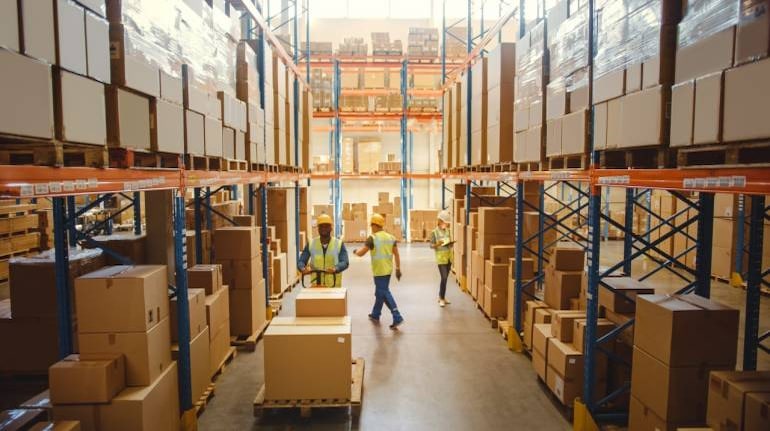
The logistics sector has been one of the fastest-growing segments of the Indian economy in recent years. The sector has expanded at a 15 percent compound annual growth rate (CAGR) in revenue in the past five years and is likely to grow at an even faster pace in the next five.
A rapid increase in the dependence of Indian customers on e-commerce, coupled with the growth of Small and Medium Enterprises (SMEs) and Business-to-Business (B2B) segments and a government push to increase exports is expected to drive future growth of the logistics segment.
The Centre has been keen on improving the efficiency of the logistics industry in India and launched a National Logistics Policy to reduce the cost of logistics.
While the government has been proactively working to extend support to businesses, there is a need for more such initiatives. With the Budget around the corner, the industry is looking at the government to announce measures to fuel its growth.
Some of the measures industry is looking for include:
Faster execution of infrastructure projectsThe industry wants the budget to announce measures to improve the execution of infrastructure projects like logistic parks, Dedicated Freight Corridors (DFCs) and cold storages.
"To enhance India's competitiveness, the budget needs to focus on dedicated freight corridors across the country and incentivise DFCs to decongest roadways to reduce logistics costs and make it more efficient," said Deepal Shah, Deputy Group Chief Financial Officer of Allcargo Group.
The industry has asked the government to consider provisions to create dedicated zones for logistic parks with adequate infrastructure and connectivity in districts across the country.
"A focus on the development of infrastructure through dedicated allocation to the logistics sector will allow for more investments in this sector," said Pranav Goel, CEO and co-founder of logistics company Porter.
Industry participants have also asked the government for capital subsidies for logistics companies for constructing warehouses in small towns.
The cold storage industry relies heavily on imported equipment. A reduction in import duties and the government's attempt to encourage cost-effective Indian-made equipment would provide a twofold boost to the sector, the industry said.
Execution of the National Logistics PolicyWhile the industry has praised the National Logistics Policy (NLP), it also expects the government to double down on the execution of measures suggested by the policy.
"The budget should fund multiple interventions across the logistics ecosystem under the National Logistics Policy so that its impact will show over the next 12 to 18 months," Shah said.
Yash Jain, co-founder of shipping platform NimbusPost, said the budget should emphasize the creation of standards of physical assets and benchmarks for service standards to fast-track execution of the NLP.
Mohammad Imthiaz, CEO and co-founder of truck freight marketplace RAAHO, said the government should focus on aligning stakeholders like state governments and to execute the roadmap shown under the NLP in a time-bound manner.
"Budget outlay is important to kick-start the project and ensure it moves at the desired pace," said Anshuman Singh, chairman and managing director of Stellar Value Chain.
Faster development of Unified Logistics InterfaceLogistics companies are looking forward to take advantage of a Unified Logistics Interface Platform (ULIP) and have asked the government to expedite the development and integration of ULIP, which was announced under the National Logistics Policy.
"There is also a need for transparency and visibility, which would be achieved as the Unified Logistics Platform gets integrated into the system," Imthiaz said.
He added that building an open source system as a common interface will help develop the platform in a timely manner.
The integration of ULIP will promote collaboration between organised and unorganized players in the industry and will also reduce the time taken to get travel permits and custom clearances thereby improving efficiency.
Electric Vehicles for cargo transportConcessions for installation of EV infrastructure such as charging stations can speed up the use of electric vehicles for commercial purposes, resolving last-mile delivery problems.
"As we move towards an electric future with the transition to electric vehicles, the government can consider allowing subsidies on the sale of electric vehicles. This will allow for various small logistics-based startup companies to procure such electric vehicles and make the transition faster," Goel said.
Discover the latest Business News, Sensex, and Nifty updates. Obtain Personal Finance insights, tax queries, and expert opinions on Moneycontrol or download the Moneycontrol App to stay updated!
Find the best of Al News in one place, specially curated for you every weekend.
Stay on top of the latest tech trends and biggest startup news.