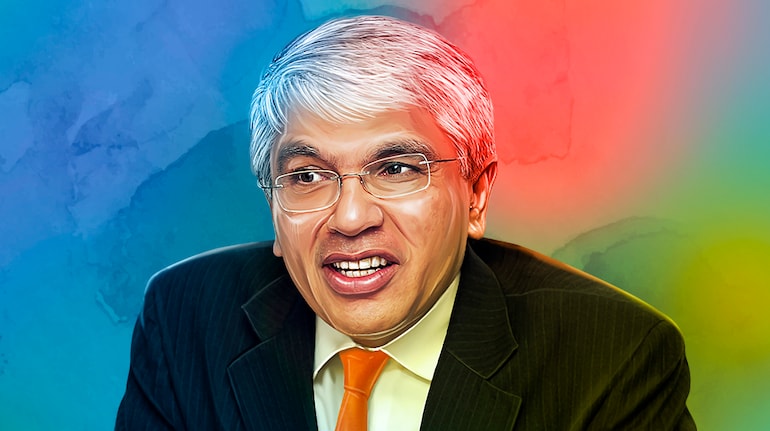
Manish Sabharwal, chairman and co-founder of TeamLease Services, told Moneycontrol’s Shweta Punj that India’s reform push in 2025 will matter only if states follow through in 2026, especially on decriminalisation and deregulation, which he said could lift India’s long-term growth trajectory. On the IndiGo disruption earlier this month, Sabharwal argued that the government remains a central part of the entrepreneurial ecosystem and said the airline had sufficient time to shift to the new pilot duty regulations.
IndiGo, India’s largest airline, faced a significant operational breakdown in early December, triggering thousands of flight cancellations and leaving about 11 lakh passengers stranded.
“I think that a well-ordered, well-functioning, well-regulated market is key to job creation, wealth creation and scaling of companies,” he said. Edited excerpts.
You can watch the full interview here
Q. What’s your view of the reforms we saw in 2025, and what does 2026 look like?Manish Sabharwal: Daniel Kahneman once said that when you want to go faster, people usually jam the accelerator, but sometimes you get better results by lifting your foot off the brake. That’s directly relevant to India. Our binding constraint today is regulatory cholesterol.
When you shift from the bird’s-eye view of the economy, fiscal and monetary policy, to the worm’s-eye view of employers’ daily life, you see different outcomes and different reforms. Fiscal policy matters, but if fiscal deficits made countries rich, nobody would bother being poor. Monetary policy is also oversold in its ability to drive productivity or fix India’s big structural challenge: the transition from farm to non-farm work.
The most embarrassing number about India is that 35 years after reforms, 42% of our labour force is still on farms. The reforms we’ve seen, GST, labour codes, the Jan Vishwas Siddhant, are the beginning of acknowledging that the 1991 reforms were important but incomplete. China and India had the same per capita GDP in 1991; China is now five times ahead.
Deregulation, decriminalisation, and digitisation didn’t get enough attention. There’s an absurd use of jail as a tool of enforcement. At the start of 2025, employers faced around 26,000 ways to go to jail. With labour code changes and Jan Vishwas principles, that should fall by 70–75% by mid-next year.
The deregulation principles also matter: you don’t need licences outside four areas, national security, environment, harm to others, and public harm. Registration can be perpetual. Inspections should be risk-based and random; otherwise, they get misused.
This isn’t about “Purn Swaraj” for employers, no regulation isn’t the answer. If no regulation was best, Pakistan would be a venture capital hub. We need a middle path: distrust versus trust of entrepreneurs, regulation versus supervision, criminal provisions versus civil provisions.
Government spending has risen 108 times since 1990, but per capita GDP has risen only eight times. You can’t spend your way out of poverty, though you can and should use spending to protect the most vulnerable.
So yes, 2025 was a good year for reform. If state governments and ministries adopt decriminalisation and deregulation more aggressively in 2026, you could see a structural shift in growth, formalisation, and, most importantly , the farm-to-non-farm transition. The only way to help farmers is to have fewer farmers, which means non-farm job creation. It’s not fixing farms; it’s fixing factories. Why is India’s largest factory only 45,000 employees, while China’s largest is 650,000? The reason isn’t infrastructure, finance, or skills anymore. Those have moved from a dagger in the heart to a thorn in the flesh. The dagger is regulatory cholesterol.
Q: Labour codes consolidate 29 laws into four codes. How do you assess state-wise implementation? What will it take for businesses to implement these reforms?Manish Sabharwal: The most important part of the labour codes is the power given to states. India can’t be run from Delhi. There’s no such thing as “Karnataka’s labour market.” Bengaluru’s labour market differs from Mysuru, which differs from Bidar.
The labour codes devolve power to state governments. I hear Uttar Pradesh is considering raising the Industrial Disputes Act threshold from 300 to many thousands; Maharashtra may be considering something similar. Kerala has said it won’t change anything, that’s their call.
But many states will see this as a chance to create a fertile habitat for formal job creation. Power in government is funds, functions, and functionaries, and the labour codes hand back many functions to states.
Yes, there will be some transition costs for some employers, but many won’t feel them, many already built gratuity into cost-to-company. The ministry has received a lot of feedback on benefit calculations, so we’ll see how rules are finally framed. Overall, states will implement labour codes very differently, and that’s what was needed for a long time.
Q: The recent tragedy in Goa, the Luthra case. Does it highlight systemic issues? What lessons should India take, beyond criminal negligence?Manish Sabharwal: The Indian state needs to do less so it can do more. Corruption is the transmission loss between how the law is written, interpreted, practised, and enforced.
Every tragedy exposes that laws aren’t protecting the people who need protection, because the state lacks enforcement capacity. For example, we have one weights-and-measures inspector for 3.4 lakh instruments. One person can’t inspect that many, corruption becomes inevitable.
We need to reimagine which laws are non-negotiable, how they’re supervised, and how they’re written. The difference between fundamental rights and directive principles wasn’t lack of ambition, it was enforceability. Fundamental rights are guaranteed and justiciable; directive principles are societal goals we may not have the capacity to enforce.
We have too many laws, so we don’t enforce the important ones. These incidents remind us we waste time on laws that don’t matter and neglect the ones that do. If you do less, you can do more.
Q: You wrote about Jan Vishwas Siddhant, trust-based deregulation, moving from “Ijazat” (permission) to “Koshish” (trying). How do we change distrust between government and business?Manish Sabharwal: Corporate India does need to win trust. But newer companies are being disciplined by markets, customers punish bad behaviour, investors punish weak governance, and talent avoids companies that don’t take the long view.
There are only two premiums in India’s stock market: growth and governance. If you don’t deliver both, you don’t do well. There’s a self-correcting quality in the labour market too, young people don’t want to work for companies that don’t treat employees well or don’t grow.
The third leg of correction must be regulation. We should punish wrongdoing, but drunk driving isn’t an argument against cars. You don’t ban cars; you make driving safer. We also need to distinguish fraud, incompetence, bad luck, bad judgment, and stupidity.
Jan Vishwas Siddhant articulates a clear approach: licences aren’t required outside certain areas; what you need is perpetual registration. You don’t need 23 different government numbers; you need one. If we can give Aadhaar to 1.4 billion people, why can’t there be a single place where all rules and regulations live? Today, there’s no single source of truth.
Big employers navigate regulatory cholesterol more easily than small employers. If you care about small employers, trust-based regulation matters most. It’s counter-intuitive, but for big firms regulatory cholesterol is a thorn in the flesh; for small firms it’s a dagger in the heart.
Q: Going forward, what reform areas should we watch? Will we see easing up and a change in government attitude?Manish Sabharwal: The problem isn’t the top; it’s the lower levels — the 25 million civil servants. We focus on 6,700 officers, but the system runs on millions. The attitude of “prohibited till permitted,” of enforcing the unenforceable, is the real issue.
This is a change process and will take time. But the tone from the top has clearly changed — I’d challenge anyone who says the reforms of the last 12 months didn’t come from that. Politics and economics are a dance — we live in a society, not just an economy.
In a democracy, political tone shapes policy. There used to be distrust of entrepreneurs, but 65% of India is under 35. Trade unions tried to disrupt after labour courts were notified, but young people aren’t invested in that geriatric war. Aspirational India sees entrepreneurs, startups, unicorns as role models — not targets.
The prime minister’s messaging — the “reform express,” long-term ambition — matters. Deregulation, decriminalisation, and digitisation wouldn’t move without continuous push from the top. The question is: how long does that tone take to reach the hands and legs people deal with daily?
Q: How do you see the IndiGo crisis? Is it regulation, governance, compliance — what’s your view?Manish Sabharwal: There’s a lot of introspection needed. In this case, there was enough regulatory time given for transition. Let’s see what the post-mortem finds — what external and internal events led to the crisis.
More broadly, airline and network businesses can see small disruptions cascade into large failures. It’s early to conclude. But one Jan Vishwas principle is clear: people need time to adjust to new regulations, and consultation should happen before changes.
The government is a crucial part of the entrepreneurial ecosystem. Entrepreneurs who think “Purn Swaraj” from regulation would be heaven are wrong. A well-ordered, well-functioning, well-regulated market is essential for job creation, wealth creation, and scaling companies.
The government has an execution deficit, the private sector has a trust deficit, and non-profits have a scale deficit. India needs better teamwork among all three to deliver mass prosperity in a mass democracy.
Q: You’ve argued civil service reform is the “meta reform” ignored since 1991 — a steel cage, not a steel frame. What actionable steps should politics take in 2026?Manish Sabharwal: Structures matter. Uttar Pradesh has 98 additional DGs now. When my father was a police officer, there was one IG. The pyramid has become a cylinder — maybe even a cone — while corporate India is moving toward Eiffel Towers. Government may need to remain a pyramid, but it can’t be a cylinder.
We need performance management. Not everyone in the services should automatically rise to the top. We must differentiate good performers from bad. Today, 98–99% of central services get “outstanding” ratings — that’s not fair. If you treat an ass and a horse equally, the ass celebrates and the horse gets frustrated.
We need a radical HR overhaul: promotions, postings, and transfers linked to performance; a reimagined training regime; lateral entry for specialist roles; and internal specialisation after five or ten years.
Business has changed dramatically since 1991. Politics has changed in the last 15 years. The civil service HR regime hasn’t changed in 25–50 years. Even good civil servants are frustrated. It’s time to put civil service reform on the agenda — you can’t treat ass and horse equally.
Q: If you were advising the finance minister on three non-negotiables for Budget 2026–27 to sustain high growth, what would they be?Manish Sabharwal: First, continue reforms that improve the daily life of employers — the worm’s-eye view.
Second, maintain macroeconomic stability. It’s hard-earned and foundational. Keep the fiscal deficit under control. Prioritise capex over revenue spending.
Third, invest more in human capital — skills, schools, higher education. It’s the only renewable energy a country has. In a world where the old geopolitical order is breaking down, as the Buddha said, Atma Deepo Bhava — you have to be your own light. This isn’t just about money; it’s also about deregulating and rethinking higher education and skills.
So: macro stability, human capital, and staying the course on deregulation, decriminalisation, and digitisation.
Q: Three things you’re optimistic about for 2026?Manish Sabharwal: More deregulation; “China factory refugees” and global manufacturing recognising India as a manufacturing hub; and continued macroeconomic stability.

Discover the latest Business News, Sensex, and Nifty updates. Obtain Personal Finance insights, tax queries, and expert opinions on Moneycontrol or download the Moneycontrol App to stay updated!
Find the best of Al News in one place, specially curated for you every weekend.
Stay on top of the latest tech trends and biggest startup news.