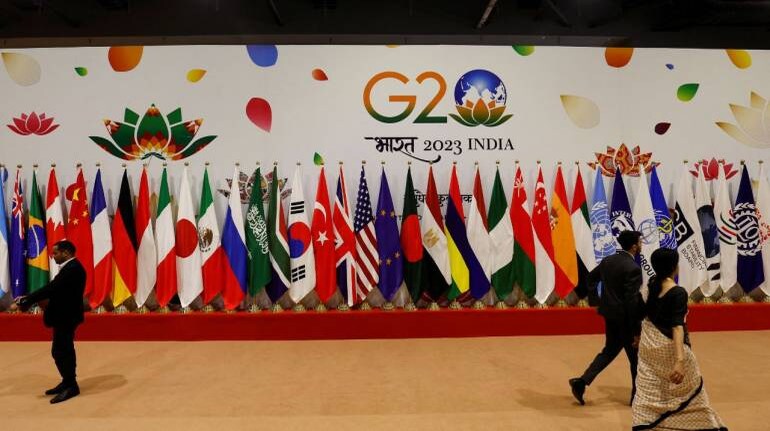
The G20 Summit Declaration, held under the theme ‘Vasudhaiva Kutumbakam’ called for the adoption of various measures to reduce the impact of natural disasters on cities of tomorrow.
The G20 Disaster Risk Reduction Working Group (DRRWG), under the Indian Presidency, included five priority areas that need to be addressed as part of the G20 Summit Declaration.
These five priority areas include global coverage of early warning systems, disaster, climate-resilient infrastructure, financing framework for disaster risk reduction, disaster response system and the ecosystem-based approach to reduce the risks caused by natural disasters.
Under the G20 New Delhi Leaders’ Declaration, countries have been asked to mobilise finances and the efficient use of existing resources to make the cities of tomorrow inclusive, resilient and sustainable.
Although the ‘Principles for Financing Cities of Tomorrow’ are voluntary and non-binding in nature, they provide a financing strategy as well as present a compendium of innovative urban planning and financing models as enunciated in the G20-OECD (Organisation for Economic Co-operation and Development) report on the subject.
“The key concerns of low-income countries and emerging markets have always been about mobilising resources for financing sustainable, resilient and inclusive cities of tomorrow," Finance Minister Nirmala Sitharaman said while presenting the G20 New Delhi Leaders’ Declaration.
She added that the G20 principles which are assured for financing cities of tomorrow to promote effective and efficient use of financial resources to support urban development that is socially inclusive, environmentally responsible and economically sustainable are now all under the frameworks of the principles that have been used to make the G20 New Delhi Leaders’ Declaration.
"We encourage stakeholders, including the Development Financial Institutions and the MDBs (Multilateral Development Banks), to explore the potential of drawing upon these principles in their planning and financing of urban infrastructure wherever applicable and share experiences from early pilot cases," the G20 New Delhi Leaders’ Declaration document read.
Similarly, the document reaffirmed the Sendai Framework for Disaster Risk Reduction and said that there is a need to accelerate its full implementation.
The document urged for accelerating progress of early warning disaster management technology and the need for early action through strengthening national and local capacities.
Furthermore, it called for the development of innovative financing tools, private-sector investment and knowledge-sharing in the field of disaster prevention and management.
The DRRWG was newly launched under India's presidency in December 2022 and it is India’s legacy to the G20. The DRRWG met three times in 2023 before accepting the relevant action points.
Brazil will take forward the DRRWG when they take the presidency of the G20 in December 2023, the release said.
The consensus among countries reaffirms their commitment to the Sendai Framework for Disaster Risk Reduction 2015-2020 to prevent new and reduce existing disaster risks.
The members agreed on accelerating their efforts to enhance universal coverage of multi-hazard early warning systems and transforming them into early action.
They will also foster collaborations between different stakeholders to build capacities for support anticipatory action and promote pre-arranged financing so that early action saves lives and livelihoods.
The members also emphasised the need for investments in disaster and climate-resilient infrastructure with a focus on G20 principles for quality infrastructure investment.
They recognised the need to strengthen public-private partnerships, blended finance mechanisms, and governance systems for resilient and interconnected infrastructure projects. The members have made voluntary contributions to a compendium of good practices on disaster-resilient infrastructure in the spirit of collaboration and sharing of knowledge and expertise on infrastructure resilience among different stakeholders.
G20 stressed the urgent need to increase financing for DRR and for better integration of DRR into public and private sector investment decisions.
The G20 members agreed to strengthen existing comprehensive national financing strategies for DRR that strengthen synergies between disaster risk financing and DRR financing in a risk-layered approach. They also agreed to develop and promote the use of assessment tools to analyse and quantify the economic impact of disasters.
Further, the countries aim to strengthen national and global disaster preparedness, recovery, rehabilitation and reconstruction systems and learn lessons from past disasters. On the last priority, the members accentuated the need for the effective application of nature-based solutions and ecosystem-based approaches for DRR.
Discover the latest Business News, Sensex, and Nifty updates. Obtain Personal Finance insights, tax queries, and expert opinions on Moneycontrol or download the Moneycontrol App to stay updated!
Find the best of Al News in one place, specially curated for you every weekend.
Stay on top of the latest tech trends and biggest startup news.