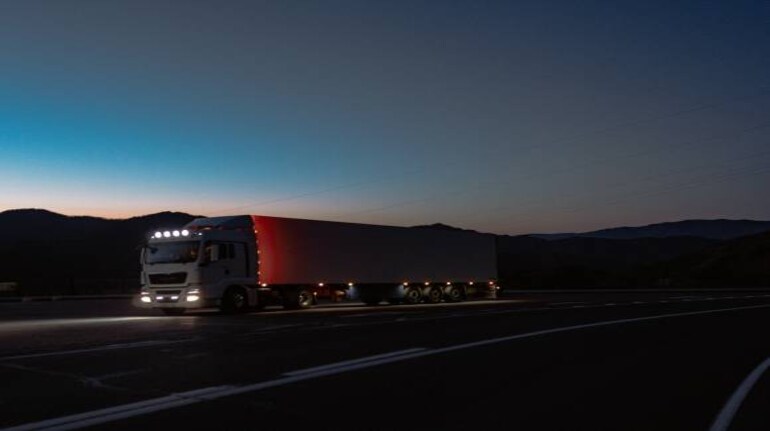
Commercial vehicles (CVs) may see an uptick in sales in February, with buyers trying to avoid the price hike that may come post-April when the new emission norms are in place.
From April 2023, the real driving emission (RDE) norms will be in place and this is likely to raise vehicle prices by 3.4 percent, according to a Nomura report on February sales estimates. The brokerage noted pre-buying in this auto category.
The RDE norms will be part of Phase II of the BS-6 emission norms and will require diesel-powered vehicles to have a pricier emission control mechanism called the Selective Catalytic Reactor (SCR) system, and a device to track real-time emissions of such vehicles. Both of these devices will add to the cost of a vehicle.
Also read: India outpaces Japan as world's third-largest auto market
The medium and heavy commercial vehicle registrations for February reached 31,100 units, which is a 27 percent rise on a YoY basis. According to Nomura, Ashok Leyland is poised to gain market share with volumes going up by 34 percent YoY.
While Jefferies’ analysts see volumes in this segment going up by nearly the same measure — by 22 percent YoY — their report shows the growth in the segment to be at 8 percent below the pre-pandemic year (2019) sales.
LKP Securities’ dealer check showed that commercial vehicles (CVs) indicated a “revival” in the category, though there were tailwinds as well.
“CVs are the bright spot with huge demand and revival of the industry but it is plagued by heavy discounting, which is not helping the bottom line although it is bolstering the topline. There is a very stifling competition to win market share among the top two OEMs,” said the brokerage’s report.
The auto segment, which is signalling the healthiest demand is the passenger vehicle (PV) category.
Is PV demand slowing down?According to LKP’s dealer check, PVs are the best placed demand-wise, followed by CVs and then tractors and two-wheelers. Vehicle registrations for this category were at 2,72,000 units in February, which is a growth of 10 percent, and Nomura estimates the wholesale volumes to be 3,33,000 units.
The brokerage’s analysis of February PV volume estimates pointed to a few trends, among them a slowing down of growth.
“In general, there has been a reduction in the waiting period of key models that we track across all OEMs… suggesting slower demand outlook. Luxury car sales also declined 20 percent YoY, suggesting signs of a slowdown. The newly launched Thar 4x2 priced lower than Thar 4x4, has seen strong demand pull and also some downtrading from Thar 4x4,” noted the analysts.
Price hikes taken by OEMs for diesel cars were also lower than expected, according to analysts. They don’t see that changing even post April 2023, following the implementation of the new RDE norms, with the manufacturers afraid to hurt an already weakening demand. “In fact, OEMs may need to step up A&P spends, in our view, as the industry inventory is normalising (2.5 to 3 weeks now),” they wrote.
Analysts at LKP said the demand remains strong (for PVs) but production constraints still remain in certain categories, such as the automatic version and higher variants of SUVs.
Two-wheeler estimates tepidIn the two-wheeler category, registrations have been around 12,50,000 units translating into about 14 percent YoY growth. The increase is better than 10 percent growth in January but would still be below the pre-pandemic volumes by 9 percent.
LKP Securities’ dealer check also suggested a weakness in two-wheeler sales except for the EVs.
This weakness may continue if rural incomes are impacted by poor monsoons, according to Nomura.
A poor monsoon season from the El Nino effect may also affect tractor and entry-level car numbers.
This could mean bad news for Maruti Suzuki, which seems to be regaining some lost ground in PVs. The February estimates show the market share for the auto major at 42-43 percent, which is fractionally higher than the OEM’s market share over the last three quarters, which was in the range of 40-41 percent.
Poor monsoon could also affect Hero MotoCorp, which has a significant presence in the sub-110cc bikes with around 78 percent of the market.
Also read: Boom in luxury car-sales in India a sign of rising consumer confidence
Tractors on a strong wicketAnything affecting rural income is bad for tractors, but currently, this auto segment is holding up well.
“Tractors are on a strong wicket with a good harvest expected in March-April, a good monsoon last year, an increase in acreage for harvesting, and constant agricultural commodity prices. Demand in north (35-40 percent of total Rabi output) and central India should drive the near-term growth,” stated LKP Securities’ report.
Jefferies’ estimates point to an 11 percent YoY growth for this segment in February, which is a good 18 percent rise from their pre-pandemic volumes.
Discover the latest Business News, Sensex, and Nifty updates. Obtain Personal Finance insights, tax queries, and expert opinions on Moneycontrol or download the Moneycontrol App to stay updated!
Find the best of Al News in one place, specially curated for you every weekend.
Stay on top of the latest tech trends and biggest startup news.