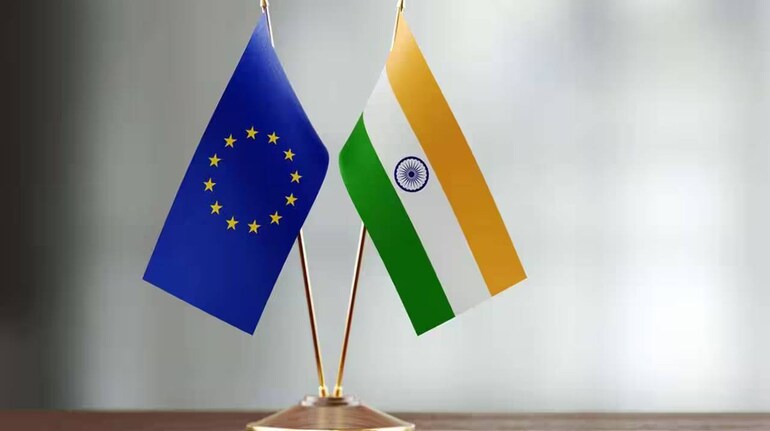

The free trade agreement concluded between the European Union and India is expected to double merchandise exports from the bloc to India by 2032, with tariffs eliminated or reduced on 96.6 percent of EU goods, the European Commission said on January 27.
According to the Commission, the tariff cuts will save around €4 billion per year in duties on European products, delivering major gains for the bloc’s exporters.
The Commission described the agreement as the most ambitious trade opening India has ever granted to a trade partner, giving EU companies a significant competitive advantage.
The deal will provide privileged access to India’s market of 1.45 billion people, the world’s most populous country and its fastest-growing large economy, with an annual GDP of €3.4 trillion.
How're the India-EU FTA talks unfolding? Track live updates here.
“India will grant the EU tariff reductions that none of its other trading partners have received,” the statement said, adding that duties on cars will be gradually reduced from 110 percent to as low as 10 percent, while levies on car parts will be fully eliminated after five to ten years.
Tariffs of up to 44 percent on machinery, 22 percent on chemicals and 11 percent on pharmaceuticals will also be mostly eliminated, according to the Commission.
A dedicated chapter in the EU-India free trade agreement will also help small and medium-sized businesses in the bloc to take full advantage of the new export opportunities.
Both sides will establish dedicated contact points to provide SMEs with relevant information on the FTA and assist with any specific issues they encounter when using the agreement’s provisions. SMEs are expected to particularly benefit from tariff reductions, removal of regulatory barriers, and the transparency, stability, and predictability provided by the agreement, the Commission explained.
The European Union and India concluded negotiations on a “historic, ambitious and commercially significant” free trade agreement (FTA) on January 27.
"This is the most ambitious trade opening that India has ever granted to a trade partner. It will give a significant competitive advantage for key EU industrial and agri-food sectors, granting companies privileged access to the world's most populous country of 1.45 billion people and fastest growing large economy, with an annual GDP of €3.4 trillion," the statement said.
According to the Commission, the agreement will strengthen economic and political ties between the world’s second- and fourth-largest economies at a time of rising geopolitical tensions and global economic challenges, underscoring their shared commitment to economic openness and rules-based trade.
European Commission President Ursula von der Leyen said the deal marked a historic moment in relations between the two sides.
“The EU and India make history today, deepening the partnership between the world’s biggest democracies...we have created a free trade zone of 2 billion people, with both sides set to gain economically," she said.
Next steps
Now that talks for the trade deal has concluded, the negotiated draft texts will be published shortly.
On the bloc's side, the texts will go through legal revision and translation into all official EU languages.
The Commission will then put forward its proposal to the Council for the signature and conclusion of the agreement.
Once adopted by the Council, the EU and India can sign the agreements.
"Following the signature, the agreement requires the European Parliament's consent, and the Council's decision on conclusion for it to enter into force. Once India also ratifies the Agreement, it can enter into force," according to the statement.
The EU and India had first launched negotiations for a free trade agreement in 2007.
The talks were suspended in 2013 and then relaunched in 2022. The 14th and last formal negotiating round took place in October 2025, followed by intersessional discussions at technical and political level.
"After a year of tireless engagement and more than a decade in the making, we have delivered the biggest FTA ever, a deal like no other. High tariffs down, opportunity unleashed...Now, our focus is clear: ensuring businesses reap tangible benefits from this FTA as quickly as possible," Maroš Šefčovič, EU's Commissioner for Trade and Economic Security said.
Discover the latest Business News, Sensex, and Nifty updates. Obtain Personal Finance insights, tax queries, and expert opinions on Moneycontrol or download the Moneycontrol App to stay updated!
Find the best of Al News in one place, specially curated for you every weekend.
Stay on top of the latest tech trends and biggest startup news.