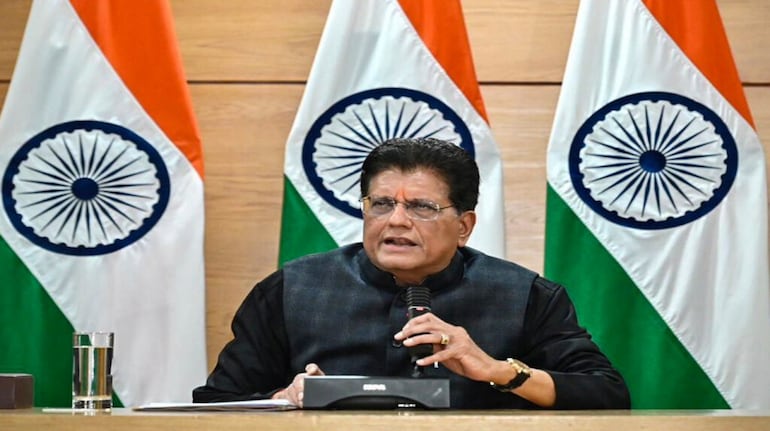
India’s textile and apparel exporters are expected to get zero-reciprocal-duty window for garments made using cotton from the United States once the proposed interim trade agreement between New Delhi and Washington is signed, Commerce and Industry Minister Piyush Goyal said on the sidelines of an event on February 12.
India and the US are expected to sign an interim trade deal around March.
This means that for Indian textiles and apparel exports, the US will lower the reciprocal tariff to 18 percent. However, garments made using cotton sourced from the United States will qualify for zero duty under the reciprocal component.
The Most Favoured Nation (MFN) tariff will continue to apply, as the reduction is limited to the reciprocal portion. As a result, the effective duty on garments made with US cotton would come down to around 3 percent.
The minister's comments assume significance as Indian textile exporters have been on edge since Bangladesh secured favourable terms under its recent trade arrangement with Washington.
Under the Bangladesh-US deal, Dhaka obtained a reduced reciprocal tariff rate of around 19 percent along with zero-duty access for certain ready-made garments manufactured using US cotton and fibres.
From April to November of 2025, Bangladesh’s ready‑made garment exports to the US reached about $7.6 billion, more than double of India’s $3.26 billion during the period.
Goyal added that around 90 percent to 95 percent of farm products produced in India have been kept out of the trade deal with the US, reiterating that farmers’ interests have been fully protected.
India has excluded a wide range of sensitive agricultural and food items from tariff concessions, including staples such as rice and wheat, dairy products, pulses, edible oils and certain fruits and vegetables, to safeguard domestic producers and food security.
Concessions have been granted on items such as almonds, walnuts, pistachios, apples, cranberries and soybean oil, largely through tariff-rate quotas.
Discover the latest Business News, Sensex, and Nifty updates. Obtain Personal Finance insights, tax queries, and expert opinions on Moneycontrol or download the Moneycontrol App to stay updated!
Find the best of Al News in one place, specially curated for you every weekend.
Stay on top of the latest tech trends and biggest startup news.