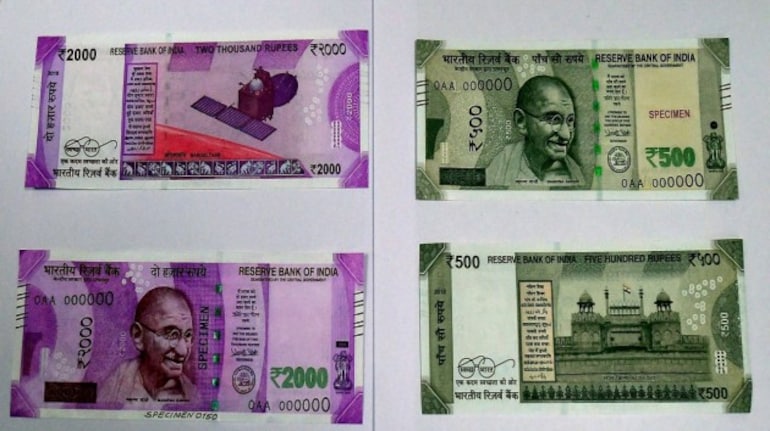
Five months ago, the government removed all the existing Rs 500 and Rs 1,000 notes from circulation. Since that landmark event, the usually conservative Reserve Bank of India has moved surprisingly quickly on changes to currency notes. And it’s also shown eagerness to experiment.
Before November last year, the central bank had largely refrained from tinkering with the existing currency for nearly two decades. New coins were introduced periodically and redundant ones like 25 paise were withdrawn, but the paper notes were relatively untouched.
November 9, 2016 saw the introduction of a crisp, pink Rs 2,000 note proudly displaying India’s mission to Mars. The Rs 500 note received an upgrade for the first time since 1987 — smaller in size and white being added to the green.
And just when you were getting used to arranging the new notes in your wallet, the RBI is now said to be considering a Rs 200 note and printing new Rs 1,000 notes. In addition, plastic notes will also be reality soon after the central bank last month got the green light to conduct field trials of plastic Rs 10 banknotes at five locations in India.
After years of general status quo on this front, what is prompting the RBI to ring in the changes to currency?
SecurityThe government’s decision to withdraw 86 percent of the currency last November was aimed at cracking down on black money, corruption and counterfeiting.
The new notes contain a see-through register and a latent image when the note is held at a particular angle, apart from a colour-shifting windowed security thread. There was initial speculation about an embedded chip but it turned out to be a hoax.
But have those security features proved sufficient?
Officials said that the new Rs 2,000 and Rs 500 notes contained features similar to the old Rs 1,000 and Rs 500 notes.
There have been a number of cases of counterfeit currency being seized, especially near the borders, indicating that forgers are adjusting quickly. And then there were cases in Hyderabad and Delhi of ATM machines dispensing notes issued by the fictitious Children’s Bank of India.
Last week, the Home Ministry decided that India must change security features on its notes every three to four years like other countries. The new Rs 200 notes, if approved, will also come with additional security features.
InflationR Gandhi, who recently completed his term as Deputy Governor of Reserve Bank of India, said that in 2014, the central bank concluded that it needed to introduce higher denomination notes given the pace of inflation. It recommended introducing Rs 5,000 and Rs 10,000 notes.
However, the government announced last week that it had not been found “suitable” to introduce Rs 5,000 and Rs 10,000 notes.
Gandhi said that higher denomination notes needed to be introduced in any economy where there is dynamic inflation. But with moves afoot to contain and stabilise inflation, he said new denominations may not be required henceforth.
Among the existing series, he said that the Rs 200 note appeared to be the only one missing from the pack and hence it made sense to introduce it.
DurabilityAcross the world, central banks have been exploring alternatives to paper notes. Plastic or polymer notes are currently used in more than 20 countries including Canada, New Zealand, Vietnam and Australia.
In India, durability may have prompted the experiment of a plastic Rs 10 note. They are expected to last longer than the existing cotton substrate-based banknotes. In addition, they lower environmental footprint and a reduced cost of production and replacement.
A polymer banknote also contains three levels of security features that cannot be successfully reproduced by photocopying or scanning, making it very difficult to counterfeit. The complexities of counterfeiting polymer banknotes are intended to act as a deterrent to counterfeiters.
Discover the latest Business News, Sensex, and Nifty updates. Obtain Personal Finance insights, tax queries, and expert opinions on Moneycontrol or download the Moneycontrol App to stay updated!
Find the best of Al News in one place, specially curated for you every weekend.
Stay on top of the latest tech trends and biggest startup news.