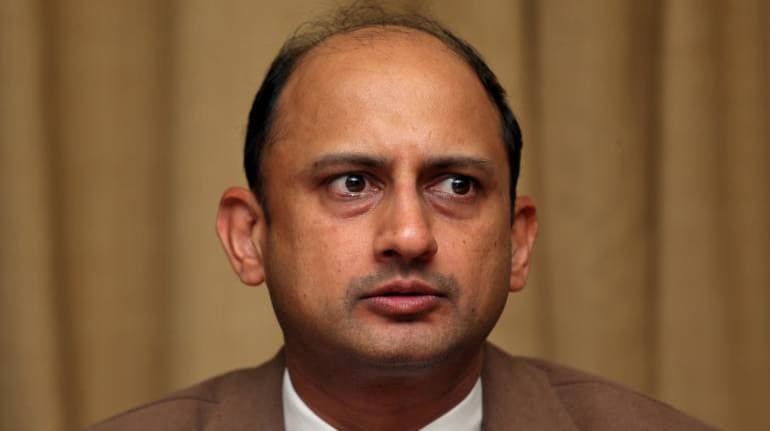
Viral Acharya, former deputy governor of the Reserve Bank of India (RBI), has been a vocal proponent of central bank autonomy and the need for financial sector reforms.
Acharya, who quit six months ahead of his term following major differences with the government on a range of issues including fiscal encroachment on RBI’s autonomy, recently released his book ‘Quest for Restoring Financial Stability in India’ published by Sage publications. Acharya spoke to Moneycontrol in an exclusive interview.
Edited excerpts:
The book has many references to the importance of RBI autonomy. How critical is RBI autonomy in the current context?I would say the central theme of the book is a little bit step forward. It is trying to diagnose why this is happening. As Dr Reddy (former RBI governor Y V Reddy) points out in the foreword of my book, the RBI Act itself is very weak. It doesn’t grant much autonomy to the central bank. There is a tendency to put the blame on recent frictions on individual personalities. But I think the problem is deeper. In my assessment, the government falls back on the central bank as its expenditure pressure rises. This is what we call "fiscal dominance".
Also Read: View | Can another rate cut help boost credit growth?The issues at that juncture required me to take a stand.
Time and again you have reiterated the need for institutional reforms on the fiscal side. Could you explain?There are a few suggestions I have made in the book. A fiscal consolidation path to reasonable targets, reorientation of expenditure towards items that have economically meaningful long-term multiplier effects, objective monitoring of consolidated debt and deficit numbers, independent fiscal council, improved disclosure standards for government expenditure and deficit that preclude the obfuscation of numbers by accounting jugaad (tricks), and significant economically meaningful divestment drive.
What is the solution for the NPA problem of Indian banks?Ultimately, the solution to the NPA problem lies in capital and institutional reforms. As the RBI’s recent Financial Stability Report anticipates double-digit Gross NPA ratios in COVID-related stress scenario, both private banks and public banks have to beef up their capital in the context of Covid-19 and prepare for the shock ahead. Also, it is important that government reduces stake in public sector banks below 51 per cent to free them from fiscal dominance. The system is not willing to embrace the problem and solve it, but due to imminent fiscal pressures, there is hope for reform.
For instance, once you recognize losses, public sector banks immediately require capital as they do not have high capital buffers. Capital has to come from the government unless the government pares majority stake in these banks. The government doesn’t do that (reduce its stake), simultaneously it won’t put timely capital either. Because if it does that, the government will have to find money from some other fiscal adjustment. So ultimately, this is the root cause of the problem. Banks have to recognize the defaulters and find capital. Divestment of majority stake in public sector banks can relieve fiscal pressures.
Six month moratorium and IBC holiday for 12 months—are these right steps?I’m always okay with some temporary relief measures to help the stressed borrowers. But if there is a belief that the shock is going to vanish with moratorium, it’s being overly optimistic. Already, some senior bankers are complaining that moratorium is used to delay payment by some borrowers who can repay. Hence, in my opinion, there can be a sunset clause that says the moratorium should not be extended beyond six months.
As far as the IBC is concerned, this is the only effective way we have to address stressed loans. We do not have an alternative private mechanism of "prepackaged bankruptcy" that other countries like the US have. While temporary measures are necessary, one should anticipate that these issues may lead to loan losses down the line. You need to prepare the banking system for that with capital, on a war footing given the benign equity market conditions. Public sector banks, private sector banks and NBFCs should raise equity capital to prepare themselves for bad times, and not just take on more and more debt financing. The regulators should be proactive in asking for such equity capital raising rather than acting after the event.
Government is not in a position to give capital to PSBsSome public sector banks should be considered for re-privatisation. They can get more financial capital from the market and modernize with better technology, human capital and risk management. In the other ones also, government can cut stake below majority mark like several of the committees in the past have recommended. The other important problem is that we keep justifying the presence of public sector banks saying they are good for developmental function and financial inclusion in the economy. But, then, the weaker public sector banks—which are very hard to recapitalise in the current form-why not get them in shape by making their business model focused like small finance banks or microcredit oranizations?
What’s your view on the Rs 20 lakh crore economic package?The package was announced at a time when the health curve was not as adverse as it is now. This has to be kept in mind. Now it is very clear that the curve is not flattening swiftly. I read recently that it is spreading in rural areas also. Going forward, there may be a need for direct transfers to address the problem. So my view is that rather than the government finding itself in a difficult situation—that it wants to spend but can’t spend because of sovereign rating downgrade risk, it should instead create space by undertaking institutional reforms on the fiscal side which I highlighted above. Otherwise, the banking system will end up bearing the burden, and other than large private banks, we are not yet seeing signs of it being prepared with capital for that.
Where will the money come from?Temporarily they (government) may have no choice but to slip further on fiscal deficit. As I said earlier, they can reorient some expenditure towards infrastructure, health and education along with other reform measures. In other words, we need a fiscal institutional reform package to build credibility of medium-term debt sustainability.
What is the solution to NPAs?Resolution of the bad assets has to take place trough IBC (Insolvency and bankruptcy Code). Putting these stressed assets to a bad bank and resolving through the IBC may also work fine. But, then we need to have a blue print for the bad bank. Who is going to run this bad bank? Will it be managed by a private office or government office? What is the initial funding required? The devil is in these details.
Is it time to revive the debate on super regulator?We are becoming more and more of a market –based economy. We should ensure that systemically important pockets of the financial sector are regulated well for adequate capital and there are no grey areas. We have the FSDC but primarily it is a discussion body between regulators and the government. A body with greater powers like the FSOC in the US or the PRA in the UK will be helpful to identify and control system-wide risks.
Are rate cuts alone enough to revive growth?Financial stability is a prerequisite for transmission of monetary policy. If banks are not healthy, that is, they are under-capitalised, then monetary transmission is difficult from banks to the real economy, because banks remain risk-averse or simply evergreen bad loans. One cannot push monetary policy on a string and expect significant sustained growth revival without fixing the financial sector health. Financial stability is not just surplus liquidity conditions that lower the cost of leverage in the financial system. It is about adequate loss-absorption capacity in the form of equity capital. That is one key message I would like to convey.

Discover the latest Business News, Sensex, and Nifty updates. Obtain Personal Finance insights, tax queries, and expert opinions on Moneycontrol or download the Moneycontrol App to stay updated!
Find the best of Al News in one place, specially curated for you every weekend.
Stay on top of the latest tech trends and biggest startup news.