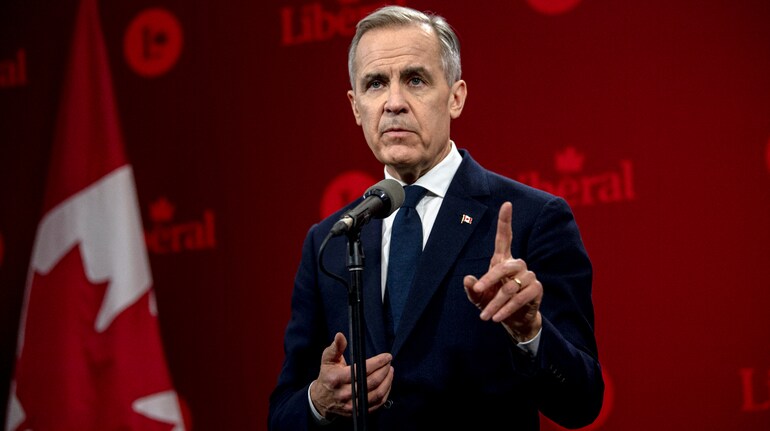

Canada’s Prime Minister Mark Carney used his address at the World Economic Forum to declare that the era of comfortable globalisation is over, and that clinging to it now risks leaving countries exposed.
“We are in the midst of a rupture, not a transition,” Carney said, warning that decades of economic integration have revealed deep vulnerabilities rather than shared security.
Over the past twenty years, crises in finance, health, energy and geopolitics have laid bare the risks of extreme global integration. More recently, Carney said, great powers have begun using that integration as a weapon. “Tariffs as leverage. Financial infrastructure as coercion. Supply chains as vulnerabilities to be exploited.”
“You cannot ‘live within the lie’ of mutual benefit through integration,” he said, “when integration becomes the source of your subordination.”
From rules to rivalry
Carney said that the international system many countries relied on no longer functions as advertised. The institutions that underpinned collective problem-solving, including the World Trade Organization, the UN system and climate frameworks, are “greatly diminished”.
For decades, Canada and other middle powers prospered under what Carney called a 'useful fiction,' a rules-based order that delivered predictability, even if enforcement was uneven and powerful countries exempted themselves when convenient.
“That bargain no longer works,” he said.
Instead, the world has entered what Carney described as an era of intensifying great power rivalry, where “the strong do what they can, and the weak suffer what they must.” Faced with this reality, many countries are turning inward to protect themselves.
The limits of fortress economics
That impulse, Carney acknowledged, is understandable. “A country that cannot feed itself, fuel itself, or defend itself has few options,” he said. “When the rules no longer protect you, you must protect yourself.”
But he warned against where that logic leads. “A world of fortresses will be poorer, more fragile, and less sustainable,” Carney said, arguing that isolation and fragmentation ultimately weaken everyone, including the most powerful states.
There is also a ceiling to transactional power. As great powers abandon even the pretence of shared values, allies hedge, diversify and rebuild sovereignty through resilience rather than rules.
Canada’s ‘principled and pragmatic’ shift
Against this backdrop, Carney said Canada is recalibrating its foreign and economic strategy around what he described as being “principled and pragmatic”.
“We are no longer relying on just the strength of our values, but also on the value of our strength,” he said.
Domestically, Carney pointed to tax cuts, the removal of federal barriers to interprovincial trade, and fast-tracked investments across energy, AI, critical minerals and trade corridors. Defence spending is set to double by 2030, with a focus on strengthening domestic industry.
Internationally, Canada is diversifying its partnerships. Ottawa has deepened ties with the European Union, including joining Europe’s defence procurement framework, and has signed multiple trade and security agreements across continents.
Canada has also concluded new strategic partnerships with China and Qatar, while negotiating trade deals with India, ASEAN and Latin American blocs.
Coalitions over nostalgia
On security, Carney reaffirmed Canada’s commitment to NATO, including expanded Arctic capabilities and support for Ukraine. He stressed that middle powers must work through flexible coalitions, 'variable geometry,' built issue by issue around shared interests.
“If you are not at the table, you are on the menu,” Carney said, warning against bilateral negotiations with hegemons that amount to “the performance of sovereignty while accepting subordination.”
Middle powers, he argued, face a choice: compete with one another for favour, or combine to create a third path with real impact.
‘Taking the sign out of the window’
Returning to Václav Havel’s idea of “living in truth”, Carney said the first step is honesty. “Stop invoking the ‘rules-based international order’ as though it still functions as advertised,” he said.
It also means acting consistently, applying the same standards to allies and rivals, and building the economic strength that makes principled positions sustainable.
“The old order is not coming back,” Carney said. “We should not mourn it. Nostalgia is not a strategy.”
Canada, he concluded, is choosing to act openly in a fractured world. “We are taking the sign out of the window,” Carney said, and inviting other middle powers to do the same.
Discover the latest Business News, Sensex, and Nifty updates. Obtain Personal Finance insights, tax queries, and expert opinions on Moneycontrol or download the Moneycontrol App to stay updated!
Find the best of Al News in one place, specially curated for you every weekend.
Stay on top of the latest tech trends and biggest startup news.