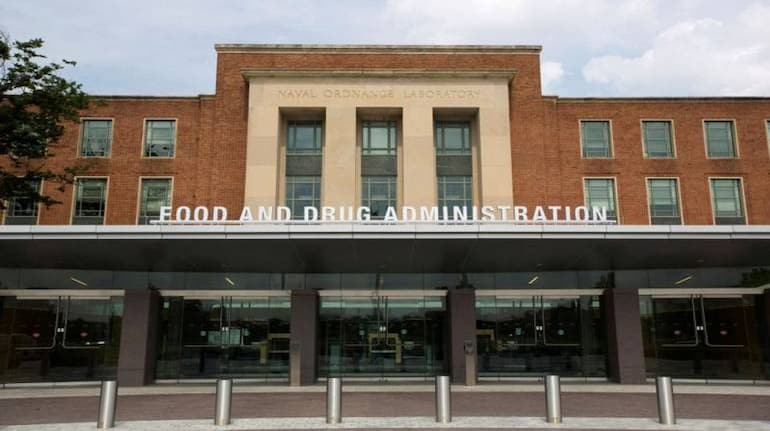
The USFDA last week approved emergency use of the Pfizer-BioNTech Covid-19 vaccine. The agency had worked at frantic speed to review the emergency use authorization (EUA) application for the vaccine in the backdrop of the raging pandemic. At the same time, however, it ensured the approval process was transparent and democratic.
To be sure, the USFDA has attracted its fair share of criticism in recent times when it issued emergency use authorisation for drugs and treatments such as hydroxychloroquine, convalescent plasma therapy and remdesivir. But when it comes to vaccines, which are given to healthy people, the agency has been extra careful.
Here are some best practices adopted by the USFDA that other regulators should find worth emulating. Each can be a reference point for Indian regulator DCGI, which has come in for a fair bit of flak in recent times.
Briefing documentThe briefing document helps the panel of outside experts who review a vaccine and recommend whether the USFDA should approve an application or not. The document contains information on the clinical trials, safety and efficacy data, population analysis, and importantly, the assessments and recommendations made by individual USFDA reviewers.
The briefing document is exhaustive. For instance, the Pfizer-BioNTech briefing document runs into 53 pages. The USFDA even makes background material available on its website.
Critically, this document is made publicly available. People can comment on it and present their views before the panel. In the recent Pfizer-BioNTech panel meeting, one hour was allotted for a public hearing. The USFDA opens a docket on its website for public comments.
At least two senior experts told Moneycontrol that the Indian drug regulator publishes no such briefing documents.
Panel compositionThe panel of outside experts that reviews vaccines in the US is called the Vaccines and Related Biological Products Advisory Committee (VRBPAC). The USFDA has a charter on selecting members for the panel, a description of their duties, compensation, and frequency of meetings.
The names and details of these experts are available on the USFDA website.
There is a member on the panel who represents consumer interests. There is also a member from the industry on the panel, but he or she does not have voting rights.
In contrast, in India, it is difficult to find the names of a Subject Expert Committee (SEC), which is the equivalent of the VRBPAC, their backgrounds and the process behind their appointment.
Conflict of interestAt the start of the VRBPAC meeting, a conflict of interest statement is made. The USFDA ensures that none of the outside experts taking part in the voting has any conflict of interest. It even goes to the depth of checking whether their spouses or children have any conflict of interest linked to the sponsor of the study.
Amar Jesani, Editor of the Indian Journal of Medical Ethics, says that conflict of interest is often not taken seriously in the Indian context.
“Even the mere presence of a person with a conflict of interest at a meeting has the potential to influence decision making. Why should that person be there in the first place,” Jesani says.
For sake of transparency, Jesani says, the SEC should have representation from civil society and the media.
TransparencyIn the recent SEC meeting that reviewed the application for emergency use of the ‘Covishield’ vaccine by Serum Institute of India, the DCGI statement mentioned that Dr. Sushant Meshram, a member of the SEC, did not participate in the discussion.
The DCGI statement has not given any reason as to why this member did not participate in the discussion. There are no details about the SEC members who took part in the meetings, who was present from the regulator side, and what views they expressed.

On the contrary, the entire VRBPAC meeting, which ran into some eight hours, was telecast live. The video is available on Youtube. It is easy to ascertain the position each member of the panel took on the vaccine. People can also watch how the voting process took place.
Following the approval of the Pfizer-BioNTech vaccine, USFDA Commissioner Stephen Hahn along with Peter Marks, Director of the Center for Biologics Evaluation and Research (CBER), held a lengthy virtual press conference, fielding questions from the media on allergic reactions, the cold chain, use of the vaccine in teenagers aged 16 and 17, pregnant women and so on.
“Today it's important for the public at large to know which direction these vaccines are moving. Everybody wants a vaccine; everybody will have to make a judgement; but who is to tell them what is right or wrong,” said Dr Arun Bhatt, independent consultant and former President of the Indian Society for Clinical Research (ISCR).
“It's important to have a democratic approach,” Bhatt added.
Jesani says the law does not prohibit the government or DCGI from sharing more information.

Discover the latest Business News, Sensex, and Nifty updates. Obtain Personal Finance insights, tax queries, and expert opinions on Moneycontrol or download the Moneycontrol App to stay updated!
Find the best of Al News in one place, specially curated for you every weekend.
Stay on top of the latest tech trends and biggest startup news.