



The UK will become the first country in the world to run a COVID-19 human challenge study. The study was approved by the UK’s clinical trials ethics body and expected to begin in a few weeks.
The UK government will be backing the study with an investment of 33.6 million pounds. The study will be conducted in partnership between the UK government's Vaccines Taskforce, Imperial College London, the Royal Free London NHS Foundation Trust and the company hVIVO, which has pioneered viral human challenge models.
The aim of the study initially is to find out the smallest amount of virus it takes to cause COVID-19 infection in small groups of healthy young people, aged between 18 and 30, who are at the lowest risk of harm. Up to 90 healthy adult volunteers will be enrolled for the study.
The UK study will be observed closely by world including India, where around 18 potential COVID-19 vaccines are under various stages of clinical development. The study outcome would help to design optimal human challenge trials to quickly test safety and efficacy of potential vaccines.
What is a human challenge trial?
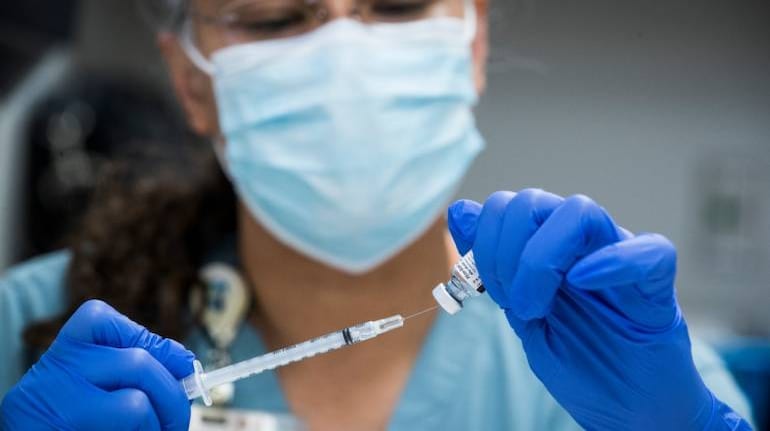
In a human challenge trial, participants are deliberately exposed to the infection (in this case it is SARS-CoV-2 virus), in order to study the disease and test the efficacy of the vaccines. For the human challenge trial - the exact virus strain that will be used to infect the participant and dosage or how much of the virus the volunteers need to be exposed to needs to be determined and approved by the regulatory authorities.
Will human challenge studies help to speed up vaccine development?
Yes. In the traditional approach, the potential vaccine or placebo will be given to volunteers in clinical trials, who will then be assessed for safety and efficacy through natural or community infection. This takes a lot of time, when the cases are on declining trend and other COVID-19 vaccines are available. This delays availability of more effective potential vaccines, even as pandemic remains a huge threat.
In a human challenge trial, the vaccinated volunteers will be exposed to the virus, in a safe and controlled environment. Medics and scientists then closely monitor the effect on volunteers 24 hours per day to see exactly how the vaccine works and to identify any side effects. This will help them to quickly measure the safety and efficacy of the vaccine, and weed out not so effective vaccine candidates.
Why is the human challenge trial given permission now, why not during initial months of pandemic?
To be sure there were ethical questions about subjecting healthy volunteers to a novel virus that can kill even young and healthy people. But experts say that the circumstances have changed after more than a year into pandemic. Now there is more understanding of COVID-19, and there better treatment protocols.
US-based vaccine advocacy group 1DaySooner risk model estimates that the risk of death for a healthy challenge trial volunteer aged 20-29— around 1 in 10,000 — which is half the mortality risk of liposuction, a third of living kidney donation, and five hundred times lower than venturing into space as an astronaut. However this model does not analyse the long-term risks of COVID-19, which can be significant even for the young, healthy people like to take part in a challenge trial.
1DaySooner expects more human challenge trials to take place in 2021.
Are human challenge trial taking place in other countries
It is not UK alone, researchers at Leiden University Medical Center in the Netherlands are also preparing for a COVID-19 challenge trial and are collaborating with 1DaySooner to include volunteer perspectives in trial design.
What is the process and how much time would take for human challenge trial?
According to 1DaySooner, a COVID-19 human challenge trial is likely to span a few months.
To begin with volunteers would be screened for infection and undergo antibody testing for about two weeks to ensure no prior infection.
Subsequently, participants would receive the treatment, either placebo or vaccine. The virus would be administered roughly 2-4 weeks later after participants have mounted an immune response to the vaccine, after which participants would be observed for a final 2-4 weeks. If a volunteer tests positive or has symptoms of COVID-19, this period might be extended.
Throughout the study period, participants would be tested frequently, with non-invasive blood draws and nasal swabs conducted on a frequent basis. Before conducting a challenge trial to test vaccines, scientists must understand the smallest dose of the coronavirus that causes infection.
"This UK study starts by exposing a few participants to a very low viral dose. If a majority of those participants are infected, then a dose expansion phase occurs to test the dose in a total of about 20 people. If a majority of the initially dosed group is not infected, then a higher dose is tested among a few participants, and the process is repeated several times as needed," 1DaySooner explains.
Is human challenge trial used before?
Human challenge trial isn't new. The method has been used for developing vaccines for seasonal flu, typhoid, malaria, and cholera, among others. In fact, Edward Jenner helped in the development of smallpox vaccine in 1796 by taking samples from a cowpox sore of a milkmaid and put it into the skin of his gardener's eight-year-old son. Jenner then intentionally exposed the child to smallpox, but the child didn't become infected.

Discover the latest Business News, Sensex, and Nifty updates. Obtain Personal Finance insights, tax queries, and expert opinions on Moneycontrol or download the Moneycontrol App to stay updated!
Find the best of Al News in one place, specially curated for you every weekend.
Stay on top of the latest tech trends and biggest startup news.