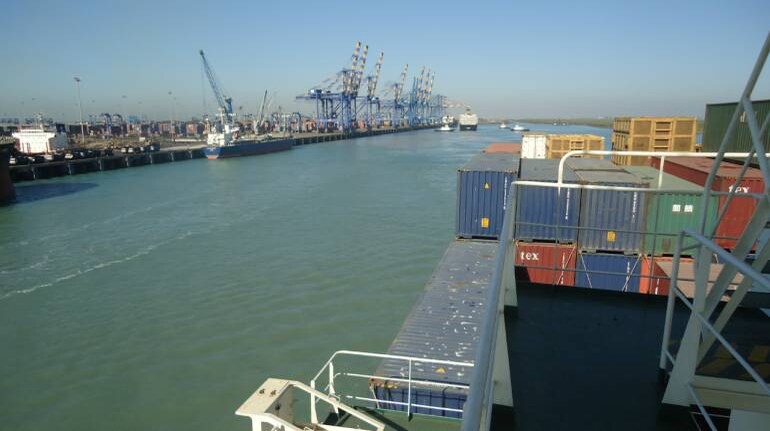
The country's scrap importers are in a dilemma.
One the one hand, they are unable to accept containers that are piling up at ports, and on the other, demand for their products has plummeted leading to a severe cash crunch.
And to confound matters further, two separate communications from the Ministry of Shipping has added to the uncertainty.
Over 30 percent of the 1.5 lakh containers that are stuck in ports across the country, contain scrap that are used to make products for auto and construction/infrastructure sectors.
"We need to release the containers from the ships within a stipulated period of time. If we don't, the shipping companies start charging us detention and demurrage (charges levied if the ships are not released by the importers after a stipulated period of time). If there is no relief, then these charges could amount to Rs 6,000 crore," Jayant Jain, Secretary, All India Non Ferrous Metal Exim Association, told Moneycontrol earlier this week.
The importers are unable to release containers because of severe cash crunch. They said it is taking longer, because of the lockdown restrictions, to get papers cleared by the banks and make the payments. Many have asked banks for relief in the form of easier credit lines.
The Association had sent a letter to Mansukhbhai Mandaviaji, Union Minister of State for Shipping, asking for a relief from paying the charges. The Ministry had earlier given the importers relief for the first lockdown period, from March 24 to April 14, to limit the COVID-19 impact. The importers had requested for an extension of this relief to cover the second lockdown period.
It looked like their requests were answered, when on April 21 the Ministry of Shipping passed an order asking all ports to ensure that importers are not levied any charges.
The waiver on charges, including that for detention and demurrage, was for the lockdown period, and for 30 days of 'recovery period." Ports were also asked to defer lease rental payments.
However, the very next day, Directorate General of Shipping in Mumbai, issued another order, this time for the shipping companies, that charges shouldn't be levied for the lockdown period, till May 3. However, there was no mention of the 30 days recovery period that the Ministry had included in its order.
"Directorate General of Shipping comes under the Ministry. How is it that both their communications are different?" asked an importer.
Importers reiterated that the 30-day recovery period is important because of the way the industry functions.
Planning aheadJitendra Chopra, an entrepreneur based in Ahmedabad, imports scrap from suppliers in the US, Middle-East and Africa. The scrap is used in his units, situated in Ahmedabad, to make products used by auto part companies, and those that make window frames for residential use.
In a month, he imports about 35 containers, which come at the Mundra or the ICD Ahmedabad port.
"At a time we order for three months, as it takes time in transportation and also releasing the containers from the port," adds Chopra.
But as soon as the first lockdown was announced, importers like Chopra put a pause on orders. That was not enough.
To ensure that the supply chain continued to function smoothly, they needed their customers in auto and constructions sectors to keep buying products from them, so that the stock of scrap keeps getting used, rather than piling up.
Not just that the clients have stopped orders, but payments have been delayed. In the mail to the Shipping Ministry, the Association said that clients such as Renault and Nissan in the auto sector, and Tata Steel in the sector, have already informed vendors about delayed payments.
The vendors were thus forced to stop payments to their suppliers, including to the likes of Chopra.
With no demand, and production stopped under lockdown, the stock of scrap kept increasing. "I have no choice but to find space to store the containers," said Chopra. He has rented a space in Ahmedabad to do the same, and now as to pay additional rent for that.
Given the circumstances, added importers, the 30-day relaxation that the Ministry gave - but not included in the order by the Directorate General - is crucial to manage the stock.
"The industry needs minimum 30 days, after the lockdown, to get back to normalcy. The shipping ministry should ensure that all the stakeholders, including ports and shipping companies, provide the waiver," said Jain.

Discover the latest Business News, Sensex, and Nifty updates. Obtain Personal Finance insights, tax queries, and expert opinions on Moneycontrol or download the Moneycontrol App to stay updated!
Find the best of Al News in one place, specially curated for you every weekend.
Stay on top of the latest tech trends and biggest startup news.