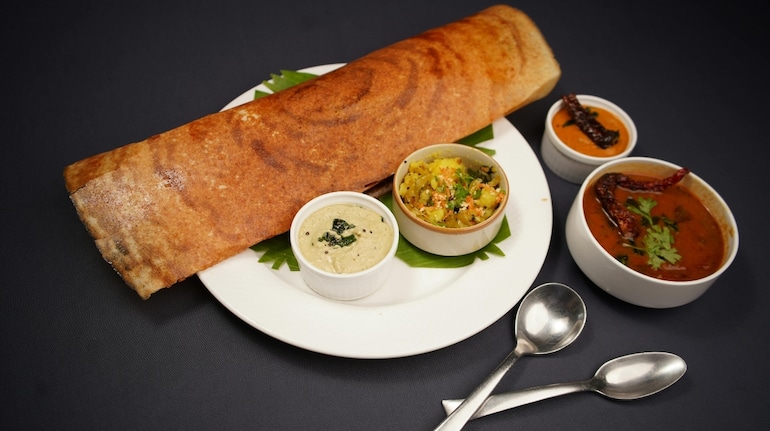
Anyone who has dared to make the South Indian classic, dosa, knows that it takes rare kind of precision to make the perfect one. Right from the soaking of rice and dal, to maintaining the correct temperature for the batter to ferment, to getting the pan’s temperature perfect — this dish calls for instinct and skill at every step. Even when using store-bought batter, a perfectly crisp and evenly browned dosa is something many struggle with.
Because the process is so delicate, every household has its own tried-and-tested method, passed down from great-grandmothers and grandmothers who refined their technique through sheer practice. What most people don’t realise is that these elders have been applying a fundamental principle of physics all along—without ever naming it.
The secret sits in a phenomenon called the Leidenfrost effect, the very reason your dosa batter might spread beautifully across the pan… or end up sticking, tearing, and breaking your spirit.
Also Read: Internet reacts to Jaipur aunty’s viral ‘made-from-scratch’ noodles video
You’ve probably seen a street vendor, or your mother or grandmother, sprinkle a few drops of water onto the tawa before pouring the batter. This tiny ritual is actually a temperature test. If the droplets sit there and slowly evaporate, the pan isn’t ready. But if they bead up, skitter around, and look like they’re dancing—the heat is just right.
That dance? That’s the Leidenfrost effect at work.
The Leidenfrost effect, or film boiling, happens when a liquid meets a surface much hotter than its boiling point. An insulating layer of vapour forms between the liquid and the surface, preventing it from evaporating immediately.
When the pan becomes much hotter than the boiling point of water, droplets hover on a cushion of vapour. This means the tawa has reached the perfect temperature, allowing the batter to smoothly spread and not stick.
Perfect dosa depends on the right amount of heat.
If the tawa is too cool:The batter is unable to spread thin, sticks and drags.
If the tawa is too hot:The batter begins to unnecessarily scorch, getting burned and creating holes and visible unevenness.
At the perfect temperature, the dosa:Crisps and evenly browns the edges
This is why the water test has been perfect for guiding dosa movement on the tawa.
Also Read: Top food trends to watch out for in 2025 according to industry experts
The Leidenfrost effect has been documented in European literature since the 18th century, but Indian cooks have been enjoying this phenomenon for centuries and it is a beautiful testament to the blend of culinary art and science.
So the next time the perfect crackle of a dosa reaches your ears, you can appreciate the unique blend of heat and timing, tradition, and a bit of physics that goes into the making.

Discover the latest Business News, Sensex, and Nifty updates. Obtain Personal Finance insights, tax queries, and expert opinions on Moneycontrol or download the Moneycontrol App to stay updated!
Find the best of Al News in one place, specially curated for you every weekend.
Stay on top of the latest tech trends and biggest startup news.