






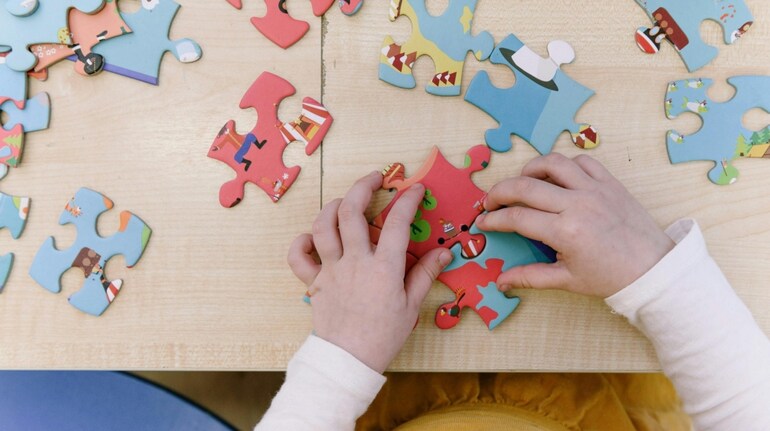

Solving a puzzle might be the last thing you expect when anxiety strikes, or when your to-do list feels endlessly tiring, but for many adults today, that is precisely the medicine that works. The times when you feel restless or anxious, instead of scrolling through your phone, if you reach for a 50-piece jigsaw puzzle designed for children, you find that within minutes, your mind is anchored, your breath steadies, and your attention softens.
According to a Time magazine report, Jodi Jill, a professional puzzle maker, based in Los Angeles, found serenity in puzzles during a turbulent childhood and now carries small kids’ puzzles on flights to steady her nerves.
Experts in play therapy note that these simple activities, like matching colours and sorting shapes, offer an entry into a mindful state that feels less daunting than formal meditation or breathwork. Rather than trying to silence the noise of life, the puzzle encourages you to refocus on the piece in your hand, the emerging pattern, the satisfaction of a match.
Also read | Chess, sudoku, puzzles: 10 games to keep brain sharp
Research around cognitive engagement shows that activities like puzzle-solvingdo more than just distract the mind. Studies show that consistent engagement with jigsaw and similar puzzles can improve memory, sustain attention, and even build what researchers call cognitive reserve, the brain’s resilience against age-related decline and stress-related cognitive slip-ups.
Puzzles work much like traditional mindfulness practices by anchoring attention in the present and reducing the mental chatter associated with elevated cortisol, the body’s primary stress hormone.
Unlike meditation apps or guided breathing sessions, puzzles lure the mind into present-moment focus effortlessly. There’s no need to quiet thoughts, you simply redirect them toward colour gradients and edge pieces, which induces a state similar to what psychologists describe as ‘flow,’ reducing anxiety’s grip.
Completing even a 50- or 100-piece puzzle gives you that dopamine-rich hit of accomplishment, a tiny victory that can set the tone for larger challenges ahead. This sense of progress is a key element in boosting motivation and emotional regulation.
Also read | Neurologist explains if puzzles, reading, and music can really delay Alzheimer's
Research in PubMed shows that mentally stimulating activities like crosswords, Sudoku or jigsaws can slow cognitive decline and support visuospatial reasoning, the brain skills involved in planning, memory and multi-step thought. Regular puzzling, especially when done consistently, helps maintain these neural pathways.
In an era dominated by digital overload, puzzles offer tactile engagement. Picking up a piece, sorting it into place, and completing a picture gives the nervous system a rare, restorative pause.
Whether you’re battling stress, facing a creative block, or simply want a break from everyday pressures, puzzles are low-stakes and non-judgmental. They provide structure, a predictable challenge, without the performance anxiety of competitive hobbies. That predictability can be especially soothing when life feels chaotic.
Disclaimer: This article only provides generic information. Don’t treat it as a substitute for qualified medical opinion. Always consult a specialist for specific diagnosis.
Discover the latest Business News, Sensex, and Nifty updates. Obtain Personal Finance insights, tax queries, and expert opinions on Moneycontrol or download the Moneycontrol App to stay updated!
Find the best of Al News in one place, specially curated for you every weekend.
Stay on top of the latest tech trends and biggest startup news.





