






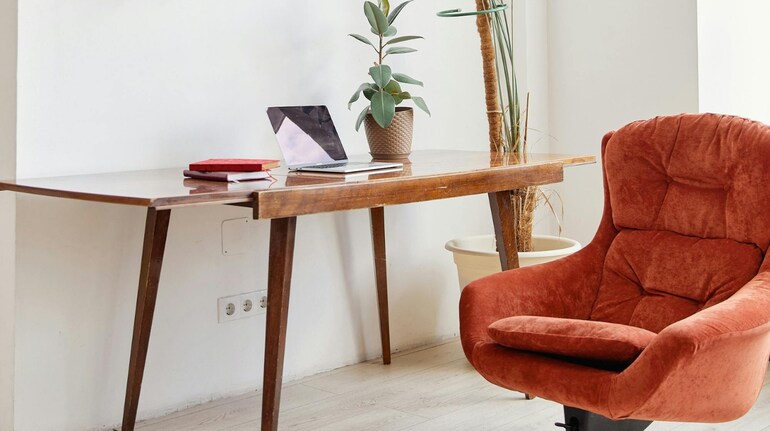

There was a time when the purpose of designing a space was only to impress a person present physically. But for the Instagram generation, the purpose of design is also to impress their camera. Sapna Khakaria, Principal Architect, The Canvas, ANJ Group told Moneycontrol, “Every café corner, reception desk, and breakout lounge is designed not just for use, but for the scroll. These are brand statements, often framed in a 4:5 ratio.”
Those who know, know that Gen Z and young millennials document every space they enter. Where they work, eat, collaborate, and celebrate becomes part of their personal narrative. "This behavioural shift has influenced décor in specific and visible ways, such as statement backdrops with bold material contrasts, sculptural lighting that holds up in low light, layered textures that create depth on camera, and biophilic inserts such as indoor greens and natural finishes,” Khakaria said.
Workplaces now consciously incorporate shareable corners & amphitheater steps, café-style breakout areas, and collaborative lounges are designed to feel dynamic in photographs. “When employees post about their workplace, they also amplify their employer’s brand in real time,” she added.
Also read: 8 indoor plants that purify air in your bedroom in the night
India’s office space has evolved from a static asset to a recruitment and retention tool. Developers and occupiers alike recognise that design shapes perception before physical experience. A space that photographs well travels faster than a brochure.
Khakaria noted, “This shift is visible in higher budgets for social hubs, curated art installations, flexible event ready spaces, and layered lighting strategies. Access to natural light and material zoning are prioritised not only for well-being but also for visual identity. Experience has become a measurable business strategy."
The Instagram Effect has pushed design from mere functionality to experience-driven and emotional. Spaces today are expected to feel inspiring, not just efficient. But good looks alone are never enough.
According to her, a space can be visually stunning, but if it echoes with poor acoustics, feels uncomfortable to sit in, or fails to function smoothly, the excitement fades quickly. Real design still begins with people as to how they move, work, pause, and interact. Trends may shape the mood, but purpose gives a space its staying power.
The evolution of décor parallels a shift in leadership within the industry. The new design language feels softer yet bolder, with curved edges, tactile finishes, warm lighting, and human-scale proportions replacing rigid monumental gestures.
“Emotional intelligence has become central to spatial planning. Women designers have played a significant role in this transition by introducing inclusive planning approaches and collaborative studio cultures. The democratisation of taste through social media has allowed younger voices to influence trends earlier in their careers, accelerating change in both design and leadership,” Khakaria explained.
Also read: 9 longest living indoor plants that require minimal maintenance
Modern décor must balance visual storytelling with sustainable materials, climate responsiveness, and operational intelligence. A beautiful corner may capture attention, but only a meaningful space will retain it. Design today lives both on screen and in reality. The challenge lies in ensuring that what trends digitally performs just as well physically.
Discover the latest Business News, Sensex, and Nifty updates. Obtain Personal Finance insights, tax queries, and expert opinions on Moneycontrol or download the Moneycontrol App to stay updated!
Find the best of Al News in one place, specially curated for you every weekend.
Stay on top of the latest tech trends and biggest startup news.





