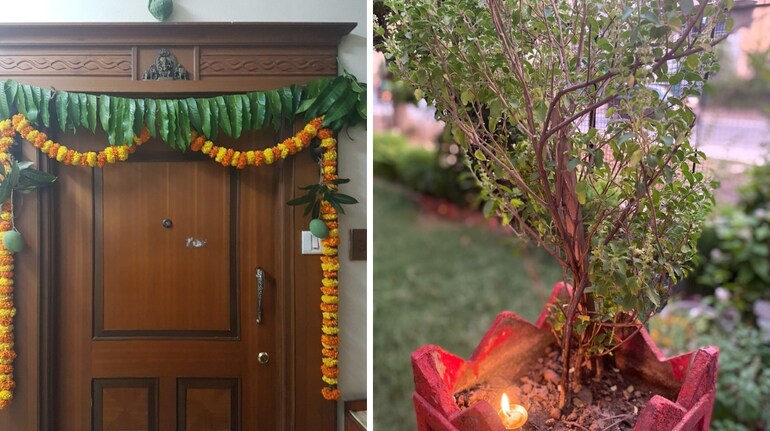

Certain flowers and leaves are thought to draw auspicious energy into homes and gardens. Far from superstition, this belief aligns with modern insights that gardens calm minds, deepen wellbeing and create spaces of positivity.
In Vastu philosophy, not only the direction of plants but also their form, scent and symbolism influence the subtle flow of prana or vital energy. Whether it’s the pure white of jasmine at dusk or the fiery petals of marigold under the sun, each plant carries meaning.
When nurtured in the right place, these flowers and leaves are said to bring joy, wealth and peace. Moreover, as per research in Journal of Therapeutic Horticulture Pairing tending plants lifts mood, sharpens focus and reduces stress. These are important ingredients associated with a richer, more fulfilled life.
Often strung at doorways, fresh mango leaves symbolise abundance and are believed to keep negative energy at bay. These leaves also stand for purity, growth, and wealth. In pujas, they bring positive energy and drive away negativity. Hung as garlands above doors, they welcome guests and blessings, making every home feel peaceful and full of good fortune.
Renowned in Ayurvedic texts (Charaka Samhita) for cleansing qualities, neem leaves are hung near entrances to purify air and energy. Vastu shastra suggests giving the neem plant a home in the north-west corner, where it feels most at ease. A spot near an open window works perfectly for this gentle flow of healthy energy.
Tulsi or basil, popular in Indian tradition, is planted at homes to improve wellbeing, prosperity and spiritual harmony.
Tulsi loves sunlight, it’s its secret ingredient for healthy growth. According to vastu, the best spot is the eastern side of your home. If that’s not possible, choose a balcony or window facing north or northeast, where it can catch gentle, nurturing light
Banana leaves, often used in auspicious ceremonies. If you wish to grow banana plant at home then as per vastu these plants are believed to attract wealth and prosperity when planted in the south-east.
Symbolising purity and spiritual growth, the lotus thrives in water features in the north/northeast, believed to draw prosperity and calm the mind.
With its bright, cheerful colours, marigold is often used in traditional celebrations and is thought to attract good fortune when planted in the east.
Sweetly scented jasmine planted in the north/northeast is believed to promote peace, steady income and harmonious relationships.
Also Read: 5 wind chimes to bring love and luck in your life, according to Vastu
Roses in the east or north add beauty and are traditionally associated with love, positive energy and financial luck.
Bright red or pink hibiscus in the east is said to support drive and success, infusing garden spaces with zeal.
Sunflowers face the sun’s rise in the east, embodying optimism and drawing growth‑oriented energy into the home.
Discover the latest Business News, Sensex, and Nifty updates. Obtain Personal Finance insights, tax queries, and expert opinions on Moneycontrol or download the Moneycontrol App to stay updated!
Find the best of Al News in one place, specially curated for you every weekend.
Stay on top of the latest tech trends and biggest startup news.