






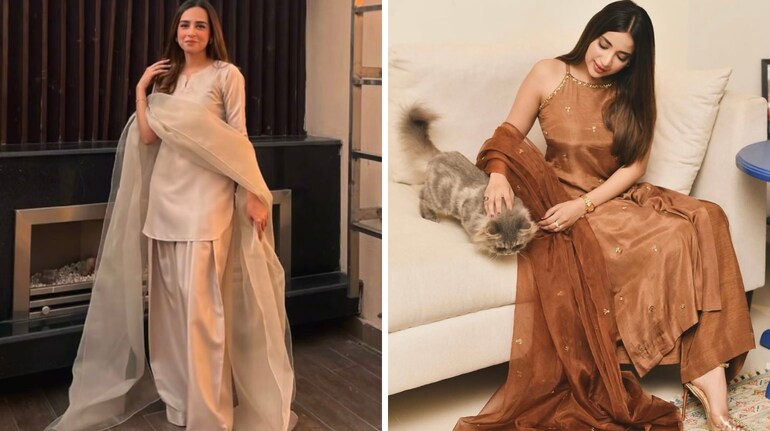

As festive dressing leans increasingly toward heritage silhouettes with contemporary relevance, the Farshi Salwar has emerged as the season’s most compelling revival. Once reserved for royal courts and aristocratic gatherings, this dramatic, floor-grazing garment is reclaiming its place in modern wardrobes, reimagined with refined fabrics, thoughtful tailoring, and a distinctly high-fashion sensibility.
Seen recently on actors such as Khushi Kapoor and Karisma Kapoor, the Farshi Salwar is no longer a nostalgic footnote but a statement of quiet opulence. The origins this style brings back the regal fashion of Mughal era, where it was favoured by women of nobility. Its name is derived from the Persian word farsh, meaning “floor,” a reference to its defining feature which is the generous length that pools gracefully at the hem. Traditionally paired with a heavily embellished kurta and a flowing dupatta, the silhouette was designed to convey grandeur, elegance, and status. The exaggerated flare and layered drape were not merely aesthetic choices but markers of aristocratic refinement.
Also Read: Smriti Mandhana dazzles in Tarun Tahiliani's embroidered jumpsuit, guess its cost
While everyday fashion evolved toward more practical cuts, the Farshi Salwar never completely disappeared. It remained an essential element of bridal wear, cultural ceremonies, and classical dance costumes. Today’s renewed interest in Farshi suits reflects a broader movement toward mindful, heritage-driven dressing. Designers are embracing the silhouette for its ability to make a statement without excess. On runways and in festive collections, the Farshi Salwar is being reinterpreted in winter-appropriate fabrics such as velvet, wool blends, and heavier cottons, making it an ideal choice for evening celebrations and seasonal gatherings. The weight and fall of these fabrics enhance the garment’s natural drama while offering warmth and comfort.
Styling the Farshi Salwar for modern occasions is about balance. Short kurtas work particularly well, allowing the flared silhouette to remain the focal point. Structured, minimally embroidered tops create a clean contrast to the movement of the salwar, while phirans add a Kashmiri-inspired elegance that feels especially relevant in winter. For those who prefer a layered look, long dupattas draped softly over one shoulder or styled as a shawl elevate the ensemble without overwhelming it.
Accessories play a crucial role in refining the look. Traditional juttis complement the heritage appeal, while flat sandals offer comfort for long festive evenings. For added height without compromising ease, wedge heels are a practical yet polished choice. Jewellery is best kept understated like the pearl chandbalis, delicate polki pieces, or heirloom silver for a regal restraint.
Also Read: Sara Ali Khan looks like royalty in a trendy cloud-dancer pearl blouse and godet skirt
What makes the Farshi Salwar particularly appealing today is its versatility. It bridges the gap between tradition and modernity, offering an alternative to predictable lehengas and anarkalis. With its sweeping hemlines and commanding presence, it allows the wearer to move with grace while making a quietly powerful statement.
Discover the latest Business News, Sensex, and Nifty updates. Obtain Personal Finance insights, tax queries, and expert opinions on Moneycontrol or download the Moneycontrol App to stay updated!
Find the best of Al News in one place, specially curated for you every weekend.
Stay on top of the latest tech trends and biggest startup news.





