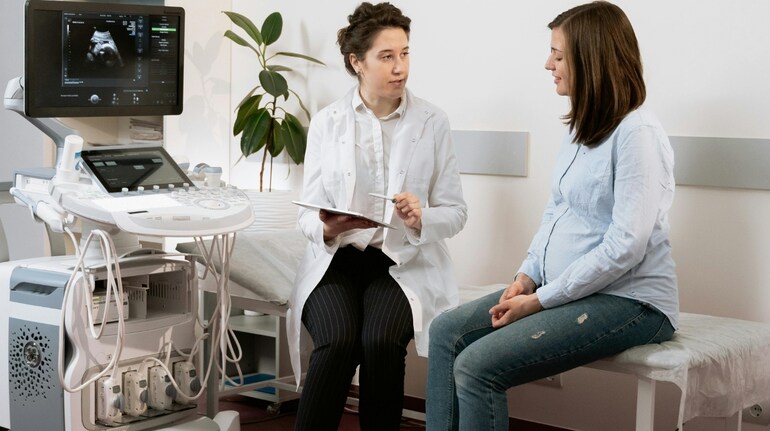

The number of women opting for egg freezing to increase their chances of becoming parents is on the rise. However, there is very little transparency and a great deal of confusion about the process and what it entails. While many women are certain about their choice, they are often unsure about how many eggs and cycles may be needed.
Dr Swati Mishra, Fertility Specialist, Birla Fertility & IVF, Kolkata, said, “Most often, the answer is not a neat, round number. It depends on age, ovarian reserve, and the future family one hopes to build.”
Also Read: Fertility specialist explains the number of eggs a woman should freeze
“Egg freezing is not an insurance policy; it is a probability game. Each egg has the potential to become a baby, but not every egg will fertilise, develop into a healthy embryo, implant, and lead to a live birth. Age is the single biggest determinant of that probability,” she added.
Studies suggest that women under 35 may need approximately 10–15 mature eggs to have a reasonable (around 70–80%) chance of at least one live birth in the future. After 38, that number may rise significantly, often beyond 20 eggs, because a higher proportion will carry chromosomal errors.
This is why one stimulation cycle is not always enough. “A woman in her early thirties with good ovarian reserve may collect 12–18 eggs in one cycle. Someone closer to 40 may retrieve fewer and may require two or even three cycles to accumulate an adequate number. The goal is not simply egg count, but mature eggs of good quality,” Dr Mishra explained.
Quality, in turn, is influenced by biology that cannot be seen under a microscope. As eggs age, rates of chromosomal abnormalities increase; by 40, more than half of embryos may be aneuploid.
According to Dr Mishra, it is also important to remember that egg freezing preserves the age of the egg – not the age of the uterus. When those eggs are eventually used, fertilisation depends on sperm health as well and the period of abstinence can influence semen parameters. Rapid progressive motility allows sperm to reach the fallopian tube in natural conception, while abnormal morphology may be associated with chromosomal errors. In cases labelled as ‘unexplained infertility’ despite normal semen reports, a DNA fragmentation test can reveal hidden damage that may affect embryo development.
The decision, therefore, is less about chasing a magic number and more about understanding probabilities. A thoughtful consultation, realistic expectations, and individualised planning are what make egg freezing an effective reproductive choice.
1. What is egg freezing?
Egg freezing is a process where a woman's eggs are extracted, frozen, and stored for future use to preserve fertility.
2. How many eggs should I freeze?
The number of eggs needed depends on factors like age and ovarian reserve. Women under 35 may need 10–15 eggs, while those over 38 may need more than 20.
3. How many cycles are required?
This varies; some women may need one cycle, while others, especially those closer to 40, may require multiple cycles.
4. What determines the quality of eggs?
Age and biological factors influence egg quality. Older eggs are more likely to have chromosomal abnormalities.
5. Is egg freezing a guarantee for future pregnancy?
No, egg freezing is a probability game, not a certainty. Each egg has the potential to become a baby, but many factors influence success.
Disclaimer: This article, including health and fitness advice, only provides generic information. Don’t treat it as a substitute for qualified medical opinion. Always consult a specialist for specific health diagnosis
Discover the latest Business News, Sensex, and Nifty updates. Obtain Personal Finance insights, tax queries, and expert opinions on Moneycontrol or download the Moneycontrol App to stay updated!
Find the best of Al News in one place, specially curated for you every weekend.
Stay on top of the latest tech trends and biggest startup news.