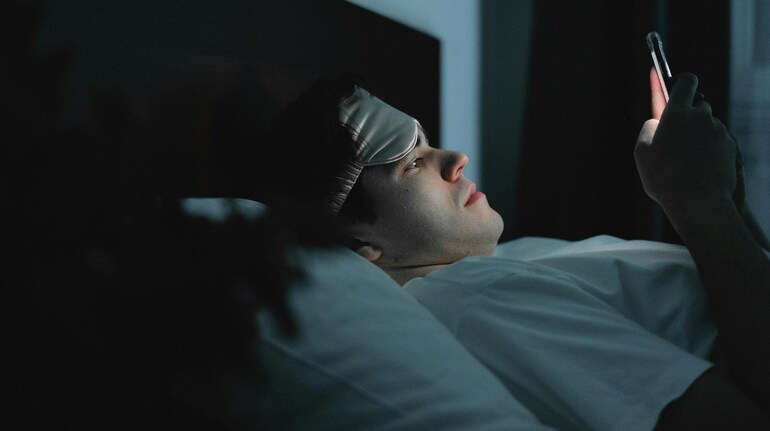

Not getting a good sleep through the night can negatively impact your health. According to researchers at Stanford Medicine, a single night’s sleep could quietly reveal whether your body is heading towards serious illness long before doctors ever spot it.
In a recent study scientists have trained an artificial intelligence system to predict the risk of more than 100 diseases using detailed sleep data. From cancer and dementia to heart attacks and mental health disorders, the model hunts for tiny mismatches between the brain, heart and breathing that the human eye usually misses. The research suggests sleep is less of a passive shutdown and more of a nightly health check we’ve been ignoring.
The AI, called SleepFM, was fed nearly 600,000 hours of overnight sleep recordings taken from 65,000 people across decades. These weren’t basic fitness-tracker stats, but full polysomnography tests, the kind involving wires, sensors and a lab bed, tracking everything from brain activity and heart rhythms to eye flickers and airflow. Traditionally, doctors use only a fraction of this data to diagnose sleep disorders. The rest? Filed away, unexplored, until now.
Also read: Doctor says these 3 medicines can save a heart attack patient
Stanford sleep specialists realised they were sitting on a physiological goldmine. For eight hours straight, the body reveals how its systems sync up, or don’t. With AI finally capable of handling the sheer complexity, researchers say they’ve uncovered patterns that hint at future disease years before diagnosis.
Much like language models learn words and sentences, SleepFM learned sleep in five-second pieces. It was trained to understand how the brain, heart and lungs talk to each other overnight. When one signal goes missing, the AI learns to fill in the gaps, a trick that helps it spot when the body’s systems fall out of rhythm.
When researchers linked sleep data to long-term medical records, the results showed that AI could reliably flag risks for 130 conditions. It was especially strong at predicting Parkinson’s disease, dementia, heart attacks, breast and prostate cancer, and even overall mortality, often with accuracy already considered useful in clinical medicine.
The clearest danger signs appeared when body systems were out of sync, a brain deeply asleep while the heart behaved as if it were wide awake, for instance. Researchers believe future versions could work with wearable devices, turning ordinary nights at home into powerful early-warning systems.
Disclaimer: This article, including health and fitness advice, only provides generic information. Don’t treat it as a substitute for qualified medical opinion. Always consult a specialist for specific health diagnosis.
Discover the latest Business News, Sensex, and Nifty updates. Obtain Personal Finance insights, tax queries, and expert opinions on Moneycontrol or download the Moneycontrol App to stay updated!
Find the best of Al News in one place, specially curated for you every weekend.
Stay on top of the latest tech trends and biggest startup news.