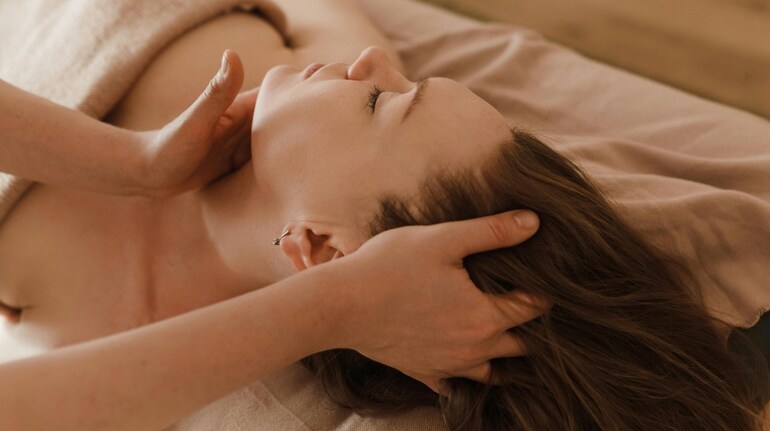
Dr Pradeep Kumar from Fortis Hospital, Bengaluru, explains the warning signs, the science behind the risk, and the safe practices everyone should follow.
Sinking into a salon chair on and letting someone soothe the tension in your neck, can feel comfortable. However, neurologists gave a warning that the very movement you associate with relaxation may, in rare cases, lead to a frightening medical emergency.
Specialists are observing a pattern that many barely know that some strokes are linked to forceful neck manipulation. “People assume these massages are harmless, but the vertebral arteries are extremely delicate,” warns Dr Pradeep Kumar, Consultant, Neurology, Fortis Hospital, Nagarbhavi.
“These arteries run along the back of the neck and provide blood to essential parts of the brain.” A sudden twist or snap can tear the artery’s inner wall, forming a clot that may travel upwards, triggering a stroke within minutes or hours.
Also read: Long walk Vs short walks: Apollo Neurologist says latter are better; Here's whyThe condition, called vertebral artery dissection, is being recognised in a growing number of salon-related cases. Dr Kumar says, “Many people walk out of a massage feeling just a little giddy. They brush it off, thinking it’s part of relaxation, but this dizziness can be an early red flag.” Symptoms like vomiting, imbalance, blurred vision, slurred speech or sharp neck pain should never be dismissed. Several people reported feeling only slightly dizzy after a massage, only to suffer a full-blown stroke later.
The vertebral artery bends sharply as it enters the skull, making it vulnerable. Untrained therapists often use forceful extensions and rotations that overstretch the artery, disrupting blood flow to the brainstem and cerebellum.
Sudden dizziness or loss of balance
Unsteady walking
Vomiting or nausea
Severe, unusual neck pain
Blurred or double vision
Difficulty speaking
Dr Kumar stresses, “If any of these symptoms appear after a massage, immediate medical attention is absolutely critical.”
Avoid neck cracking, sudden jerks, aggressive twisting and deep pressure near the upper spine. “Only trained physiotherapists or licensed experts should manipulate the neck,” Dr Kumar cautions. Gentle shoulder and upper-back massages are far safer for casual relaxation.
Early diagnosis can prevent permanent disability, and awareness is the first line of defence. By understanding the risks, and knowing when to seek help, people can still enjoy their wellness routines without unknowingly jeopardising their health.
Also read: Sleeping for less than 6 hours every night? Doctors have a warning that you must not ignoreFAQs on neck massages:1. What are the main benefits of a neck massage?Neck massages can relieve muscle tension, reduce stiffness, improve circulation, and ease headaches caused by tight neck muscles.
2. Can a neck massage help with stress?Yes. Massaging the neck activates the body’s relaxation response, lowering stress hormones and promoting calmness.
3. How long should a neck massage last?A typical neck massage lasts 10–20 minutes, which is usually enough to loosen muscles and reduce discomfort.
4. Is it safe to give yourself a neck massage?Generally yes—gentle self-massage is safe. Avoid deep pressure on the spine and stop if you feel sharp or worsening pain.
5. How often should you get a neck massage?For tension relief, 2–3 times per week is common. For long-term maintenance, once a week or as needed works well.
Disclaimer: This article, including health and fitness advice, only provides generic information. Don’t treat it as a substitute for qualified medical opinion. Always consult a specialist for specific health diagnosis.Discover the latest Business News, Sensex, and Nifty updates. Obtain Personal Finance insights, tax queries, and expert opinions on Moneycontrol or download the Moneycontrol App to stay updated!
Find the best of Al News in one place, specially curated for you every weekend.
Stay on top of the latest tech trends and biggest startup news.