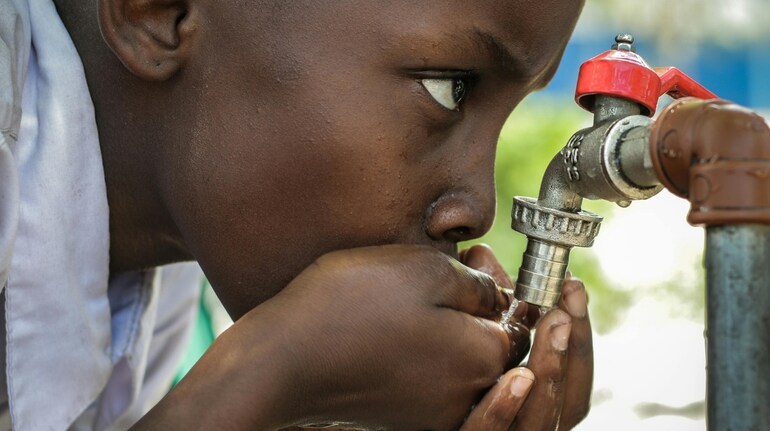

India’s cleanest city is battling one of its worst public health emergencies. Indore’s Bhagirathpura locality has reported 16 deaths and more than 1,400 cases of illness linked to contaminated drinking water, prompting health authorities to now formally classify the outbreak as an epidemic.
Residents say foul smell, bitter taste and visibly discoloured tap water were ignored for days before the surge in illness became impossible to overlook. State and Central rapid response teams are now combing through pipelines and local sources to pinpoint the contamination.
“We are treating this on the scale of an epidemic,” said chief medical and health officer Dr Madhav Hasani. “National teams are analysing data to identify whether this came from a single source or multiple points.”
Amid the mounting infections, one case has raised alarm among clinicians. According to NDTV, 67-year-old Bhagirathpura resident Parvati Bai Kondla has developed Guillain-Barre Syndrome (GBS)—a rare autoimmune condition in which the immune system attacks peripheral nerves, leading to weakness or even paralysis. Parvati is currently on ventilatory support and undergoing dialysis. A Nerve Conduction Study from
Indore’s Alpha Brain Study Centre reportedly detected clear signs of acute inflammatory nerve injury, including:
According to the NDTV report, a senior AIIMS said the result is “medically significant and deeply concerning” as GBS can be triggered by infections—including those spread by contaminated water.
Still, health officials say confirmation is pending. “GBS is a clinical diagnosis and can arise from many causes,” said Dr Hasani. “We have yet to receive an official report linking this case to the outbreak.”
Also Read: What is Guillain-Barre Syndrome, rare disorder behind 1 death, over 100 cases in Pune?
GBS is a rare autoimmune disorder that typically follows a viral or bacterial infection.
The exact cause remains unclear, but it often begins days or weeks after:
In extremely rare cases, surgery, trauma or even vaccination may act as triggers.
GBS usually starts subtly and progresses rapidly. Warning signs include:
If untreated, weakness can progress to paralysis, making the condition a medical emergency.
Because the disorder affects nerves that control movement and body functions, complications may include:
Most patients eventually recover, though recovery can take months.
What is Guillain-Barre Syndrome (GBS)?
GBS is a rare autoimmune disorder where the immune system attacks the peripheral nerves, leading to weakness or paralysis.
What causes GBS?
The exact cause is unclear, but it often follows viral or bacterial infections such as Campylobacter, influenza, cytomegalovirus, Epstein-Barr virus, hepatitis, HIV, COVID-19, Zika virus, and mycoplasma pneumonia. In rare cases, surgery, trauma, or vaccination can trigger it.
How is GBS diagnosed?
GBS is diagnosed based on clinical symptoms, nerve conduction studies, and sometimes lumbar puncture tests.
Can GBS be treated?
There is no cure for GBS, but treatments like plasmapheresis and immunoglobulin therapy can reduce severity and speed recovery.
Disclaimer: This article, including health and fitness advice, only provides generic information. Don’t treat it as a substitute for qualified medical opinion. Always consult a specialist for specific health diagnosis.

Discover the latest Business News, Sensex, and Nifty updates. Obtain Personal Finance insights, tax queries, and expert opinions on Moneycontrol or download the Moneycontrol App to stay updated!
Find the best of Al News in one place, specially curated for you every weekend.
Stay on top of the latest tech trends and biggest startup news.