






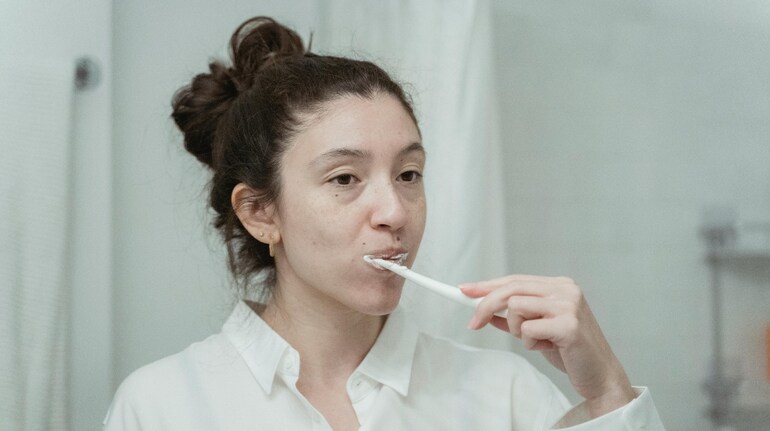

While some don’t think beyond brushing twice, others go overboard with a meticulous hygiene routine to maintain their oral health. It is true that poor oral health can lead to chronic diseases and excessive whitening or brushing after every meal can also damage your enamel.
In his new post on Instagram, Dr. Mark Burhenne, a US-based dentist, revealed seven common everyday habits that should be stopped because they silently harm your teeth and gums. He also suggested alternatives that are better for your oral health. Take a look!
Dr Burhenne warned, “It destroys your oral microbiome and raises your blood pressure by attacking the healthy bacteria.”
What to do: He highly recommended oil pulling, an ancient Ayurvedic practice that involves swishing oil in the mouth.
Those obsessed with brushing their teeth immediately after eating should stop because they are scrubbing away their enamel.
What to do: Always wait for at least 30 to 45 minutes after eating your meal.
Mouth breathing shouldn’t be ignored as it points to an underlying airway obstruction that can become a cause for many other serious health problems. “Open mouth at rest, forward head posture, dark circles under the eyes. These are airway red flags, not “just a phase”,” the dentist warned.
If you are obsessed with teeth whitening, you should know that your teeth enamel doesn’t grow back. “Peroxide sensitivity is a warning you’re doing irreversible damage, not a side effect to push through,” Dr Burhenne added.
Many people think snoring is normal, but Dr Burhenne explained it’s not. “It’s a sign your airway is obstructed. It’s connected to heart disease, cognitive decline, and metabolic dysfunction.”
What you should do: He advised consulting an AADSM dentist
Dr Burhenne advised it’s best to spit than rinse. "The fluoride (or hydroxyapatite) needs time to work. Rinsing it away defeats the purpose entirely.”
Also read: Doctor says these 3 medicines can save a heart attack patient
It’s best to take preventive measures before it’s too late. “By the time a tooth hurts, you’ve lost the window where you can reverse the cavity (called an incipient lesion). Pain is late-stage. Prevention is the whole game.”
1. What are considered bad oral habits?
Habits like nail biting, teeth grinding (bruxism), thumb sucking, mouth breathing, chewing ice, and using teeth to open packages.
2. How do bad oral habits affect dental health?
They can cause tooth wear, chipped teeth, jaw pain, gum damage, sensitivity, and even misalignment over time.
3. Can teeth grinding be harmful?
Yes. Chronic grinding can damage enamel, cause headaches, jaw disorders (TMJ), and increase tooth sensitivity.
4. Do childhood oral habits affect adult teeth?
Yes. Prolonged thumb sucking or mouth breathing in childhood can impact jaw development and tooth alignment.
5. How can bad oral habits be corrected?
Awareness, stress management, dental guards for grinding, orthodontic treatment if needed, and regular dental check-ups can help.
Disclaimer: This article, including health and fitness advice, only provides generic information. Don’t treat it as a substitute for qualified medical opinion. Always consult a specialist for specific health diagnosis.
Discover the latest Business News, Sensex, and Nifty updates. Obtain Personal Finance insights, tax queries, and expert opinions on Moneycontrol or download the Moneycontrol App to stay updated!
Find the best of Al News in one place, specially curated for you every weekend.
Stay on top of the latest tech trends and biggest startup news.





