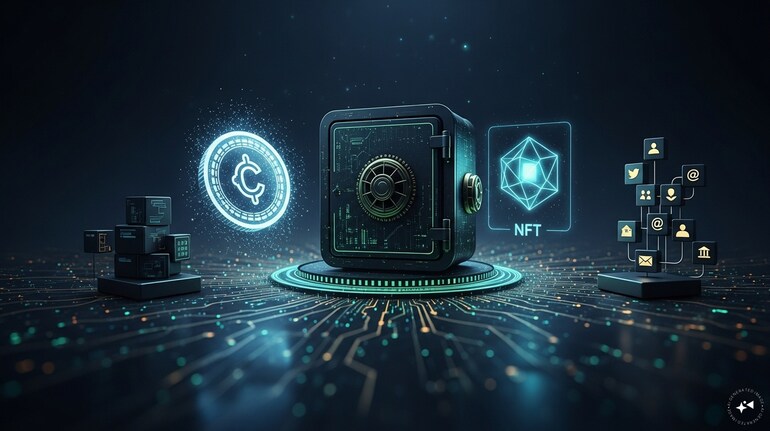

Life is full of uncertainties, and unexpected events can leave families not only grieving but also burdened with the task of managing a loved one's belongings. This is why inheritance planning is so important. It ensures that all assets, whether physical, financial, or digital, are seamlessly transferred to the beneficiaries. As digital assets like cryptocurrencies and NFTs continue to grow in popularity, having a well-thought-out inheritance plan has become more essential than ever.
Which digital assets can be inherited?
Digital assets capable of inheritance broadly include any electronically stored property or rights that possess either economic value or legally recognisable interests.
“These encompass online investment and Demat accounts holding securities, balances in digital wallets, intellectual property hosted online, domain names, digital documents stored on cloud platforms, email accounts, and monetised social media profiles. Increasingly, blockchain-based assets such as Bitcoin, Ethereum, NFTs, and other tokenised digital assets also constitute inheritable property,” said Tushar Kumar, Advocate, Supreme Court.
What does the law say in the context of inheriting digital assets?
From a legal standpoint, prudent succession planning for digital assets must be undertaken with the same diligence accorded to conventional property. Individuals should maintain a confidential inventory of digital holdings, clearly incorporate such assets within their testamentary dispositions under the framework of the Indian Succession Act, 1925, and, where possible, register nominees or designated beneficiaries with financial intermediaries.
“It is critical to ensure the preservation of access credentials, whether through encrypted password managers, sealed instructions to the executor, or carefully structured digital asset memoranda, so that heirs may practically realise the asset upon succession,” said Apurv Sardeshmukh, Managing Partner and Co- Founder, Stride Legal.
Given that many digital platforms operate under contractual terms governed by foreign jurisdictions and treat user accounts as non-transferable licences rather than proprietary interests, careful documentation and estate planning are indispensable to ensure that valuable digital wealth does not remain locked, disputed, or permanently lost upon the owner's death.
What are the different ways to claim digital assets after the owner's death?
Social media: Profiles now have ‘Legacy Contacts’ or ‘Inactive Account Managers’. If a nominee has been appointed, they can directly download data and memorialise the profile. However, the nominee will not be able to access private messages.
Cryptocurrency: Blockchain-based digital currencies can be claimed by providing a death certificate, a succession certificate or a will. For self-custodial wallets, physical access to seed phrases or recovery phrases is essential.
NFT (Non-Fungible Token): NFTs are unique and non-interchangeable digital assets that represent ownership over artistic creations such as art, music, etc. Their value largely depends on rarity.
NFTs are usually distributed among legal heirs as per personal laws if the owner dies intestate. In the case of a will, they are bequeathed accordingly. If an NFT is stored on platforms like WazirX, legal heirs can contact the platform directly by presenting a death certificate, succession certificate, and identity proof. Upon verification, the platform may transfer the NFT to the heirs.
However, many NFT holders use smart contract switches that automatically transfer the NFT to a specific wallet if it remains unchecked for a certain period. Inheriting an NFT does not automatically transfer intellectual property rights.
Digital Securities: Securities regulated by SEBI follow a more simplified process. If a nominee is registered, then by presenting a ‘Transmission Request Form’ and a death certificate, the shares can be transferred to the nominee. On online platforms shares are typically transferred to the nominee’s demat account within 30 days.
Digital Documents (PDFs, cloud-stored data, emails): It is important to note that a nominee under the Digital Personal Data Protection Act (DPDP) Act acts as a ‘key holder’ or trustee. They have the legal right to access the account to prevent identity theft or manage your legacy, but the actual value within those documents (such as a manuscript or business data) still belongs to the legal heirs under the Indian Succession Act.
Google allows transfers through the Inactive Account Manager option, Apple has a Legacy Contact feature, while Microsoft generally requires a formal court order.
Nupoor Maharaj, Advocate, Delhi High Court, explains how to plan succession for digital assets:
Statutory Nomination Rights: Under Section 10 of the DPDP Act, individuals have the right to nominate a representative to exercise their data rights posthumously. This is critical for managing the ‘digital persona’ (emails, cloud storage) separately from financial assets.
Appointment of a Digital Executor: It is professionally advisable to name a ‘Digital Executor’ in a will, a tech-savvy individual specifically empowered to manage hardware, passwords, and two-factor authentication devices.
Smart Contract Switches: These are self-executing codes that automate asset transfer upon a period of inactivity. Under the Bharatiya Sakshya Adhiniyam (BSA), 2023 (which replaced the Evidence Act), these function as electronic records and carry significant evidentiary weight in proving the owner's intent.
Legacy Contracts / Inactive Account Manager Feature: This feature allows you to generate an ‘Access Key’. After your death, your heir provides this key along with a death certificate.
What are the key points to keep in mind when planning the succession of digital assets?
The first point to check is whether the asset is legally recognised and whether regulations allow its lawful transfer or inheritance. “Individuals should maintain a clear inventory of their digital assets, use legacy tools provided by platforms where available, securely store access credentials, and clearly mention digital holdings, particularly virtual digital assets, in their wills or trust arrangements,” said Tanuj Sud, Partner & Co-Founder, Gravitas Legal.
Discover the latest Business News, Sensex, and Nifty updates. Obtain Personal Finance insights, tax queries, and expert opinions on Moneycontrol or download the Moneycontrol App to stay updated!
Find the best of Al News in one place, specially curated for you every weekend.
Stay on top of the latest tech trends and biggest startup news.