






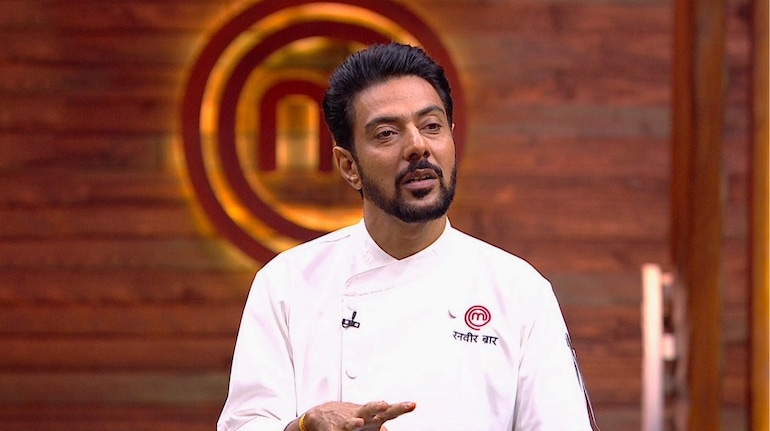

For Ranveer Brar, food has never been just about taste. It has always been about time, memory, and meaning. As MasterChef India returns with a renewed focus on celebrating the pride of Indian flavours, Ranveer finds himself at the intersection of culture and cuisine, not just as a judge, but as a storyteller shaping how the country sees its food. At a time where Indian cuisine no longer needs explanation or validation, he believes the narrative has fundamentally shifted.
From the “unhyphenation” of Indian food on the global stage to the deeply personal stories home cooks bring into the MasterChef kitchen, Ranveer Brar sees this season as a reflection of a confident, forward-moving India.
Whether he is encouraging contestants to articulate the emotional roots of a dish, warning against innovation that disrespects tradition, or recalling a simple childhood meal of churi made by his grandmother, Ranveer’s approach is rooted in empathy and authenticity.
Alongside fellow judges Vikas Khanna and Kunal Kapur, he champions patience, temperament, and storytelling as essential ingredients, reminding aspiring cooks that great food isn’t just cooked, it’s lived. Excerpts from an exclusive conversation with MoneyControl:
This year’s theme is about celebrating the pride of Indian flavours. What does “Desh Front Foot Par Chal Raha Hai” mean to you as a judge and a storyteller through food?
I think we’ve always spoken about food and culture as our soft power. But India is moving forward. For me, it’s the fact that our food and stories are truly being celebrated across the world. There was a time when we needed to explain Indian culture and Indian food. And when people got it, we had to explain North Indian culture, North Indian food, South Indian culture, and South Indian food. We don’t need to explain anything anymore. The world knows, right? And the world is celebrating it. That, for me, is very important. There is this "unhyphenation" of Indian cuisine that has happened, and that is what we’re trying to bring to the show.
You’ve previously spoken about the narrative power of food, how dishes carry stories and culture. How will that perspective shape your approach this season?
For me, stories shaping the narrative are really, really important. Even when we speak to our home cooks this season, we ask them about the story of the dish and the reason behind it. And I think that connects not just the home cooks, but the audience also, to the dish much better. You know, a story is a true connection to an otherwise singular directional recipe.
You’re known for bringing warmth and storytelling into your critique. How do you encourage contestants to connect emotionally with their dishes?
I think what has happened over the years is that I’ve started believing more and more in the power of storytelling, and hence, that has become my segue to both understanding and explaining food. And in this show, when the contestant comes with their food, I encourage them to explain their food through storytelling, through conversations. And that is what stays and sticks.
When a contestant presents a dish rooted in heritage but with a modern interpretation, what key balance do you look for?
The key balance that I look for is that the original dish, which is rooted in heritage, should be done full justice. The modernisation should make it more palatable and more appealing, and it should make the story more relevant rather than take over. I think a dish that is blasphemous to the original concept is something that really doesn’t work.
Food often evokes memory and culture. Can you share a personal dish that embodies your own food narrative and why it matters to you?
For me, the dish that always does it is churi. I remember my grandmother used to wait for me to say I was hungry, then get into the kitchen, make a hot roti, add hot ghee, and shakkar. She would then make these tiny balls out of it and give them to me. I always used to wonder how she could do it so fast! How her hands didn’t burn! But it goes to show the grit of the Indian grandmother and the joy she gets in cooking for her grandchildren. Even today, it connects me to my Punjabi roots, where as long as there is grain, there is ghee, and there is sugarcane, you will always have a meal.
How do you navigate moments when tradition and innovation collide, especially with strong regional dishes?
I think each one has to be judged on its own. I look for the deep-rootedness of the tradition and the need for innovation within it. If a dish requires innovation, then it is justified. First, does that tradition require innovation? And second, does the innovation enhance the overall experience of the tradition? That becomes very important for me.
If you could design a challenge purely inspired by your home state’s food, what would it look like?
If I could design a challenge purely inspired by my home state’s food, it would probably be an overnight cooking challenge inspired by Lucknow, where you leave things to marinate, cook, and simmer for a really long time. Dum Pukht is one of the cuisines of Lucknow, and I think the best flavour, or the best ingredient, that flavours food is time. I want people to understand and appreciate the fact that good food takes time, and time can create magic. Hence, I would create an overnight challenge.
Working alongside Vikas Khanna and Kunal Kapur again must be special. What is one thing you admire most about each of your co-judges?
It’s always special working with Vikas and Kunal. Vikas, I think, is the sage in the room. He’s the elephant, both in terms of memory and patience. I really admire his temperament, his patience, and the quiet calm he brings to the show.
Kunal, I think, is one of the most amazing hands when it comes to Indian cooking, Indian food, and understanding Indian cuisine. I’ve had the pleasure of working with him for almost five years, and we started our careers almost concurrently in the same hotel. So I have a lot of respect for Kunal.
Also Read: Chef-actor Ranveer Brar sustains severe spine injury, advised bed rest
The show now blends talented home cooks with intense challenges. What advice would you give to someone walking into the MasterChef India kitchen for the first time?
My advice to someone entering the MasterChef kitchen for the first time is not to get intimidated by the size, scale, and grandeur of things, or by the 22 cameras around you, but to believe in your relationship with food. Eventually, what really matters is what you bring to the show and the food you are cooking. That said, it’s also important to understand that MasterChef is not just a show of cooking prowess; it’s also a show of temperament, where you’re challenged with twists, turns, and time pressures at all points. The most even temperament usually wins.
Discover the latest Business News, Sensex, and Nifty updates. Obtain Personal Finance insights, tax queries, and expert opinions on Moneycontrol or download the Moneycontrol App to stay updated!
Find the best of Al News in one place, specially curated for you every weekend.
Stay on top of the latest tech trends and biggest startup news.





