






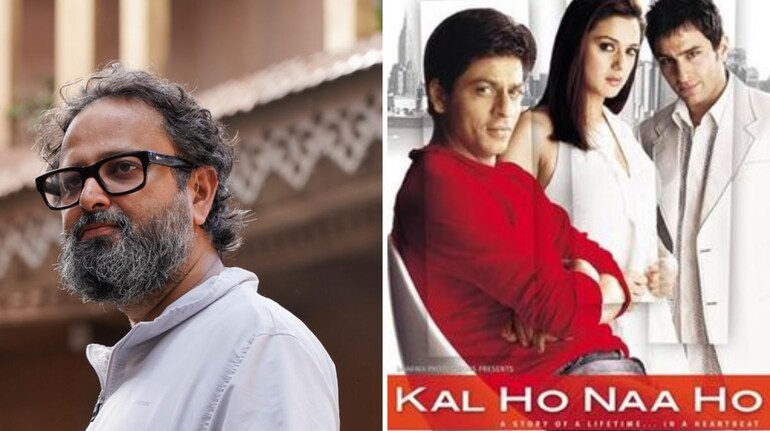

Noted filmmaker Nikhil Advani has spent over two decades navigating Hindi cinema’s constantly shifting expectations, often finding himself at the centre of polarised reactions.
From the emotional excesses of Shah Rukh Khan starrer Kal Ho Naa Ho to the unflinching realism of Mumbai Diaries, his career has rarely been about playing safe.
With Freedom at Midnight Season 2 on SonyLiv, he enters perhaps his most scrutinised phase yet, tackling history, politics and collective memory on a scale that inevitably invites debate.
The first season of Freedom at Midnight, which released in November 2024, sparked conversations not just around its subject matter but also its cinematic language.
Now with the release of season 2 on January 9, Moneycontrol asked him if why he kept some bits as 'glossy' but this was a charge Nikhil Advani firmly rejected and said he is clear that every aesthetic and narrative decision stems from intent, not ornamentation.
In an exclusive video conversation with Moneycontrol, Nikhil Advani spoke at length about the creative choices behind Freedom at Midnight, the enduring brickbacks he has received since Kal Ho Naa Ho (2003), and why backlash has never dictated his storytelling.
He also spoke about how failure, success and long-form storytelling have reshaped his confidence as a filmmaker. He also stressed on the fact that why history, especially for younger audiences, demands both honesty and empathy.
Excerpts from the exclusive conversation:
Ques: Do you think Freedom at Midnight is 'too glossy” for its subject. How do you respond to that?
Nikhil Advani: Whether it is glossy or not, I just decided that I don’t. I had done Mumbai Diaries, which was extremely dark and gritty. I mean, there are parts of Mumbai Diaries , which most people say we could not even see. It’s so dark. I say because electricity has gone in Bombay. So how can you see? Everything is dark. We just decided that our reference point was The Crown. When you’re saying glossy, you mean highlights — there are a lot of highlights coming through the window. The windows are being burnt out. We didn’t want to do blue screen. We shot on 86 sets. When you do a period show of this scale, you don’t want to go to a rundown, badly maintained 1940 ka building and then do everything on VFX and clean up everything on VFX.
Ques: The show is based on the acclaimed 1975 book Freedom at Midnight by Dominique Lapierre and Larry Collins. Did you ever worry about its perspective being questioned?
Nikhil Advani: No, they are in the book. They are all part of the book, and the book has been in publication since 1975. So anybody who had to raise those questions would have raised it between 1975 and 2025.
Whether we question the perspective through which it is written, that is not only an Indian perspective, it is a Western gaze, what is indisputable are the events that have taken place. That’s why the tagline of the show is ‘The history you may not know, the history you should know.’
My instruction to the writing room was very clear: if a scene does not reflect the sacrifice of many and the ambition of one, discard it.”
Ques: You’ve said you want children to engage with history through this show. How does Season 2 build on that idea?
Nikhil Advani: In Freedom at Midnight Season One, I ended the entire season with Vaishnav Janato. It was sung by Nirali Kartik. It’s a beautiful rendition. In Season Two, when Ashu (Ashutosh Phatak), the music director, asked me how do we end it, I said we will end with Vaishnav Janato again — but with children singing it. Because the children must take this country forward. Just like Rocket Boys made children interested in science, we want Freedom at Midnight to make children interested in history.”
Watch the exclusive interview with Nikhil Advani
Ques: You’ve faced backlash before most notably for Kal Ho Naa Ho. Did that experience prepare you for this moment? Do you feel you could have toned down the characters.
Nikhil Advani: Why should I tone anything down? I have got brickbacks for Kal Ho Naa Ho. People said, what is this, it’s such a bubble gummy film. I am used to it. There is a song in Amar Prem — ‘kuch toh log kahenge, logon ka kaam hai kehna.’ That’s really how I see it. You can’t make work thinking about who will be offended.
Ques: At what point did you begin taking yourself more seriously as a filmmaker?
Nikhil Advani: Failure of Patiala House and success of D-Day allowed me to create my own production company. I realised that I was not taking myself seriously as people were taking me. When I announce something now, there are people waiting for it — maybe a handful — but there are people. I realised technicians, writers, actors want to work with us. My schooling has been Dharma Productions and Yash Raj, where there is a freedom of not answering why you’re doing something. That became a big learning.
Ques: With AI becoming part of filmmaking conversations, where do you stand?
Nikhil Advani: I don’t know enough about AI. There’s no question one has to learn more about it, understand how it has to be used sensibly, ethically, legally. There are only 15 or 20 heads of department what about the other 380 people working on a film? They will be hit the hardest. AI is here, it’s not going anywhere. We have to figure out how to use it correctly.”
Nikhil Advani has carved a distinctive, often unpredictable trajectory in Hindi cinema one that mirrors the industry’s own evolution over the last two decades.
He made his mark in the industry with Shah Rukh Khan, Preity Zinta and Saif Ali Khan starrer Kal Ho Naa Ho, which instantly placed him in the popular imagination as a director of emotion-forward, mainstream storytelling.
He then expanded his filmography across romance, political thrillers and long-form storytelling. From D-Day to Mumbai Diaries, Vedaa, Freedom at Midnight and many more, Emmay Entertainment is producing some binge worthy content not only on OTT but theatricals too.

Discover the latest Business News, Sensex, and Nifty updates. Obtain Personal Finance insights, tax queries, and expert opinions on Moneycontrol or download the Moneycontrol App to stay updated!
Find the best of Al News in one place, specially curated for you every weekend.
Stay on top of the latest tech trends and biggest startup news.





