






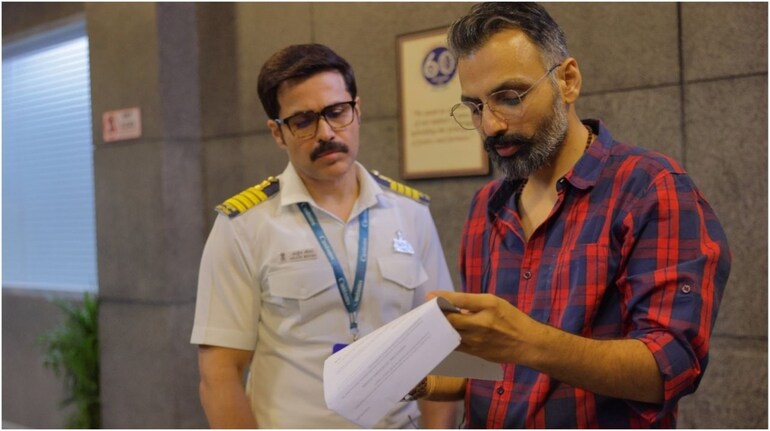

For director Raghav M Jairath, Taskaree: The Smuggler’s Web was not just another thriller, it was a chance to look closely at a world most people pass through without a second thought. Airports, security checks, and customs counters are everyday spaces, but for Raghav, they became the gateway to a much larger, darker ecosystem.
“When I came on board, the script by Neeraj Pandey and Vipul Rawal was already written,” he tells MoneyControl. “But research doesn’t stop once the script is done. In fact, that’s when it becomes more focused.” He explains that the team broke the material down episode by episode, deciding what would actually make it to screen. “There’s no point researching everything under the sun. You need to understand what you’re showing the audience and then go deep into that.”
Working closely with Neeraj Pandey for over a decade has shaped that discipline. “At Friday Filmworks, research is not optional,” Raghav says. “Neeraj sir has always believed that if the foundation isn’t solid, the thriller won’t work. I’ve seen that approach since 2013, and it’s something that stays with you.”
One of the biggest creative decisions, according to him, was telling the story through the eyes of customs officers rather than smugglers. “While shooting, we all have crossed the green channel numerous times,” he says. “And you get curious to know how they live? What they do? How they catch? Because every system will have gaps and these gaps get exploited by these syndicate members or by these criminals. And every time these gaps would keep changing and these guys would find different new ways to do this. And the beauty is how these officers keep updating themselves and keep filling up these gaps and finding these guys again and again and again."
"So every day is a different story, every bag has something else, every person has something else to do. Looking at all these things, it became very interesting for all of us to tell a story from the lens of custom officers and to expose how the syndicate actually operates.”
As the research deepened, the sheer scale of smuggling became impossible to ignore. “What really shocked us was gold smuggling,” Raghav admits. “The amount of gold that comes into the country daily is huge, and what gets caught is just a small percentage. That’s when you realise how big the network really is.” Once the team followed the trail across borders, the story naturally expanded. “Different countries specialise in different things — gold, drugs, electronics. When you connect the dots, the scale becomes global.”
"I won't say that we wanted to tell a story from a scale point of view. We want to tell a great story, but the reason we chose this story is because the story had a lot of scale inherently in itself," he explains.
Recreating that reality on screen came with serious logistical and ethical challenges. “Airports are probably the toughest locations to shoot in,” he says. “You’re working under constant security, limited time, and you can’t disturb real passengers. There’s no room for mistakes.” Beyond logistics, there was also the responsibility of what not to show. “We were very careful not to reveal sensitive operational details. This is a show, not a manual. You can suggest how things work without spelling everything out.”
Raghav's background in television helped him navigate these pressures. Having handled large-scale shows like Kaun Banega Crorepati and Bigg Boss, he believes that experience was invaluable. “Television teaches you discipline,” he explains. “You learn to be prepared, to respect time, and to get things right quickly. That really helps when you’re working on something as complex as Taskaree.”
The workshops for the series were intense, he recalls, even for actors with smaller roles. “We wanted everyone to understand the world they were in. Even if your role is small, you need to know how your character thinks, how they speak, how they move.”
Some of the research left a lasting impact on him. “The stories of drug mules were especially disturbing,” Raghav shares. “People risk their lives, literally carrying drugs inside their bodies, for very little money. It's very disturbing, but we showed that scene from a comic sense, to show what was happening. Imagine you're carrying something so dangerous in your stomach. What if it bursts? If it bursts, it's instant death. As filmmakers, we choose to tell the story from a little far away lens without making you feel the cringe of it, but also telling you that this is happening."
On the ongoing debate about streaming platforms and audience attention spans, Raghav remains pragmatic. “Everyone’s still figuring it out,” he says. “There’s no fixed formula yet. Streaming has just given us a bigger canvas.” For him, the core remains unchanged. “I think if we just tell the story that we want to say, we are motivated enough to make sure that the emotion and the expression of the story translates through to the audience, I think they will all connect with it instantly.”
Looking ahead, Raghav believes Indian audiences are ready for more than the industry sometimes assumes. “Viewers today are exposed to global content,” he says. “They’re smarter, more curious. You can’t underestimate them.” Ultimately, his own guiding principle remains simple, “I just want to tell stories that excite me. If I’m genuinely interested, chances are the audience will be too.”
Discover the latest Business News, Sensex, and Nifty updates. Obtain Personal Finance insights, tax queries, and expert opinions on Moneycontrol or download the Moneycontrol App to stay updated!
Find the best of Al News in one place, specially curated for you every weekend.
Stay on top of the latest tech trends and biggest startup news.





