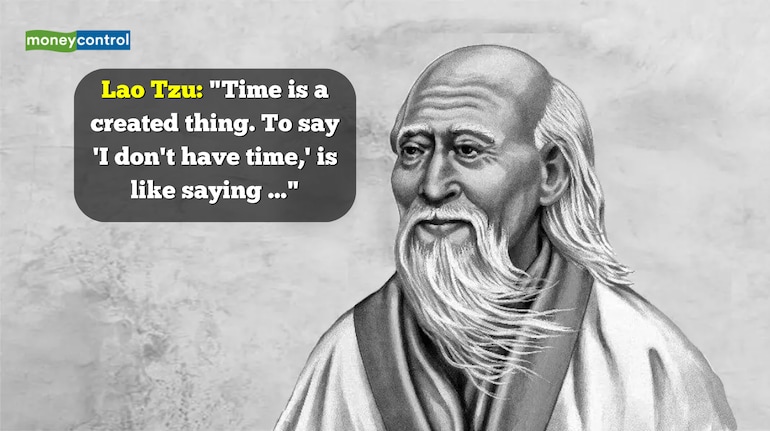

We live in an age where the phrase "I don't have time" is a universal sigh, a ready excuse for countless postponed dreams and unattended priorities. The ancient sage Lao Tzu, founder of Taoist philosophy, saw through this modern complaint with startling clarity centuries ago. He offered a simple but revolutionary reframe:
"Time is a created thing. To say 'I don't have time,' is like saying, 'I don't want to.'"
This is not a scolding about productivity. It is a profound insight into personal responsibility and the true nature of our choices.
Time as a Creation, Not a Container
First, Lao Tzu challenges our basic assumption. We often think of time as a fixed container—a limited tank that gets filled by our obligations, leaving nothing for our desires. Lao Tzu says, "Time is a created thing." This means our experience of time is not a pre-set condition imposed on us, but something we actively shape through our intentions and actions. We "create" time for what we deem essential. We find an hour for a crisis, make minutes for a phone call from a loved one, or carve out years for a chosen career path. The time doesn't magically appear; we generate it by deciding something is important enough to displace other things.
The Honesty of "I Don't Want To"
The second line delivers the piercing truth. When we claim "I don't have time," we are usually describing a feeling of overwhelm or reluctance. Lao Tzu translates this into a statement of priority: "I don't want to." It is a call for radical self-honesty.
This isn't about judging our wants as good or bad. It’s about acknowledging the truth. You do have the same 24 hours as everyone else. If you are not writing that book, calling that friend, starting that exercise routine, or learning that skill, it is not because time is missing. It is because, in the hierarchy of your current commitments, comforts, and fears, that activity has not been prioritized. Something else—be it rest, distraction, fear of failure, or another obligation—is currently "winning" your created time.
A Tool for Empowerment, Not Guilt
Lao Tzu’s wisdom is ultimately empowering, not shaming. It moves the locus of control from an external force ("time") to an internal one ("my choices"). It asks us to stop being passive victims of a busy schedule and to become conscious architects of our days.
The next time you hear yourself say "I don't have time," pause. Hear Lao Tzu’s translation: "I don't want to enough, right now, to make it a priority." Then, you have a real choice. You can accept that this is your current honest priority without guilt. Or, you can decide that you truly do want it, and begin the creative act of making time for it by adjusting another commitment.
This simple shift in language transforms excuses into insights. It reminds us that our lives are built not by the time we find, but by the priorities we choose to create time for.
Discover the latest Business News, Sensex, and Nifty updates. Obtain Personal Finance insights, tax queries, and expert opinions on Moneycontrol or download the Moneycontrol App to stay updated!
Find the best of Al News in one place, specially curated for you every weekend.
Stay on top of the latest tech trends and biggest startup news.