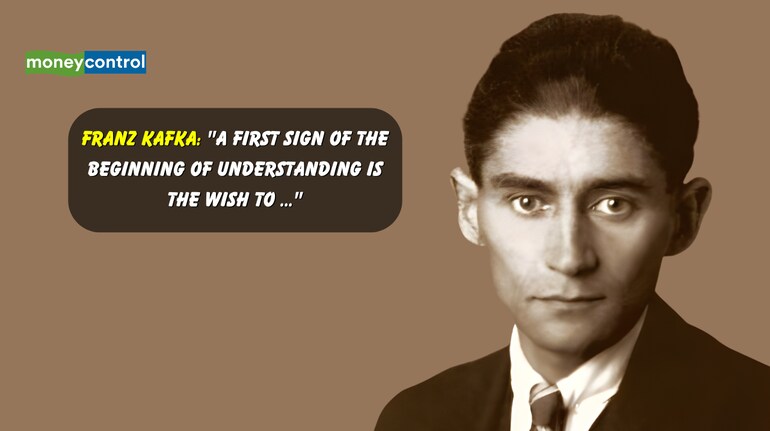
Franz Kafka, a writer who mastered the art of exploring anxiety and existential dread, offers a line that is as unsettling as it is profound: "A first sign of the beginning of understanding is the wish to die." At first glance, it appears shockingly dark, even nihilistic. But to dismiss it as mere pessimism is to miss the deeper, more nuanced truth Kafka points to about the painful birth of self-awareness.
This is not a glorification of death, but a stark metaphor for the necessary end of a former self.
To understand Kafka, we must see "the wish to die" not as a literal desire for physical end, but as a deep, spiritual exhaustion with a false way of being. Before "understanding" begins, we often live in a state of unconscious comfort. We are carried by unexamined routines, societal expectations and borrowed beliefs. This life may be numb or stressful, but it is familiar. It is a kind of psychological sleep.
The "beginning of understanding" shatters this sleep. It is the moment the veil lifts, and we start to see the contradictions, absurdities, and burdens of our constructed existence. We recognize the weight of roles we play, the emptiness of pursuits we never chose, and the fragile scaffolding of a life built on others' terms. This new sight is not peaceful; it is acutely painful. The old identity—the comfortable, sleeping self—now feels like a prison.
Thus, "the wish to die" emerges. It is the soul's desperate cry to escape the suffocating confinement of that inauthentic life. It is a wish for the false self to die, so that something more real might have space to be born. It is a craving for radical release from everything that feels alien and burdensome.
Kafka identifies this agonizing wish not as the end, but as the first sign. It is the crucial, painful catalyst. This despair is the proof that one has stopped sleepwalking and has truly begun to see. The comfort of ignorance is gone, but the clarity of a new way of living is not yet formed. One is caught in the in-between—a terrifying, lonely, but utterly necessary limbo.
The quote, therefore, is a strange comfort to anyone who has felt this profound alienation. It says: this crushing feeling is not a sign that you are broken, but that you are beginning to see. The wish for the old life to end is the precondition for a new one to begin. The journey forward from that point is about translating that wish—not into an end, but into a courageous letting go. It means actively "killing off" the parts of your life that are false, to make room for choices that are true.
Discover the latest Business News, Sensex, and Nifty updates. Obtain Personal Finance insights, tax queries, and expert opinions on Moneycontrol or download the Moneycontrol App to stay updated!
Find the best of Al News in one place, specially curated for you every weekend.
Stay on top of the latest tech trends and biggest startup news.