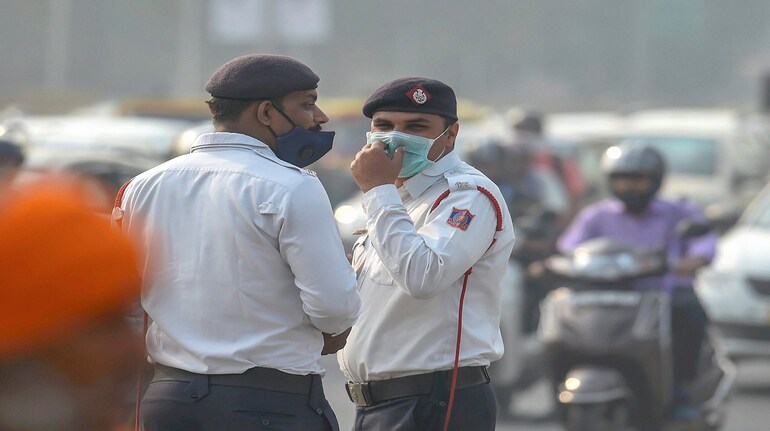
A profound public health and economic crisis, driven by relentlessly toxic air, is now reshaping life in the national capital, with a significant portion of its residents considering leaving entirely, a major new report has concluded.
The study, ‘Countering Delhi NCR Air Pollution & Aligning Solutions: Clean Air as a Right to Life (Article 21)’, released by the Illness to Wellness Foundation (ITWF) with support from the CII–ITC Centre of Excellence for Sustainable Development, paints a stark picture of a structural, year-round problem. It moves far beyond the familiar winter smog, detailing how pollution is corroding health, destabilising education and business, and prompting a citizen exodus.
A survey of 17,000 residents, included in the report, found that 40% would prefer to move out of Delhi to escape the polluted air and its damaging health effects. This desire to leave underscores how the crisis is disrupting the city’s fundamental liveability.
The health impacts are severe and widening. Prolonged exposure is estimated to reduce life expectancy in Delhi by 8.2 years, while increasing risks of stroke, heart disease and chronic lung illness. Medical experts at the report’s launch emphasised that the neurological toll is particularly alarming.
Dr Daljit Singh, vice chairman and head of neurosurgery at Max Smart Super Speciality Hospital, stated that air pollution has become a major risk factor for stroke, with nearly 17% of global cases linked to polluted air. He confirmed hospitals see clear spikes in stroke admissions during high-pollution months and warned of growing associations with dementia, Alzheimer’s and Parkinson’s disease.
"The damage remains invisible," said Dr G C Khilnani, chairman of pulmonary medicine at PSRI Hospital, who described the situation as a "man-made public health emergency." He warned that ultra-fine particles silently damage multiple organs, and real change will only come when society recognises its role in the crisis.
The economic consequences are staggering. Nationally, air pollution costs India USD 36.8 billion annually, a figure that balloons to USD 95 billion — roughly 3% of GDP — when productivity losses and premature deaths are accounted for. For Delhi alone, an analysis by CREA cited in the report estimates annual losses of Rs 64,250 crore, wiping out 5.8% of the city’s GDP.
This economic strain manifests daily. The Illness to Wellness Foundation report notes suppressed travel and discretionary spending during severe smog, reduced footfall in retail, tourism and hospitality, and forced school closures of 10-15 days annually, which disrupts learning and burdens families. Healthcare systems buckle under pressure, with respiratory and cardiac outpatient visits rising by approximately 25% during peak pollution episodes.
Former Union health secretary Rajesh Bhushan, now chairperson of the ITWF, stressed that air pollution must be treated as a core public health issue. He noted that prolonged exposure not only shortens lives but adds years of chronic illness, reducing productivity and quality of life and called for coordinated action across healthcare, urban planning and public awareness.
The report identifies the perennial sources of Delhi’s pollution: vehicles (32%), construction and road dust (28%), industry (17%), crop residue burning (9%), thermal power plants (8%), and household sources (6%). This persistent emission mix overwhelms short-term emergency measures like the Graded Response Action Plan (GRAP).
Despite the grim assessment, the report points a way forward, drawing lessons from cities like London, Beijing, and Paris. It argues that lasting clean-air gains are achievable through continuous enforcement, a transition to clean mobility, and long-term urban planning reforms.
The conclusion is unequivocal: stop-gap solutions have failed. Securing Delhi’s future — and the right of its citizens to breathe clean air — demands unwavering, year-round structural reform and collective public action.
Discover the latest Business News, Sensex, and Nifty updates. Obtain Personal Finance insights, tax queries, and expert opinions on Moneycontrol or download the Moneycontrol App to stay updated!
Find the best of Al News in one place, specially curated for you every weekend.
Stay on top of the latest tech trends and biggest startup news.