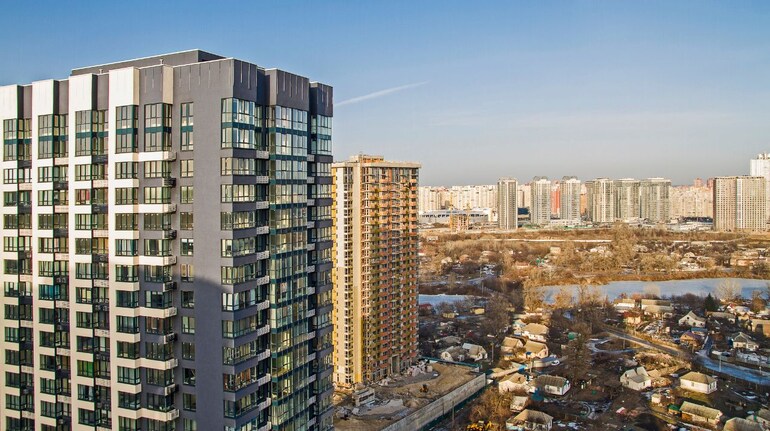

The Union Budget 2026’s proposal to create City Economic Regions (CERs) is expected to open up new real estate growth corridors across Tier-2 and 3 cities along with temple towns, as the government looks to drive region-based urban development backed by assured, multi-year infrastructure funding.
Market observers said that the move is set to reshape urban growth and real estate demand beyond metros. The focus on temple towns and tourism-led economies is likely to spur residential, rental housing and retail development, while industrial and logistics-led CERs could drive demand for worker housing, industrial parks and support infrastructure.
Union Finance Minister Nirmala Sitharaman on February 1 said cities are India’s engines of growth and that the government will now focus on smaller cities and temple towns that require modern infrastructure and basic amenities to unlock their economic potential.
According to government officials, under the plan, CERs will be mapped based on specific growth drivers—such as manufacturing, logistics, services, education and tourism—to harness the economic power of agglomeration.
“Each City Economic Region will receive Rs 5,000 crore over five years, with funds released through a challenge mode and a reform-cum-results based financing mechanism, encouraging states and urban local bodies to accelerate infrastructure creation, connectivity and civic upgrades,” officials said.
Impetus to Real Estate
Real estate developers said the CER framework could unlock planned urban expansion, driving demand for housing, commercial spaces, mixed-use projects and hospitality assets in emerging cities.
Pradeep Aggarwal, Founder & Chairman, Signature Global (India) Ltd, said that urban development receives a sustained boost with an allocation of Rs 5,000 crore per year for five years for City Economic Regions, alongside a continued focus on Tier-2 and Tier-3 cities as emerging growth centres.
“These measures will enable planned urbanisation, support civic infrastructure, and unlock housing demand across new geographies,” he said.
Gurpal Singh Chawla, Managing Director, TREVOC Group, said that the sustained emphasis on capital expenditure and urban infrastructure in this Budget reinforces the government’s commitment to long-term economic growth.
“The introduction of the City Economic Regions framework, with dedicated funding for Tier-2 and Tier-3 cities, is a structured step towards improving connectivity, civic amenities and economic activity beyond metros. While immediate demand impact may be limited; this structural focus will gradually strengthen real estate fundamentals in emerging urban centres,” he said.
Experts said that the focus on smaller cities and religious centres is also likely to accelerate residential and rental housing demand, while supporting retail and hospitality development around tourism-led economies.
Jaideep Ahuja, Managing Director and CEO, Ahuja Residences Private Limited, said that the continued year-on-year increase in public capex reflects a consistent commitment to building demand through infrastructure.
"This directly supports both hotels and serviced apartments by enabling expansion into growth corridors where business travel and long-stay requirements are accelerating," he said.
Shift to region-based planning
Industry experts view CERs as a shift towards region-based urban planning, enabling better land use, transit-oriented development and infrastructure-led real estate growth, while easing pressure on overcrowded metros.
Manik Malik, CEO, BPTP said that the emphasis on infrastructure-led expansion across Tier-1 and Tier-2 cities is expected to support orderly urban growth and strengthen regional market fundamentals over time.
“The continued focus on infrastructure creation, economic stability, and spatial development corridors provides a constructive policy backdrop for stakeholders across the real estate ecosystem, including developers, lenders, and homebuyers,” he said.
Experts said that if implemented effectively, could strengthen real estate fundamentals in emerging markets over the medium to long term.
Aditya Goel, Co-Founder, One Prastha Group, said that focusing on development in tier-2 cities, would help in further expansion of amenities for the customers and promote a healthy and sustainable environment for developers as well as the customers.
“Sustained capital expenditure and emphasis on infrastructure-led growth, urban development will further boost employment and strengthen the organisation of the sector,” he said.
Discover the latest Business News, Sensex, and Nifty updates. Obtain Personal Finance insights, tax queries, and expert opinions on Moneycontrol or download the Moneycontrol App to stay updated!
Find the best of Al News in one place, specially curated for you every weekend.
Stay on top of the latest tech trends and biggest startup news.