






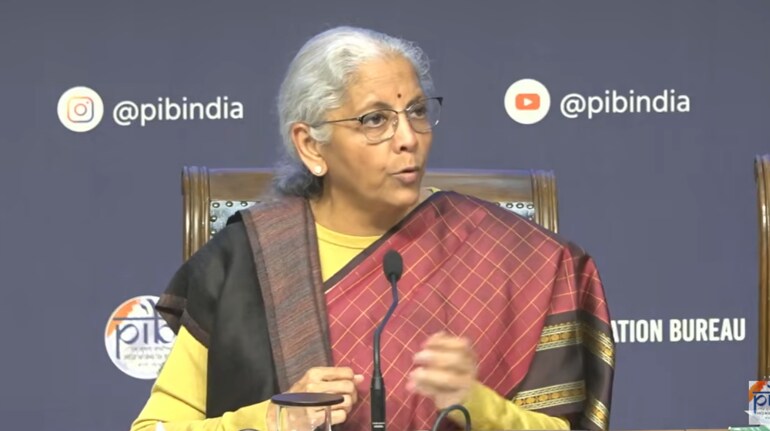

Placing artificial intelligence at the heart of agricultural reforms, Union Finance Minister Nirmala Sitharaman, on February 1, announced the launch of Bharat-VISTAAR, a multilingual AI-powered platform aimed at transforming farm advisory services and boosting productivity across the country.
Presenting the Union Budget 2026-27 in the Lok Sabha, FM Sitharaman said Bharat-VISTAAR, short for Virtually Integrated System to Access Agricultural Resources, will integrate AgriStack portals and the Indian Council of Agricultural Research (ICAR) package of agricultural practices with advanced AI systems to deliver customised, real-time advisory support to farmers.
"I propose to launch Bharat-VISTAAR, a multilingual AI tool that shall integrate the AgriStack portals and the ICAR package on agricultural practices with AI systems. This will enhance farm productivity, enable better decision-making for farmers and reduce risk through customised advisory support," FM Sitharaman noted.
According to the Budget documents, Bharat-VISTAAR will form a key pillar of the government’s Digital Public Infrastructure (DPI) for agriculture, aimed at empowering farmers with actionable information, streamlining collaboration among stakeholders and ensuring the long-term sustainability of digital agricultural extension services.
The Finance Ministry, in its statement, noted that the initiative reflects the Budget’s emphasis on emerging technologies and artificial intelligence as critical enablers in fulfilling the government’s “second Kartavya”, meeting the aspirations of common citizens and strengthening their capacity to become active partners in India’s journey towards prosperity.
Alongside Bharat-VISTAAR, Sitharaman also announced a series of agriculture and allied sector initiatives to raise farm incomes, diversify output and generate rural employment. These include a Coconut Promotion Scheme focused on major coconut-growing states, aimed at increasing production and productivity by replacing non-productive trees with high-yielding varieties.
“To further enhance competitiveness in coconut production, I propose a coconut promotion scheme to increase production and enhance productivity through various interventions, including replacing non-productive trees with new saplings in major coconut-growing states,” she said.
India is among the world’s largest coconut producers, accounting for about 31 percent of global output, with nearly 30 million people, around 10 million of them farmers, dependent on coconut cultivation for their livelihoods.
The Budget also underscored the broader role of emerging technologies in India’s growth story.
It highlighted initiatives such as the AI Mission, National Quantum Mission, Anusandhan National Research Fund, and the Research, Development and Innovation Fund, while noting the growing importance of the Animation, Visual Effects, Gaming and Comics (AVGC) sector, projected to require nearly two million professionals by 2030.
To support India’s “Orange Economy”, the Budget proposed setting up AVGC Content Creator Labs in 15,000 secondary schools and 500 colleges, with support to the Indian Institute of Creative Technologies, Mumbai. It also announced a new National Institute of Design in eastern India and a high-powered Education to Employment and Enterprise Standing Committee to assess the impact of AI and emerging technologies on jobs and skills.
Together, the measures signal a strong push to leverage AI and digital platforms, led by Bharat-VISTAAR, to modernise agriculture, strengthen rural livelihoods and align India’s farm and allied sectors with the country’s broader technology-driven development agenda.
Discover the latest Business News, Sensex, and Nifty updates. Obtain Personal Finance insights, tax queries, and expert opinions on Moneycontrol or download the Moneycontrol App to stay updated!
Find the best of Al News in one place, specially curated for you every weekend.
Stay on top of the latest tech trends and biggest startup news.





