
Book Extract
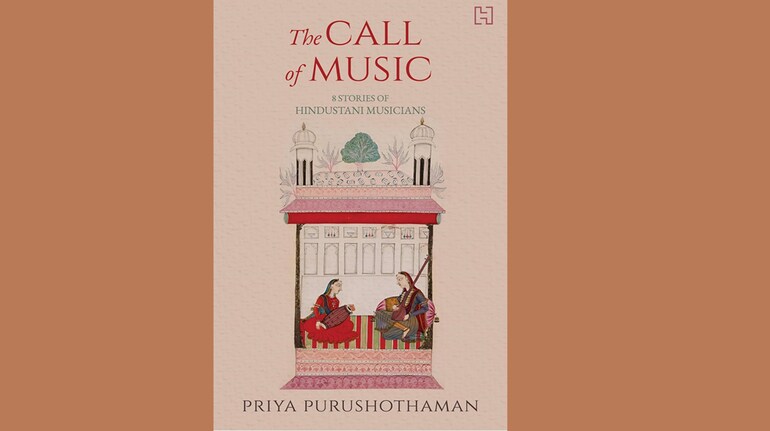
Excerpted with permission from the publisher The Call of Music: 8 Stories of Hindustani Musicians, Priya Purushothaman, published by Hachette India.
******
Finding a sarangi player in Connecticut – an American state filled with mansions of hedge fund managers, picket white fences, and Audis – is about as unusual as finding a French horn player in Uttar Pradesh. Yet, on one visit to the US, I was delighted to learn about a sarangi artiste living in New Haven, Connecticut, a college town known for being home to Yale University.
His name was Suhail Yusuf Khan, and our first meeting was for a video recording for YouTube. Suhail had a very sophisticated Delhi-ness to him – the grace and refinement with which he spoke, his impeccable attire from juttis to shawl, and above all, an immediate sense of affability. When we began playing, the sound of his sarangi wrapped us in the blanket of an intimate mehfil, adding warmth and life to the otherwise sterile recording studio. We were in a typically bland American suburb, but it felt like we were in Lucknow, circa 1940.
I was nervous to perform with a musician from such a celebrated family of hereditary musicians: Suhail is the grandson of the celebrated sarangiya, Ustad Sabri Khan, who was the recipient of many prestigious honours including the Padma Bhushan and Sangeet Natak Akademi awards. Sabri Khan Saheb was featured on the Indian postage stamp, and established his career as a leading accompanist of All India Radio for two decades, playing with artistes from a golden era of Hindustani music in which just one day of radio broadcasts could include performances by Ustad Bade Gulam Ali Khan, Pandit D.V. Paluskar, and Ustad Amir Khan. Khan Saheb himself learned sarangi in Moradabad from his father, Ustad Chaju Khan, his grandfather Ustad Haji Mohammed Khan, and his uncle Ustad Laddan Khan. Khan Saheb’s sons and grandsons were all trained musicians – Suhail grew up in a household surrounded by music and professional musicians.
The very early days of Suhail’s life were divided between his hometown of Kashipur, and Delhi, where Sabri Khan Saheb (Suhail’s maternal grandfather) lived. Kashipur, is a smaller satellite city – previously a royal region for the Himalayan Kumaon princes, and an often visited summer site by British officers who frequented the summer capital of Nainital. This is all to say that Kashipur had a system of patronage and art, sometimes featuring courtesans and other musicians who cultivated a culture of music at the behest of the local raja.
The Mirasi community – an Islamic caste of musicians, dancers, and performers – were given tracts of land by the princes to sustain their art. Suhail’s paternal grandfather, Mazhar Hussain, was a sarangi player who settled in Kashipur during this period of activity. However, soon after Indian Independence, and the disappearance of the feudal order, the local patronage systems collapsed and there was a lack of opportunities to sustain music as a livelihood. The town did not have the basic amenities a musician would require to survive, like a radio station to broadcast performances or a local school where they could teach music. Sadly, none of Mazhar Hussain’s children took to music as a profession, though they were trained.
Suhail’s father, Aaqil Yusuf, was initially obsessed with Amitabh Bachchan and harboured dreams of becoming a Bollywood actor. Instead, he ended up learning tailoring and becoming a fashion designer for men’s formal wear. After running a shop in Kashipur, he moved to Saudi Arabia in the early 1990s, where he worked in a boutique for almost two decades, shuttling to and from India. Suhail’s elder uncle worked as an administrator for the UP interstate bus service, and his younger uncle also took to fashion and became a successful designer. By the time Suhail was born, music was virtually absent from Kashipur, both from a lack of suitable infrastructure as well as inherited stigma and bias against practitioners hailing from the Mirasi community.
Suhail remembers this bias well, a prejudice that was present both internally and externally to his community.
‘The very first time I had experienced the pejorative or derogatory use of the term Mirasi in action was in Kashipur. Interestingly, it did not come from an outsider – it came from our community. It wasn’t directly stated to us, but it was discussed in a way that we are “gaane bajaanewale,” we are Mirasis, while they are Julahas – weavers. Ours was a neighbourhood of different castes and professions.”
By the age of six, Suhail’s mother, Farzana Yusuf, decided to move with her two sons to Delhi so that they could live with her father and brothers and immerse in an atmosphere of talim and music making. Perhaps it was a combination of her maternal and musical instincts that led her to Delhi, preventing her sons from missing the opportunity of receiving their musical legacy.
“She saw that I had some inclination and interest. I would react to music differently than other children, and she sensed it. I was obsessed with the sarangi, the way it produces this ethereal sonorous sound. My mum tells me that when I was six or seven months old, other children would wake up when the sarangi was played, but I would remain asleep or become very calm.”
Sabri Khan Saheb’s house was a hub of musical activity, bustling with his sons, grandchildren, relatives, students, and many other musicians who would often drop in. In addition to sarangi, family members played the santoor, tabla, harmonium, and sang. It was a cauldron of musical emotions – competitiveness and bullying coexisting with love and support. And while each member tried to outshine the other, he would also help his kin in a time of need, after which the spirit of competition would resume.
**********
Priya Purushothaman, The Call of Music: 8 Stories of Hindustani Musicians, Hachette India, 2025. Hb. Pp.304
The Call of Music traces the journeys of eight singular voices in Hindustani music – some acclaimed performers, others quiet torchbearers who create, teach and sustain the tradition far from the public eye. From the narrow lanes of Kashipur to the sweeping hills of San Rafael, these artists emerge from vastly different worlds, yet each has devoted their life to music with unflinching conviction and artistic courage.
Among them are the heirs of musical legacies, grappling with the weight of inheritance; vocalists who challenge gendered assumptions embedded in the tradition; instrumentalists who reimagine the expressive possibilities of their craft; a sarangi player navigating the complexities of caste and faith; and a tabla maestro bridging a lineage ruptured by Partition.
As these musicians forge their identities within a classical tradition, they reveal an artform not only enduring, but continually transforming – connecting generations, reshaping boundaries and resonating anew. What binds them is a profound surrender to the art, a deep-seated devotion that transcends convention and circumstance. Together, they form a luminous, emotionally textured portrait of a musical legacy – rooted and radically alive.
'This is a rich and beautiful meditation on the greatest of our art forms. Herself an exceptionally gifted vocalist, Priya Purushothaman writes with elegance and empathy about the life and vocation of eight musicians of different backgrounds, whom she has known or studied with. While attentive to questions of caste, gender and religion, Priya never lets her focus waver from the "practice” of classical music, of what it means to devote oneself to learning, listening, absorbing, practising and performing. As a lover of our shastriya sangeet I found this book utterly compelling. So will readers with a more general interest in narrative non-fiction, and those seeking to make of their profession a calling.' – Ramachandra Guha
'Introducing readers to the lives, personalities, strengths, challenges, and music of eight artists who have inspired her over the years, Priya Purushothaman's writing reflects in totality the rigour and introspection that has marked her journey as a singer.' – Shubha Mudgal
'The Call of Music is one of those rare books that forces us to see ourselves for who we are. In this collection of stories, Priya Purushothaman allows us to accompany musicians and learn from the intricate threads that stitch together their identity and life experience with making music. She brings together musicians from very different social and philosophical spaces and lets each of their stories flow into another, subtly initiating a conversation between them. This book is, in its essence, about finding and retaining one's own voice. For us, the readers, these are moments of personal reflection.' – T.M. Krishna
Priya Purushothaman is a reputed Hindustani vocalist. She is trained in the style of the Agra gharana, and has performed in major venues in India and abroad. She is also the author of Living Music: Conversations with Pandit Dinkar Kaikini. Priya is interested in documenting stories of musicians and their creative processes from her perspective as a practitioner. Her music can be heard at www.priyapurushothaman.com.
Discover the latest Business News, Sensex, and Nifty updates. Obtain Personal Finance insights, tax queries, and expert opinions on Moneycontrol or download the Moneycontrol App to stay updated!
Find the best of Al News in one place, specially curated for you every weekend.
Stay on top of the latest tech trends and biggest startup news.